
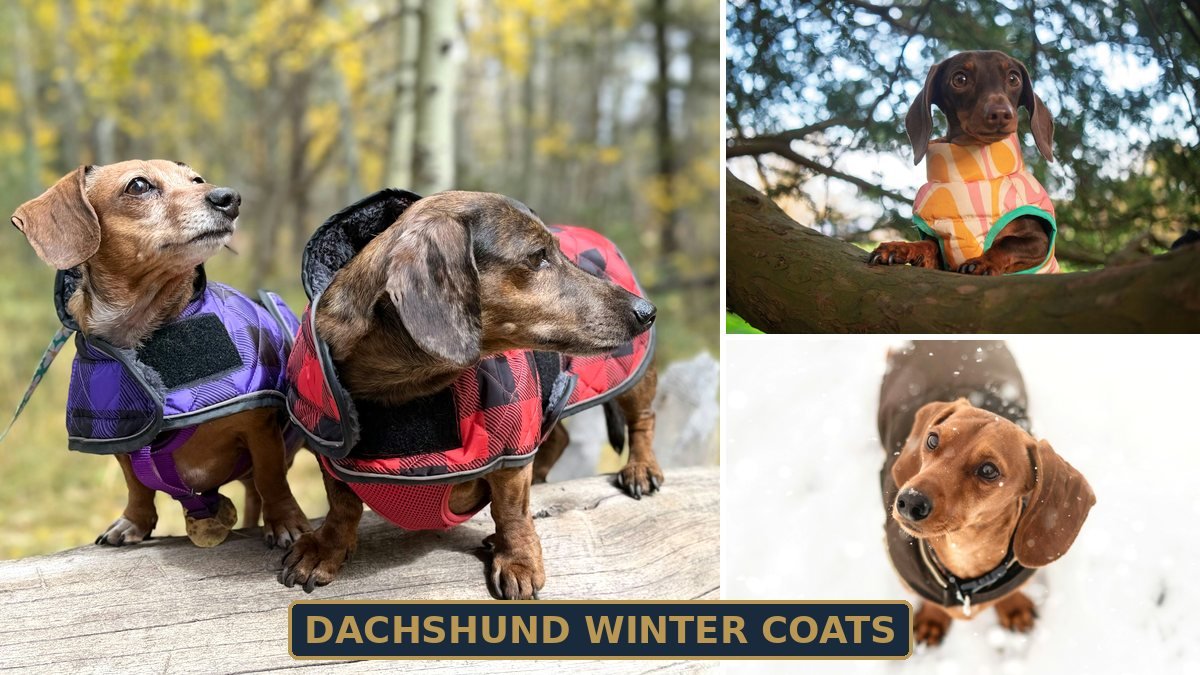
As an Amazon Associate, PetKiddies earns from qualifying purchases. We may also earn from other affiliate links on this page at no extra cost to you.
A quick note: we are not vets, and this is general information, not a substitute for advice from your own vet. This guide comes from our research into sizing charts, product listings and published guidance. We have not tested these coats or put them on our own dogs.
Last updated: Nov 19, 2026
Cold weather is arriving across much of the US, and a dachshund winter coat is a common question for owners of these long, low dogs. The trouble is that most dog coats are cut for a “typical” dog with a shorter back and longer legs, so a coat that fits on paper can bunch, slip or leave the belly bare on a dachshund.
This guide covers who tends to need a coat, how to measure a long-backed dog, which styles suit which weather, and what to check before you buy. For the basics that apply to every breed, see our general dog winter coat guide.
Quick answer
- Short-coated and small dogs are the usual candidates. The AKC advises that small, delicate and short-haired dogs have a sturdy winter coat and a fitted sweater.
- Measure three things: back length, chest girth and neck. Then compare them with that maker’s own size chart, not your dog’s weight alone.
- Back length matters most for a dachshund. A coat that is too short leaves the belly and lower back uncovered.
- Look for a harness opening if you walk with a harness, and check leg holes for rubbing.
- Match the style to the weather: sweater or fleece for dry cold, waterproof shell for rain and wet snow.
- Supervise, and take the coat off when it is wet. Do not leave a coat on for sleep or in a crate.
Does a dachshund need a winter coat?
It depends on the dog and the day. Dachshunds come in three coat types, smooth, wirehaired and longhaired, and in two sizes in the US: standard and miniature. The AKC lists the miniature as 11 pounds and under at 12 months of age or older.
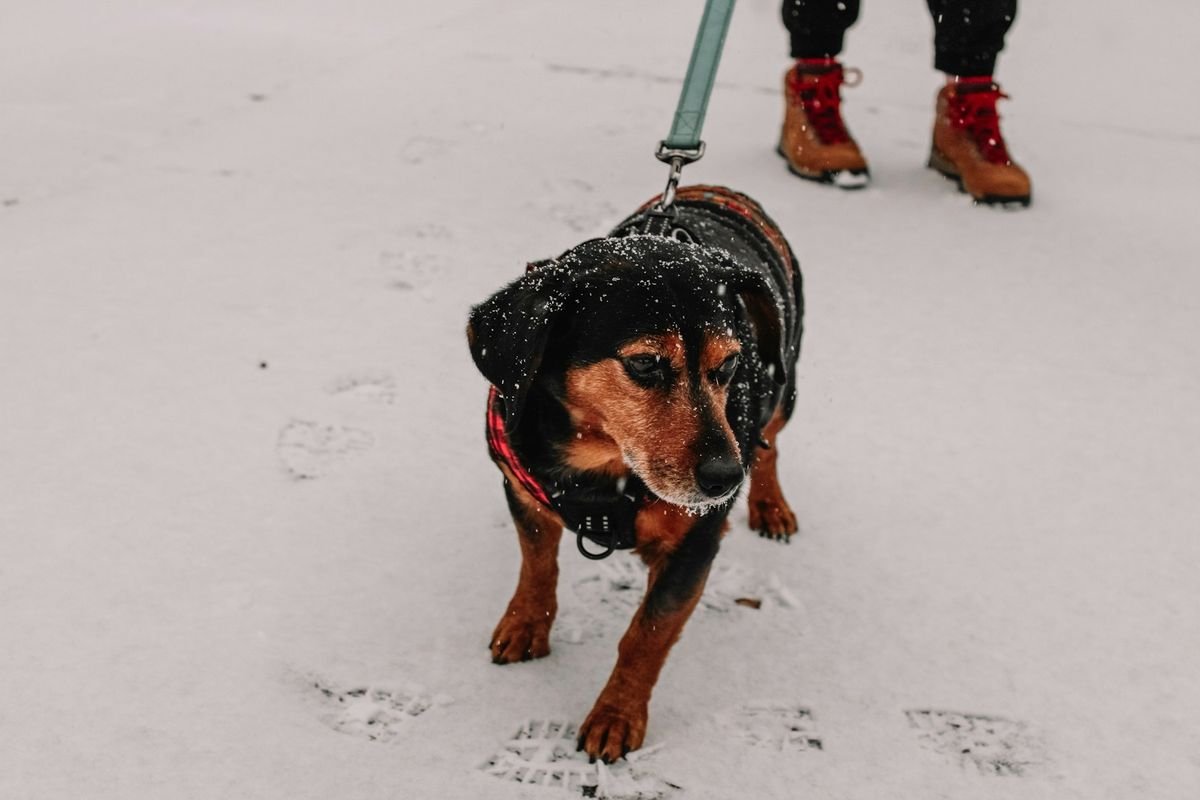
The AKC says very young and very old dogs have a hard time regulating body temperature, and the ASPCA suggests a coat or sweater for short-haired dogs, with coverage from the base of the tail to the belly. Put together, that points to smooth dachshunds, seniors, puppies and lean dogs as the most likely to want a layer. This is general guidance, not a rule for every dog.
Longhaired and wirehaired dachshunds carry more coat, so they may need less help in dry, mild cold. The ASPCA also notes that a longer coat provides more warmth. Wet or very cold weather can still be a different story, and you know your own dog best. As a practical observation, a dachshund’s short legs keep the belly close to the ground, so it is the part most likely to get wet in slush.
If your dog has had back trouble, talk to your vet before choosing any clothing. The AKC notes that dachshunds are among the breeds predisposed to intervertebral disk disease (IVDD) because of their short legs and long body.
How to measure your dachshund
Most makers size by back length, chest girth and neck. Use a soft tape (a sewing tape is ideal) with your dog standing on all four feet.
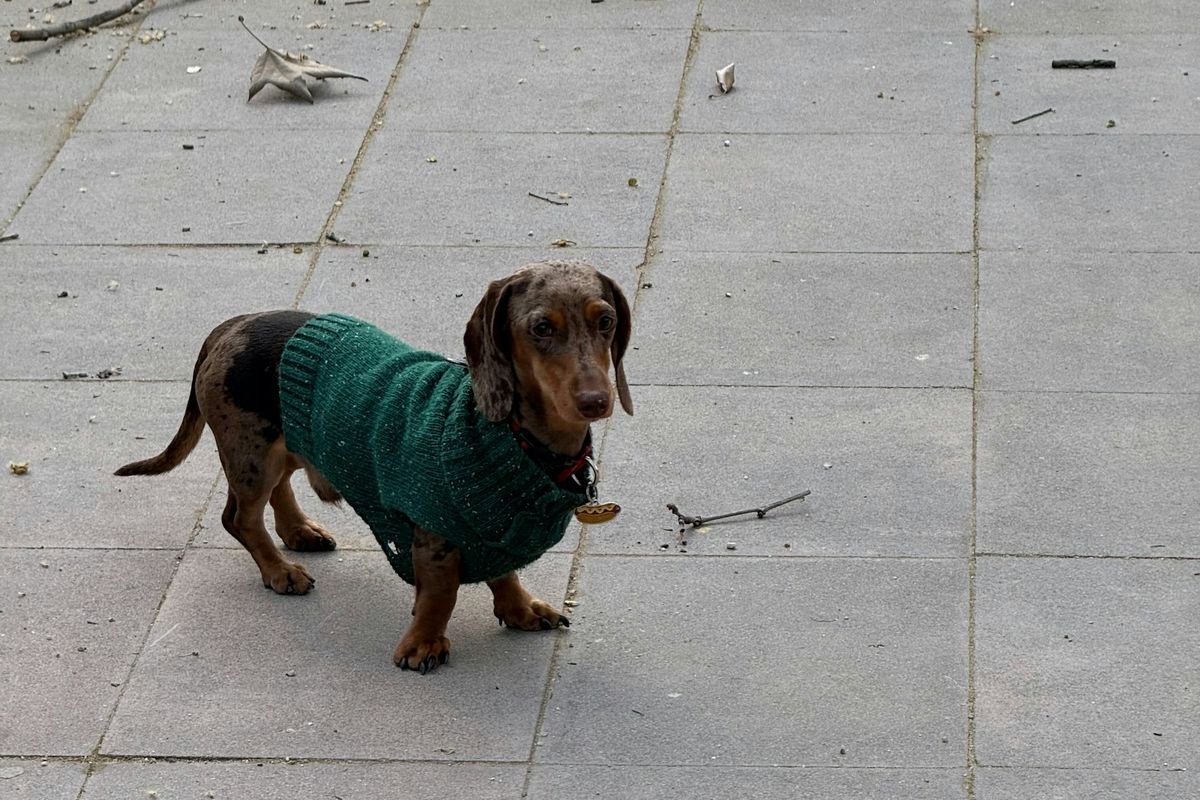
- Back length: measure along the spine from the base of the neck (where a collar sits) to the base of the tail. Do not measure to the tip of the tail.
- Chest girth: wrap the tape around the widest part of the ribcage, just behind the front legs. Keep it snug but not tight.
- Neck: measure around the neck where a collar normally sits, if the chart asks for it.
- Write the numbers down and compare each one with the maker’s chart. Check whether the chart is based on back length, chest or weight.
A few tips: measure twice, ask a helper to hold treats and keep your dog still, and follow each maker’s instructions on whether to add room. Some charts say to size up between sizes and others do not, so only follow advice the maker gives for that coat.
Why do dachshunds fall between sizes? Their back is long compared with their leg length, and many have a deep chest. A chart built on breed averages can pair a back length with a chest size that does not match your dog. Some makers sell cuts designed for dachshunds, so check each listing or maker page to see whether the coat says it is cut for long-bodied dogs.
Coat styles at a glance
| Style | Best for | What to check on a dachshund |
|---|---|---|
| Sweater | Dry, cool days and indoor chill | Stretch around the chest, back length reaching the belly, and a neck that does not slip over the ears. |
| Fleece pullover | Light, soft warmth for short walks | Leg holes that do not rub, and a belly panel long enough to cover the middle. |
| Insulated jacket | Colder days with wind | Bulk over a long back, and whether the chest closure sits flat. |
| Waterproof raincoat or shell | Rain and wet snow | Belly coverage, a hem that does not drag on the ground, and room to move the legs. |
| Full-body snowsuit | Snowy or very wet walks | Whether the leg tubes suit short legs, and how easy it is to get on and off. |
| Coat with harness opening or built-in harness | Dogs that walk in a harness | Opening position, leash point, and that straps do not rub behind the front legs. |
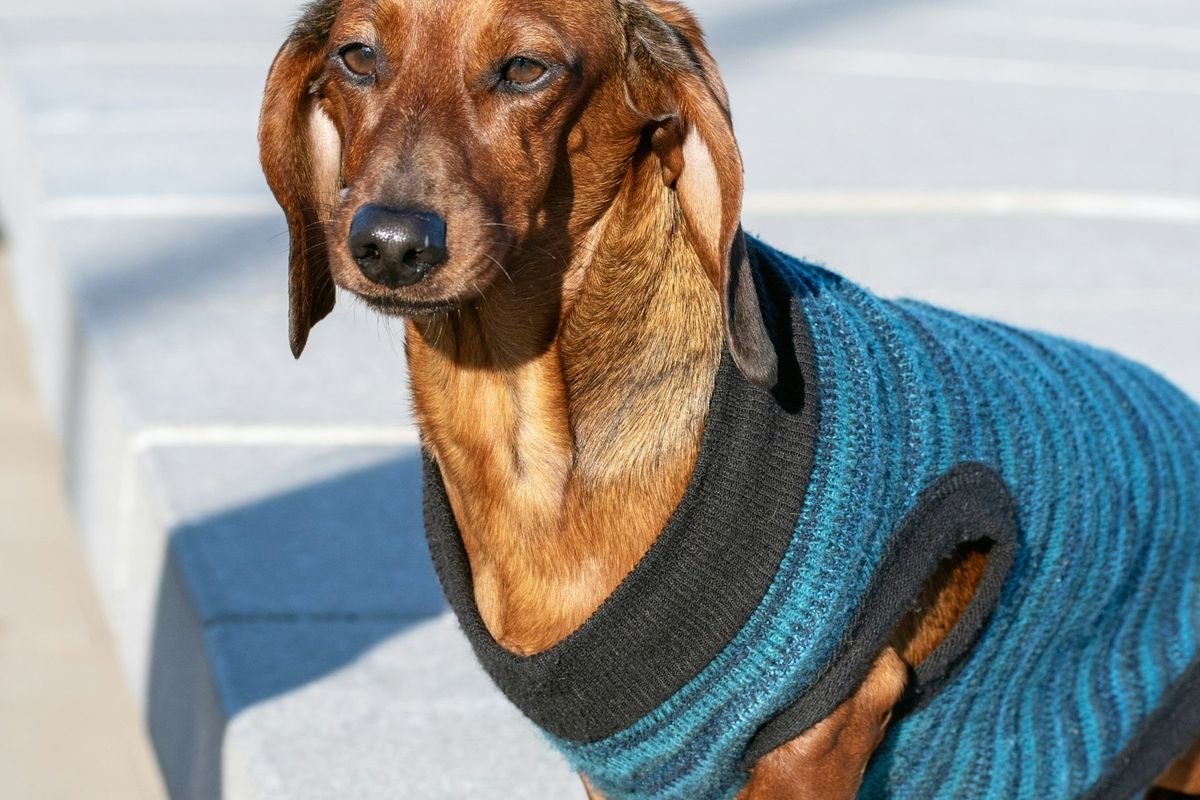
Fit checklist for long backs and short legs
- Back length reaches the base of the tail without ending short, and does not hang over the tail.
- Belly coverage: the ASPCA suggests coverage from the base of the tail to the belly for short-haired dogs.
- Clear of the urination area. As a practical point, check that the coat does not sit over where your dog pees, especially on males, so it stays dry.
- Ground clearance: with short legs, a long hem can trail in snow. Check that the coat stays off the ground when your dog walks.
- Leg holes and armpits: look for rubbing or hair loss after a walk, and watch for a stiff gait.
- Harness opening or leash port: it should line up with your dog’s harness. Our dog harness guide has more on harness fit.
- Easy on and off: a wide neck opening and simple closures mean less fuss and no awkward lifting of your dog.
- Reflective trim: helpful on dark winter evenings.
- Free movement: your dog should be able to walk, sit and lie down without the coat bunching or pulling.
Picks worth a look
Fit depends so much on your own dog’s measurements that we are not naming one specific coat here. The buttons below open Amazon search results for each type. On any listing, read the size chart and the full description before you buy, and compare the maker’s numbers with your dog’s measurements.
Dachshund-specific cut coat. This suits owners whose dog falls between sizes on standard charts. Search for coats that name dachshunds in the title, then check the listing for back-length measurements and whether there is a harness slot.
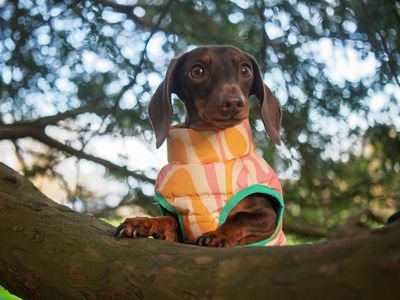
Dachshund in a jacket (illustrative photo, not the exact product). Photo: Christopher Cassidy on Unsplash (Unsplash License) (cropped)
Dachshund winter coats (Amazon search results)
Opens Amazon search results. Look for dachshund in the title, check back-length measurements on the size chart and any harness slot.
Search on AmazonFleece or sweater. This suits dry, cool days, indoor chill and seniors who feel the cold. Check the stretch around the chest, the length of the belly panel and whether the neck stays put.
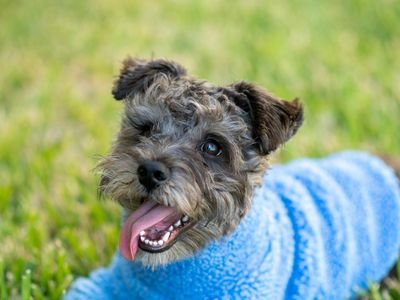
Small dog in a fleece (illustrative photo, not the exact product). Photo: nader saremi on Unsplash (Unsplash License) (cropped)
Dachshund fleece and sweaters (Amazon search results)
Opens Amazon search results. Check chest stretch, belly panel length and neck fit against your dog's measurements.
Search on AmazonWaterproof jacket with harness opening. This suits wet-weather walks. Check the description for a waterproof outer, the position of the harness opening and the hem length on short legs.
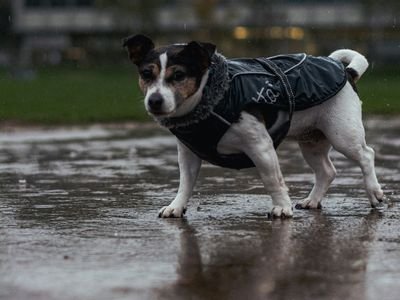
Small dog in a rain jacket (illustrative photo, not the exact product). Photo: Miguel Lindo on Unsplash (Unsplash License) (cropped)
Waterproof dachshund jackets with harness opening (Amazon search results)
Opens Amazon search results. Check the waterproof claim, harness opening position and hem length for short legs.
Search on AmazonSafety and comfort tips
- Supervise. Do not leave a coat on an unattended dog, or on for sleep or in a crate. Check the skin under it for rubbing after each walk.
- Remove a wet coat. The ASPCA advises towel-drying your pet as soon as they come inside. We suggest taking off a damp coat at the same time and letting it dry fully.
- Watch for signs of cold. Cornell University’s College of Veterinary Medicine lists shivering, whining or barking, tail tucking or a hunched posture, lifting paws off the ground and reluctance to walk. If you see them, warm your dog up and head in.
- Know when to call your vet. The AKC says frostbite can show as skin that looks white or blue, especially on ears and tail tips, and to consult your vet about winter problems. Call your vet if you are worried.
- Lift with support. Many dachshund resources advise supporting both the chest and the hind end and keeping the back level. Ask your vet to show you the right way for your dog, especially if there is any history of back problems.
- Look after paws and bellies. The ASPCA suggests washing and drying paws and belly after walks to remove ice, salt and chemicals. See our ice melt paws guide.
- Older dachshunds may need extra warmth and shorter outings. See our senior dog winter care guide.
FAQ
What size coat does a miniature dachshund need?
Go by your dog’s back length, chest girth and neck, then compare them with the maker’s chart. The AKC defines a miniature as 11 pounds and under at 12 months or older, but coat charts differ, so weight alone is not a reliable guide.
Do dachshunds get cold easily?
Some do. The AKC says small, delicate and short-haired dogs should have a winter coat and fitted sweater, and that very young and very old dogs have a hard time regulating body temperature.
Should a dachshund wear a coat indoors?
Usually not for long. We suggest a coat for outings and a warm bed or blanket indoors, and the AKC notes a heated bed can suit dogs that get chilly. If your dog wears a sweater inside, supervise and remove it for sleep.
Can a dachshund wear a coat with a harness?
Yes, if the coat has a harness opening or is made to go over a harness. Check that the opening lines up with your dog’s harness and that no strap rubs behind the front legs.
How should a dachshund coat fit?
Snug enough to stay put and cover the back and belly, but loose enough for free movement. The ASPCA suggests coverage from the base of the tail to the belly for short-haired dogs.
Are dog boots needed in winter?
Not always. The ASPCA says booties can add coverage and keep sand and salt from lodging between toes, and also advises washing and drying paws after walks.
Bottom line
A good dachshund coat comes down to measuring a long back properly, checking belly coverage and leg holes, and choosing a style that suits the weather. Check the size chart on each listing, and talk to your vet if you have any health concerns.
More from PetKiddies
- Dog winter coat guide
- Senior dog winter care
- Dog paws and ice melt in winter
- Best dog harnesses 2026
- Black Friday and Cyber Monday pet deals
Sources
- AKC, “How to Keep Your Dog Warm and Safe This Winter” (accessed Nov 19, 2026). akc.org
- ASPCA, “Cold Weather Safety Tips” (accessed Nov 19, 2026). aspca.org
- AKC, “Intervertebral Disk Disease in Dogs” (accessed Nov 19, 2026). akc.org
- AKC, Dachshund breed page and Official Standard of the Dachshund (accessed Nov 19, 2026). akc.org, Standard (PDF)
- Cornell University College of Veterinary Medicine, Riney Canine Health Center, “Winter safety tips” (accessed Nov 19, 2026). vet.cornell.edu
Featured photos: left, Photo: Bonnie Hawkins on Unsplash (Unsplash License) (cropped); top right, Photo: Christopher Cassidy on Unsplash (Unsplash License) (cropped); bottom right, Photo: Dan Smedley on Unsplash (Unsplash License) (cropped)