

As an Amazon Associate, PetKiddies earns from qualifying purchases. We may also earn from other affiliate links on this page at no extra cost to you.
A quick note: we are not vets, we have not hands-on tested the feeders below, and no brand has paid for placement. This guide is research-based, drawing on sources such as the AAFP, Cornell Feline Health Center and the ASPCA. We inform; your vet decides – especially on portions, weight loss and prescription diets.
Last updated: Oct 27, 2026
An automatic cat feeder can be a genuinely useful tool. It can serve measured meals on a schedule, take the 5am breakfast negotiation out of your hands, and in multi-cat homes keep one cat’s special diet away from the other. It cannot notice that your cat has stopped eating, refill itself, or fix its own jam.
A viral video this week showed a cat staring at a feeder that had dropped a single piece of kibble because the owner forgot to refill it. It is funny, but it makes the main point of this guide: a feeder is only as good as the human checking it. With holiday travel coming up, here is how to decide whether one is worth it and how to choose well.
Quick answer: is an automatic cat feeder worth it?
- Yes, for routine and portion control – it serves measured meals at set times, which helps if you are trying to manage your cat’s weight with your vet.
- Yes, for early risers – some cats stop waking you for breakfast once the feeder, not you, is the source of the morning meal.
- Yes, for long workdays and multi-cat diet control – a microchip feeder can keep a prescription diet for one cat away from the others.
- Dry vs wet matters – most hopper feeders are for dry kibble only; wet food needs a tray-style feeder with ice packs, and even then only for limited hours.
- It is not a pet sitter – common vet guidance is that someone should check on a cat at least daily if you are away for more than about a day.
- Always keep a manual backup – keep a bowl and food on hand, and watch your cat actually eat from the feeder before you rely on it.
What an automatic cat feeder actually does (and doesn’t do)
At its simplest, an automatic feeder stores food and releases it on a schedule. The details vary a lot by type. Gravity feeders are just a hopper over a bowl: as the cat eats, more food slides down. They are cheap and simple, but they are not portion-controlled, so for many cats they work like a bottomless bowl and can encourage overeating.
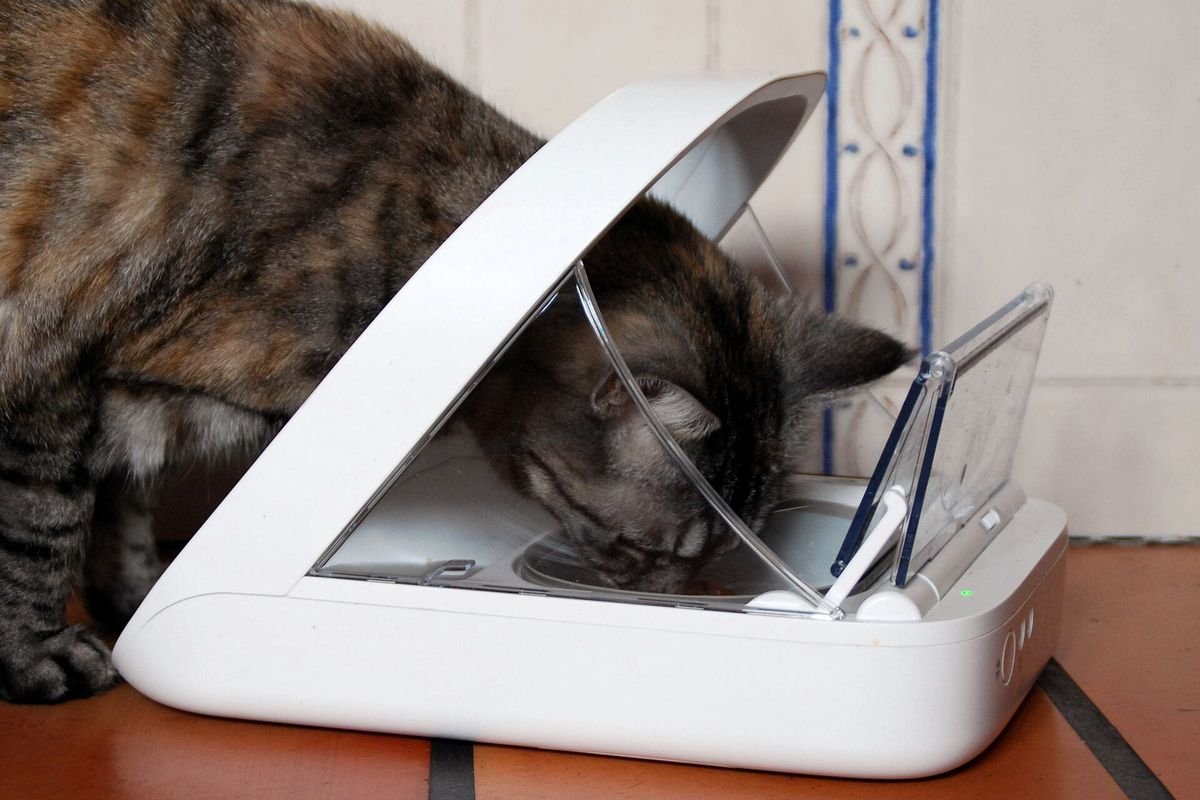
Timed hopper feeders dispense set portions of dry kibble at set times, programmed with buttons. App or WiFi feeders add phone scheduling, low-food alerts and sometimes a camera. Wet-food feeders use lidded compartments that open one at a time, usually with ice packs. Microchip (RFID) feeders open only for a cat whose chip or tag is registered.
What none of them do is replace enrichment. The AAFP’s feline feeding programs consensus statement notes that automatic feeders can help but do not typically provide for foraging and predation. Puzzle feeders and hunting-style toys are a different tool, and our guide to interactive cat toys for indoor cats covers those.
Types of automatic cat feeders compared
Here is how the main types stack up.

| Feeder type | Best for | Food | Watch out for |
|---|---|---|---|
| Gravity feeder | Cats that self-regulate well; short-term backup | Dry | No portion control; easy to overeat |
| Timed hopper (button/timer) | Routine meals without needing an app | Dry | Kibble size limits, jams, empty hopper |
| WiFi/app feeder | Remote schedule changes, alerts, camera models | Dry | WiFi or server outages, app setup, cost |
| Dual-bowl feeder | Two cats on the same food and schedule | Dry | Does not stop one cat eating both bowls |
| Microchip/RFID feeder | Prescription diets, food thieves, multi-cat homes | Wet or dry | Training period, bowl size, batteries |
| Wet-food tray with ice packs | Wet-food cats, a few timed meals | Wet or dry | Spoilage; limited cooling time; easy to raid |
To choose, start with your cat’s food: hopper feeders list a supported kibble size, and kibble outside it is a common cause of jams. Look for an anti-jam design, battery backup for power cuts, dishwasher-safe parts and a stainless steel bowl, which is easier to keep clean than scratched plastic.
Also check the freshness seal (gasket or desiccant pack), a lid lock against cats who pry the hopper open, and how small a “portion” is. Small increments make it easier to fine-tune daily amounts.
The real benefits: routine, portions and better mornings
Cats are built to eat small amounts often. The AAFP consensus statement suggests splitting a cat’s daily food into multiple small meals through the day, and mentions programmable feeders, including microchip models, as one way to offer them. That makes a timed feeder handy for people who work long days.
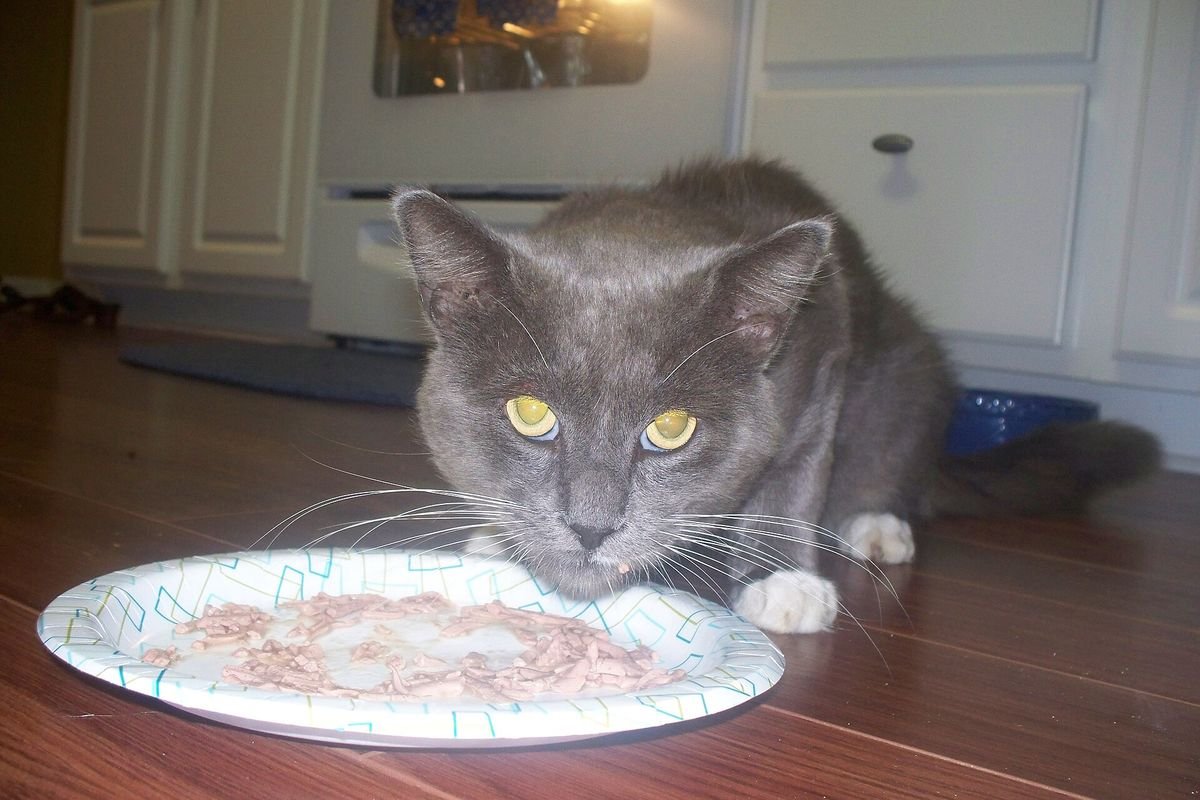
Portion control is the other big win. The Cornell Feline Health Center calls obesity the most common nutrition-related problem in cats, and the Association for Pet Obesity Prevention’s 2022 survey classified 61 percent of cats as overweight or obese. A feeder does not set the right amount – your vet should help with that – but it does make sure the amount you settle on is what actually gets served.
Mornings can improve too. Cats that wake you for food have often learned that it works, and some behavior advice suggests a timed feeder can shift the breakfast cue away from you, though a cat that wants attention may keep pestering. In multi-cat homes, a microchip feeder can keep a prescription diet for one cat away from the others, which separate bowls rarely manage on their own.
Risks to know before you rely on one
Kibble can jam, hoppers run empty (as that viral cat discovered), batteries die and power cuts happen. With WiFi feeders, an internet or server outage can knock out app features. In February 2020, owners of Petnet SmartFeeders reported a week-long outage, and the company reportedly went dark a few months later. Some current feeders say they keep running a stored schedule offline; check that before you buy.
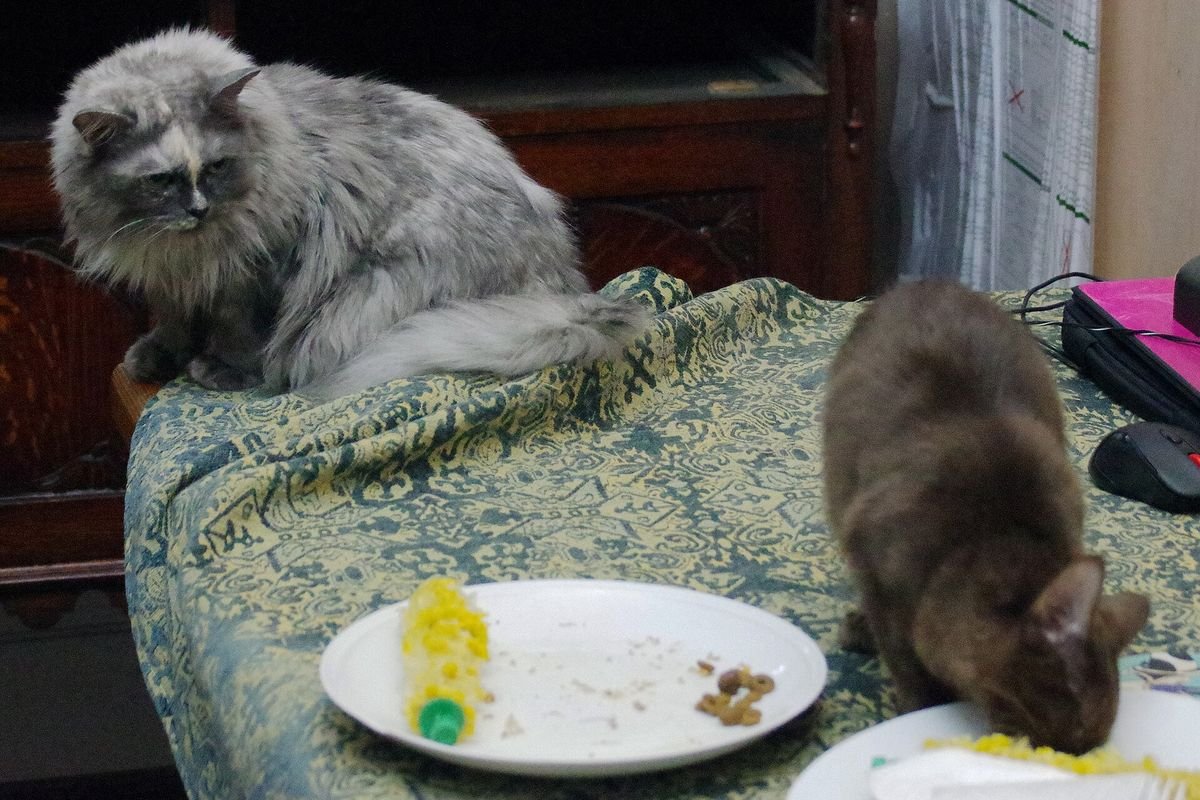
Dry food can go stale in a hopper, so add only a few days’ worth and clean it between refills. Keep the original bag so you can check lot numbers if there is ever a recall – our pet food recall guide explains how. For wet food, the FDA’s pet food storage advice says to promptly refrigerate or throw out leftover canned and pouched food, so follow the feeder maker’s ice pack guidance closely and do not stretch it.
The biggest risk is not noticing that your cat is not eating. A cat that stops eating can become seriously ill. VCA Animal Hospitals describes fatty liver disease (hepatic lipidosis) developing after a few days of little or no eating, with overweight cats at higher risk. If your cat skips meals for more than a day or so, call your vet. Finally, some cats are startled by motor noise; a nervous cat may avoid the feeder entirely.
Can an automatic feeder replace a pet sitter when you travel?
For multi-day trips, the honest answer is no. A feeder handles one job. Your cat also needs fresh water – the ASPCA advises fresh, clean water at all times and washing and refilling bowls daily – plus a scooped litter box, and someone to notice vomiting, hiding or a cat that is not eating. Our guide to cat litter box problems is a good reminder of how quickly a neglected box can cause trouble.
Common vet guidance is that if you will be away for more than about 24 hours, you should arrange a sitter or a trusted person to check in, ideally daily. For a single overnight, a reliable feeder, a fountain, a clean litter box and a camera may be enough for a healthy adult cat, with a neighbor on standby in case something goes wrong. Ask your vet if your cat has a medical condition.
Planning Thanksgiving or Christmas travel? Book a sitter early, run the feeder for a week before you leave, and write down how to refill it and clear a jam.
How to introduce an automatic feeder to your cat
Go slowly. Set the feeder next to the old bowl and, if possible, leave it off or open at first so your cat can eat from it without motor noise. Then run real meals while you are home for about a week, watching your cat eat and checking for jams.
Weigh what the feeder dispenses on a kitchen scale; a “portion” varies by brand and kibble. Set the total daily amount with your vet’s advice, then divide it into meals rather than adding feeder meals on top of what you already serve.
Put the feeder in a quiet spot away from the litter box. If you have a dog, place it out of reach or consider a microchip feeder; dogs raiding cat food is common, and our slow method for introducing a cat to a dog touches on setting up cat-only spaces.
Our research-based picks
These picks are based on research into features and specs, not hands-on testing. Listings and stock change, so check the current version and kibble limits before you buy.
Best button-programmed feeder: PETLIBRO Automatic Cat Feeder (timed)
PETLIBRO Automatic Cat Feeder, Timed Dry Food Dispenser suits owners who want scheduled dry meals without an app. The listing describes USB-C power with D-cell battery backup and dry kibble from about 2 to 15mm. Check your kibble size and the listed capacity, since versions differ.
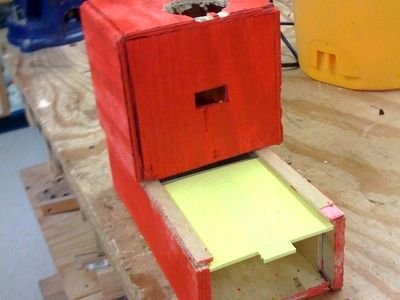
Timed pet feeder (item type, not the exact product). Photo: Sen777, CC BY-SA 3.0, via Wikimedia Commons (resized)
PETLIBRO Automatic Cat Feeder, Timed Dry Food Dispenser
Scheduled dry meals without an app; battery backup. Check kibble size and capacity first.
Check price on AmazonBest WiFi feeder: PETLIBRO Granary WiFi Feeder
PETLIBRO Granary 5L WiFi Automatic Feeder is for owners who want app scheduling and low-food alerts. The listing says it supports both 2.4GHz and 5GHz WiFi and up to 10 meals a day. App features depend on your network, so keep checking in person.
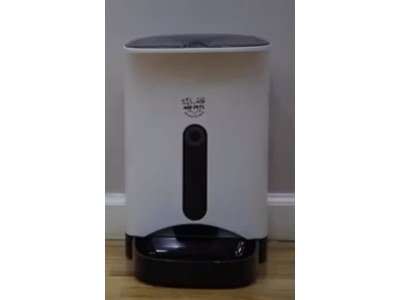
Smart (WiFi) pet feeder (item type, not the exact product). Photo: Petnet (YouTube channel), CC BY 3.0, via Wikimedia Commons (resized)
PETLIBRO Granary 5L WiFi Automatic Feeder
For app scheduling and low-food alerts; listing says 2.4GHz and 5GHz WiFi.
Check price on AmazonBest for two cats on the same food: PETLIBRO Dual-Bowl WiFi Feeder
PETLIBRO Automatic Cat Feeder for 2 Cats splits each meal between two stainless steel bowls, which can reduce squabbling at mealtime. It does not stop a pushy cat from eating both portions, and it suits cats on the same diet only. The listing gives a 2-12mm kibble range and 2.4GHz/5GHz WiFi.
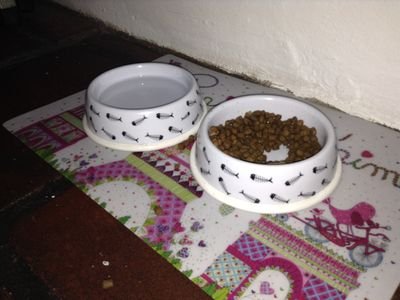
Two cat food bowls (item type, not the exact product). Photo: Deavmi, CC BY-SA 4.0, via Wikimedia Commons (resized)
PETLIBRO Automatic Cat Feeder for 2 Cats
Splits meals into two steel bowls for two cats on the same diet.
Check price on AmazonBest for prescription diets and food thieves: SureFeed Microchip Pet Feeder
SureFeed Microchip Pet Feeder opens only for a registered cat’s microchip or tag, so it is a common choice when one cat needs a prescription diet or another overeats. It handles wet or dry food but is not a timed dispenser. Expect a training period while your cats get used to the moving lid.
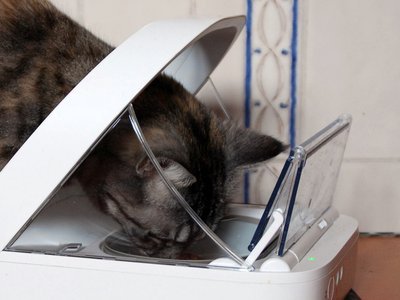
Microchip pet feeder (item type, not the exact product). Photo: Giraldillo, CC BY-SA 4.0, via Wikimedia Commons (resized)
SureFeed Microchip Pet Feeder
Opens only for a registered cat; useful for prescription diets in multi-cat homes.
Check price on AmazonBest for wet food: Cat Mate 5-Meal Automatic Feeder
Cat Mate 5-Meal Automatic Pet Feeder (sold as the C500) uses five lidded bowls on a timer, with twin ice packs to help keep wet food cool. It suits timed wet meals over a limited period, not days away.
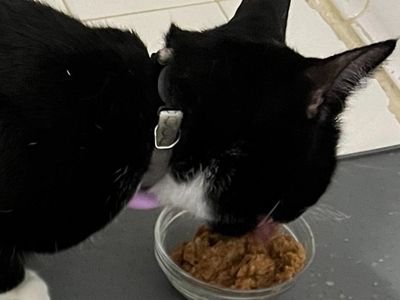
Wet cat food in a bowl (item type, not the exact product). Photo: Jay KapLon, CC BY 4.0, via Wikimedia Commons (resized)
Cat Mate 5-Meal Automatic Pet Feeder
Five timed wet or dry meals with ice packs; for limited hours, not trips.
Check price on AmazonDo not forget water: Catit Flower Fountain
Catit LED Flower Cat Water Fountain is a widely sold 3-liter fountain with a filter, a sensible companion to any feeder. It still needs regular cleaning, filter changes and refills.
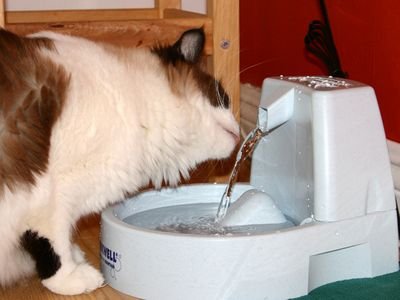
Cat water fountain (item type, not the exact product). Photo: April Killingsworth, CC BY 2.0, via Wikimedia Commons (resized)
Catit LED Flower Cat Water Fountain
3-liter filtered fountain to pair with any feeder; needs regular cleaning.
Check price on AmazonFAQ
Are automatic cat feeders good for cats?
They can be, as a tool rather than a replacement for care. The AAFP notes they can help, though they do not provide foraging. They work best alongside daily human checks, fresh water and play.
How long can I leave my cat with an automatic feeder?
Common vet guidance is that a cat left for more than about 24 hours should have a sitter or trusted person checking in, ideally daily. A feeder cannot refill water, scoop litter, clear a jam or notice illness, so treat it as a helper, not a substitute.
Can I put wet food in an automatic feeder?
Only in feeders designed for it, usually tray models with ice packs. Follow the maker’s cooling guidance and remove leftovers promptly. Hopper feeders are for dry kibble only.
Do automatic feeders help cats lose weight?
They can help by serving consistent portions, but the feeder does not decide how much your cat should eat. Ask your vet for a daily amount, weigh the portions on a kitchen scale, and recheck your cat’s weight regularly.
What if my cat’s feeder jams?
Clear it and feed your cat by hand. To prevent jams, use kibble within the listed size range, keep the hopper clean and dry, and do not overfill it. Keep a manual bowl on hand so a jam is a short inconvenience, not a missed day.
Will an automatic feeder stop my cat waking me up?
For some cats, yes, because the feeder becomes the source of breakfast instead of you. It will not work for a cat that wants attention. Avoid feeding the moment your cat wakes you, since that rewards the habit.
Are WiFi feeders worth it?
They are worth it if you want low-food alerts, remote changes or a camera. Otherwise a button-programmed feeder with battery backup may be simpler. Either way, check that it keeps its schedule offline.
Do I still need a water fountain?
Your cat needs fresh water at all times; a fountain is one option, not a requirement. Some owners find their cats like moving water. Whatever you use, clean and refill it regularly.
Bottom line
An automatic cat feeder is worth it for predictable meals, steadier portions or multi-cat diet control. Match the type to your cat’s food, test it while home, and keep a manual backup.
It will not replace you or a sitter: someone still needs to check the hopper, the water and the cat. If you are stocking up on supplies before the holidays, our Black Friday and Cyber Monday pet deals tracker is a good place to start.