
As an Amazon Associate, PetKiddies earns from qualifying purchases. We may also earn from other affiliate links on this page at no extra cost to you.
A quick note: we are not vets, we do not lab-test products, we have not hands-on tested the items below, and no brand has paid for placement. This guide combines one real fostering story with guidance from veterinary and welfare sources such as the AAFP, International Cat Care, the Cornell Feline Health Center and the ASPCA. We inform; your vet (or your rescue’s vet) decides.
Last updated: Oct 30, 2026
A friend of ours who is fostering recently took in two foster cats, Fufu and Lulu, both roughly 2 years old. They could hardly be more different: Fufu is curious and playful, and Lulu hides.
If you have just brought home a new foster cat, that split may sound familiar. Cats often react differently to a new place, and both exploring and hiding are normal ways of coping. This guide covers the safe room, shy and curious cats, managing two cats, treat training, picking up a cat safely, nail trims, brushing a cat that sheds, and when to call your rescue or vet.
Quick answer: how to settle in a new foster cat
- Start with one quiet safe room with food, water, a scratching post and a litter box away from the food.
- Let hiding happen. Offer boxes and covered beds, and don’t pull a hiding cat out unless there is a safety or medical reason.
- Keep a predictable routine with set meal times and a quiet voice.
- Play daily with a wand toy, from a distance for shy cats.
- Use treats as your training tool for handling, brushing and nail trims – food is a great motivator for building trust.
- Don’t pick up a new cat until trust is built. When you must, support the chest and back end, or use a towel. Wash any scratch with soap and water.
- Trim nails when the cat is calm and drowsy, one or two at a time.
- Go at the shy cat’s pace, and introduce two unbonded cats slowly.
- Call your rescue or vet if a cat is not eating after about 24-48 hours or is not using the litter box. Any cat straining to pee with little or no urine – especially a male – is an emergency.
Meet Fufu and Lulu: two foster cats, two very different personalities
When we asked our friend a few quick questions, here is what she shared. Fufu and Lulu are about 2 years old. Fufu is curious and playful; Lulu hides. Treats help a lot – they are how she does behavioral training with the cats, and thanks to treat training she can now trim their nails. And Fufu is very into the brushing routine.

Exploring and hiding are both familiar reactions to a new place, and temperament can vary widely even between cats of the same age. A cat that explores is not “better adjusted” than one under the bed; they are coping differently.
Hiding is a normal stress response. International Cat Care’s guide to helping a new cat settle in says a new adult cat may retreat to a hiding place, “and this is fine,” and that some cats take several weeks to feel safe. The goal is to make the home safe enough that hiding becomes unnecessary.
Set up a safe room before day one
Prepare one quiet room before your foster cat arrives, such as a spare bedroom or office. A small space is easier for a nervous cat to learn, and International Cat Care notes that adult cats may feel more comfortable in one room to start with.

The AAFP/ISFM Feline Environmental Needs Guidelines make a good checklist. They rest on five pillars: a safe place; multiple, separated key resources; opportunities for play and predatory behavior; positive, consistent and predictable human interaction; and respect for the cat’s sense of smell. In practice:
- Litter box away from food and water – box in one corner, bowls on the other side.
- Hiding spots such as a box on its side, a covered bed or a cat cave.
- Block hard-to-reach places like box springs and recliners (recliner mechanisms can also injure a cat), so you can reach the cat if needed.
- Escape-proof the room: scared cats can bolt, so open the door slowly and check window screens.
- Vertical space, such as a cat tree or cleared shelf.
- A scratching post, which also spreads the cat’s scent.
- A safety check for cords, string, hair ties and toxic plants – lilies are highly toxic to cats.
Fostering two cats? The ASPCA’s guide to introducing cats recommends at least as many litter boxes as cats, ideally one more – three boxes for two cats. For litter, see our best cat litter for 2026 roundup.
Letting a shy cat like Lulu come out at their own pace
If your shy cat is like Lulu, the first days may be mostly hiding. Your job is to show the cat, again and again, that the room is predictable and people bring good things.

International Cat Care says some cats need several weeks to feel safe, and a shy cat may need longer still. Treat any timeline as a rough guide, not a deadline.
Offer hiding spots the cat can use
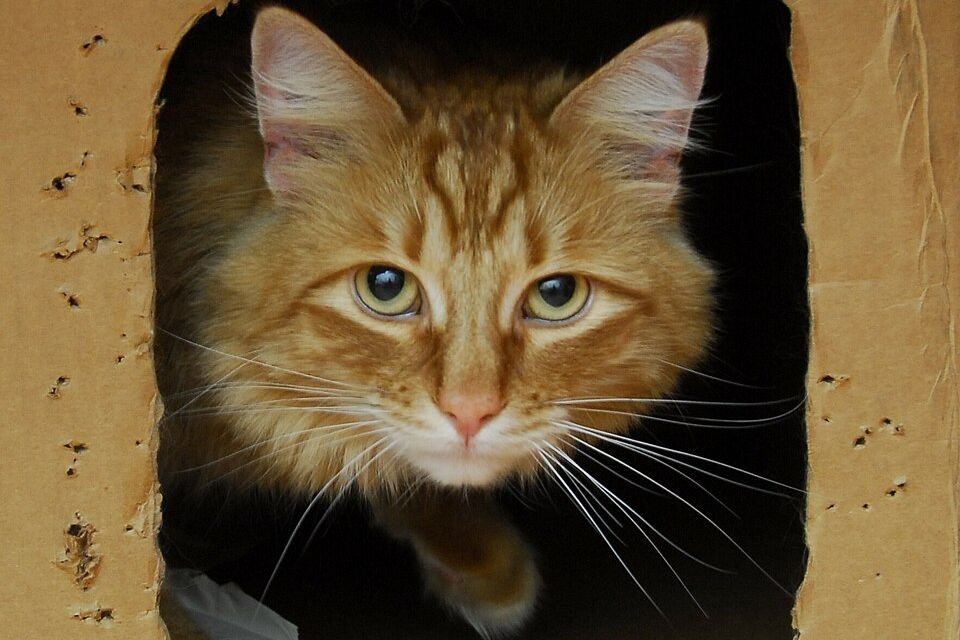
Offering hiding spots is not giving in to fear. In a small 2014 study of newly arrived shelter cats (Vinke and colleagues), cats given a hiding box had lower stress scores on days 3 and 4 than cats without one; by day 14 the groups were similar. With only 19 cats it is limited evidence, but it suggests a hiding box may ease stress in the first days.
Keep a predictable routine
Feed at the same times and keep your voice soft. Very anxious cats may only eat and use the litter box at night at first, so check both quietly.
Sit, don’t chase
Sit on the floor and read aloud or scroll your phone. If the cat approaches, offer a relaxed hand to sniff and let the cat decide what happens next. Never reach into a hiding spot or pull the cat out.
Slow blinks
Narrow your eyes, then close them softly. In a 2020 University of Sussex-led study in Scientific Reports (Humphrey and colleagues), cats slow-blinked back more at people who slow-blinked at them, and were more likely to approach an unfamiliar person after a slow blink than after a neutral face.
Wand-toy play from a distance
Many shy cats will play before they will be touched. Move a wand toy slowly along the floor from a few feet away. Even watching it intently is progress.
Pheromone diffusers: what the evidence says
Pheromone diffusers such as FELIWAY Classic are popular, but the evidence is mixed. A 2010 systematic review in JAVMA (Frank, Beauchamp and Palestrini) found insufficient evidence for most uses studied, and lack of support for reducing stress in hospitalized cats. A 2023 review in Veterinary Evidence found moderate evidence that it may reduce some signs of acute stress in a veterinary setting, but did not support using it as the only stress-reduction tool – and neither review looked at foster cats settling in at home. A diffuser may help a little; it does not replace a safe room and patience.
Channeling a curious cat like Fufu: play and enrichment
A curious, playful cat like Fufu has confidence and energy to burn. A few short interactive play sessions every day are the best outlet.

Follow the hunting sequence: stalk, chase, pounce, catch, eat. Move a wand toy like prey and let your cat catch it, especially at the end. Then offer a treat or meal so the “hunt” ends satisfied rather than wound up. For ideas beyond wands, see our guide to the best interactive cat toys for indoor cats.
- Food puzzles turn part of a meal into foraging.
- A window perch adds something to watch.
- Rotate toys every few days.
- Never use hands as toys, which can teach a cat that biting people is play.
- Laser pointers: always finish with a toy the cat can actually catch.
Two new cats at once: managing the pair
First, ask your rescue whether your foster cats already know each other. Cats that lived together calmly can often share a safe room from day one; strangers should start in separate spaces.

Either way, give each cat its own bowls, resting and hiding spots, and litter boxes spread out so one cat cannot block another. If problems show up, our guide to cat litter box problems walks through the usual causes.
For cats that are not bonded, the ASPCA describes a gradual introduction:
- Keep them separate, so they can hear and smell but not see each other.
- Swap scents with a cloth rubbed on one cat’s cheeks, left near the other with a treat.
- Add good things, like treats on either side of a closed door.
- Allow visual contact through a baby gate once both cats are calm and eating.
- Add short supervised visits. If things go badly, go back a step.
Watch for tension signs such as hissing, growling, swatting, stiff posture or one cat blocking another from food or litter boxes. Relaxed body language, playful “paws” under the door and resting calmly in the same room are encouraging signs.
The first two weeks: a simple timeline
Every cat is different. These are typical patterns, not deadlines, and a shy cat may move much more slowly.
| When | Focus | What it can look like | What you can do |
|---|---|---|---|
| Day 1 | Arrival and quiet | Hiding, eating little; a curious cat may explore at once | Open the carrier in the safe room; keep visits short |
| Days 2-3 | Basic needs | Eating and using the litter box, maybe only at night | Set meal times, check food and litter, sit quietly |
| Days 4-7 | Building trust | Watching you, sniffing your hand | Gentle wand play, treat tosses, slow blinks |
| Week 2 | Routine and handling | More time in the open, brief touch | Short treat-training sessions; first brushing for confident cats |
| Beyond week 2 (if still hiding) | Patience and check-in | Mostly hidden but eating and using the litter box | Keep the routine, update your rescue, ask about behavior support |
Eating and toileting should never wait for the timeline – see the red flags below.
Shy cat vs curious cat: what each one needs
The same basics shift depending on personality.
| Need | Shy cat (like Lulu) | Curious cat (like Fufu) |
|---|---|---|
| First days | Quiet room, short calm visits | Safe room, plus more play and exploring |
| Hiding spots | Several, including one near food | A few, plus high perches |
| Play | Wand toy from a distance | Daily active sessions ending with a catch |
| Handling | Wait for the cat to approach | Short sessions paired with treats |
| Treats and training | Toss treats nearby, then offer by hand | Teach paw handling, brushing, nail trims |
| Warning signs to watch | Not eating, no litter use, worsening hiding | Rough play, boredom, unsafe spots |
Treat training for handling and nail trims, step by step
Our friend told us that treats help a lot. Treats are how she does behavioral training with Fufu and Lulu, and thanks to treat training she can now trim their nails. That fits the low-stress approach of the 2022 AAFP/ISFM Cat Friendly Veterinary Interaction Guidelines, which are written for vet teams but stress reducing fear and giving cats a sense of control.
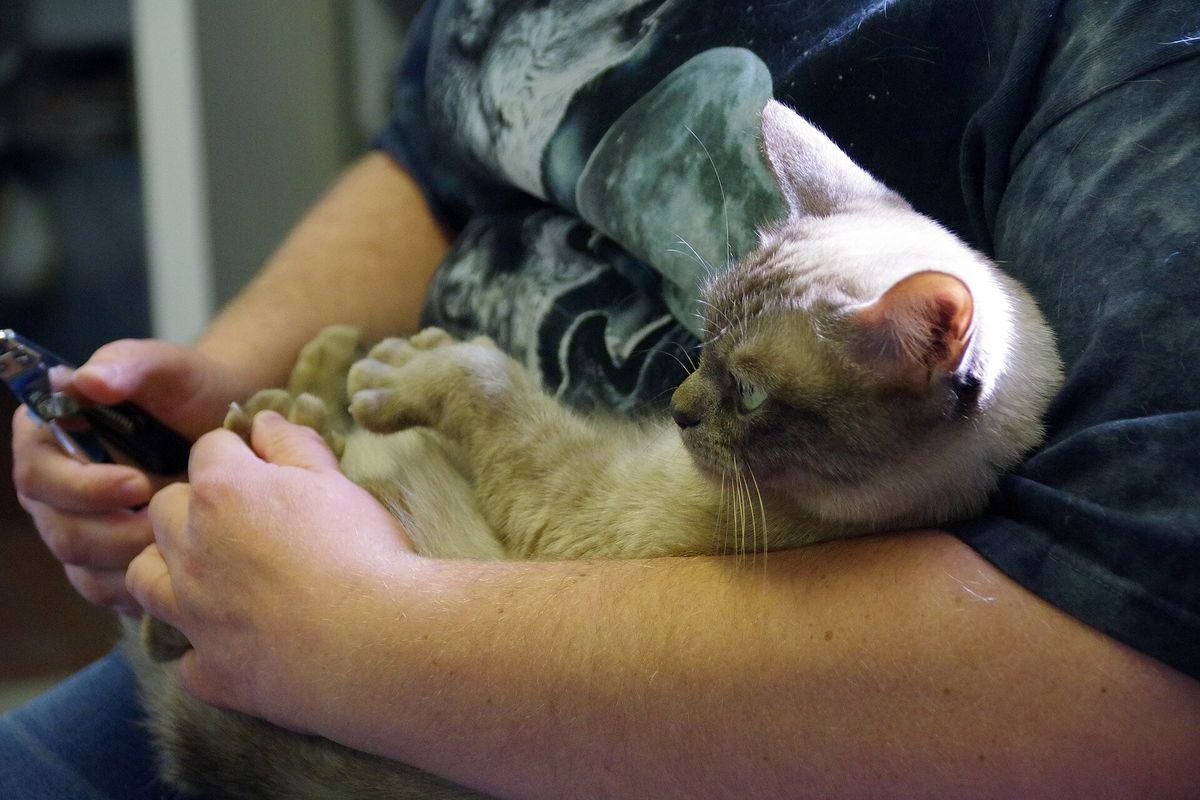
Food has been a great motivator for building trust. One thing our friend does is simple: she taps a paw, then gives food. Over time, that paw-touch-then-treat pairing teaches the cat that hands near their feet predict something good – the groundwork for nail trims later. The ASPCA’s grooming guide describes the same idea: touch and gently press a paw for a moment, release, and immediately give a treat.
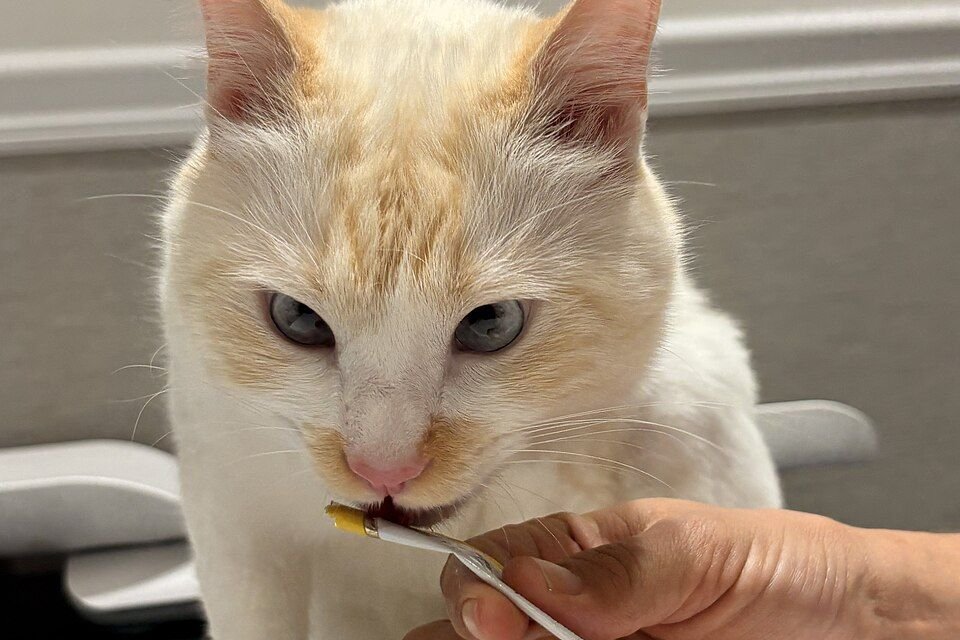
Move on only when your cat is relaxed with the current step. Expect days or weeks.
- Choose a high-value treat. Lickable treats work well because the cat keeps licking while you handle a paw.
- Pair touch with treats. Tap or touch a paw briefly, then treat. Keep it to a second or two at first.
- Extend a claw. Gently press a toe pad so the claw slides out, then treat.
- Introduce the clippers. Let the cat sniff them, treat, and put them away.
- Clip one nail, treat, stop. Add nails per session only as your cat stays calm.
- Trim only the clear tip. The ASPCA’s grooming guide says to snip only the white part of the claw and avoid the pink quick, which holds nerves and blood vessels. If you do nick the quick, the ASPCA notes styptic powder stops the bleeding – keep some nearby – then stop for the day and let your rescue know.
- Keep sessions short and stop before stress – tail flicking or pulling away means stop.
- Use a towel only if needed, and ask your rescue’s vet team or a vet tech for a demo.
When is the best time to trim a cat’s nails?
Our friend’s foster cats have very long nails, which raises a practical question: when should you trim? The short answer is when the cat is calm and a little sleepy.
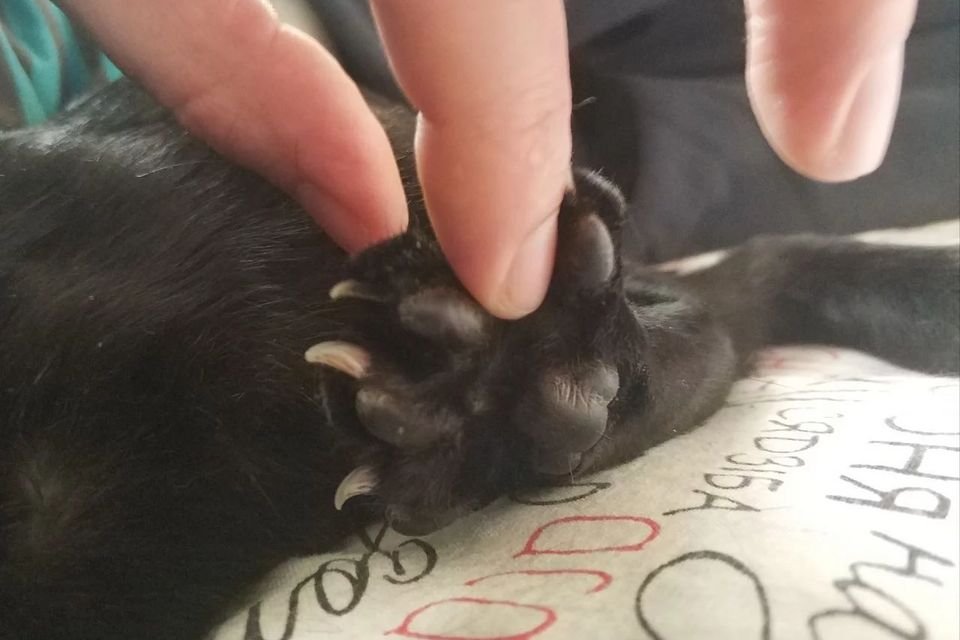
- Pick a relaxed, drowsy moment – for example after a meal, or once a cat has settled down after play. International Cat Care’s claw-trimming advice says to choose a time when your cat is relaxed. Cornell’s CatWatch newsletter adds a caution: don’t try right after a lot of stimulating play or a stressful moment – wait until the cat has calmed down on their own.
- Only after paw-handling practice. Do the treat steps above first, so touching paws is already a good thing.
- Keep sessions short: one or two nails. The ASPCA suggests not trimming more than two claws in one sitting until your cat is comfortable. It’s fine to spread one round of trims over several days.
- Good light, tiny cuts. Snip just the clear tip and avoid the pink quick. With dark nails where you can’t see the quick, take off even less.
- End on a good note with a treat or a short play session.
How often? Sources differ a little. Cornell’s CatWatch suggests roughly every 2-4 weeks, as does VCA Animal Hospitals for indoor cats, while the ASPCA suggests every ten days to two weeks. Checking paws weekly and trimming when the tips get long is a sensible middle ground. International Cat Care notes many cats keep their claws in shape by scratching, so a good scratching post matters too.
Signs nails need attention: International Cat Care lists claws catching on bedding or carpet, a tapping sound on hard floors, and claws visible when the paw is relaxed.
Very long nails that curl toward the pad need a professional. Overgrown claws can curve around and grow into the paw pads, which is painful and can get infected. This is more common in older, less active cats, but any cat with nails curling into the pads should see a vet. With a cat who has already scratched someone or who has very long nails, it is reasonable to ask your rescue’s vet team or a groomer to do the first trim. VCA suggests exactly that when nails truly need doing now, then working on home trims afterward.
Picking up a new foster cat – and what to do about scratches
When our friend picked up one of the cats, she got scratched badly. She is now slowly building trust instead. That is a common lesson with new fosters: a cat who doesn’t yet feel safe may lash out when lifted, even if they seem calm on the floor.
Wait for trust before you lift
International Cat Care’s guide to handling and interactions notes that cats don’t enjoy being picked up or held for long periods, and that forceful or insecure handling increases the chance of being bitten or scratched. With a new or shy foster, skip picking up altogether at first. Let the cat come to you, keep touches short, and use food and play to build trust.
How to pick up a cat safely (when you need to)
- Support the whole body. Lift gently from a secure footing, with one hand under the chest and the other under the back end, and hold the cat close against your body – never by the belly alone or dangling.
- Never scruff. International Cat Care is against scruffing as restraint because it can cause fear and make handling harder later.
- Use a towel for necessary handling. For a carrier transfer or a nail trim, gently wrapping the cat in a towel with one leg free – sometimes called a “burrito” wrap, and described by International Cat Care for claw trims – can protect you and help some cats feel secure. Ask your rescue’s vet team for a quick demo.
- Keep it brief, and let go if the cat struggles. Set them down gently near a hiding spot.
If you get scratched
The CDC’s advice on cat bites and scratches is to wash the wound with warm soapy water right away. It says to seek medical attention if the wound is serious, becomes red, painful, warm or swollen, the cat appears sick, you don’t know the cat’s rabies vaccination status, or it has been more than 5 years since your last tetanus shot.
Also watch for cat scratch disease, a bacterial infection spread mainly through scratches from cats with fleas. The CDC says to see a healthcare provider for a fever, enlarged tender lymph nodes 1-3 weeks after the scratch, or a pustule at the scratch site. People with weakened immune systems are at higher risk of severe illness. Ask your rescue about flea prevention for the foster cats – and never use permethrin flea products (often sold for dogs) on cats, as the CDC warns.
Brushing as a bonding routine
Our friend mentioned that Fufu is very into the brushing routine. That is a good sign: a cat that enjoys brushing is relaxed enough to be touched and chooses to stay. Cats that are friends often groom each other, and for many cats a short, gentle brushing session can become a calm shared ritual.
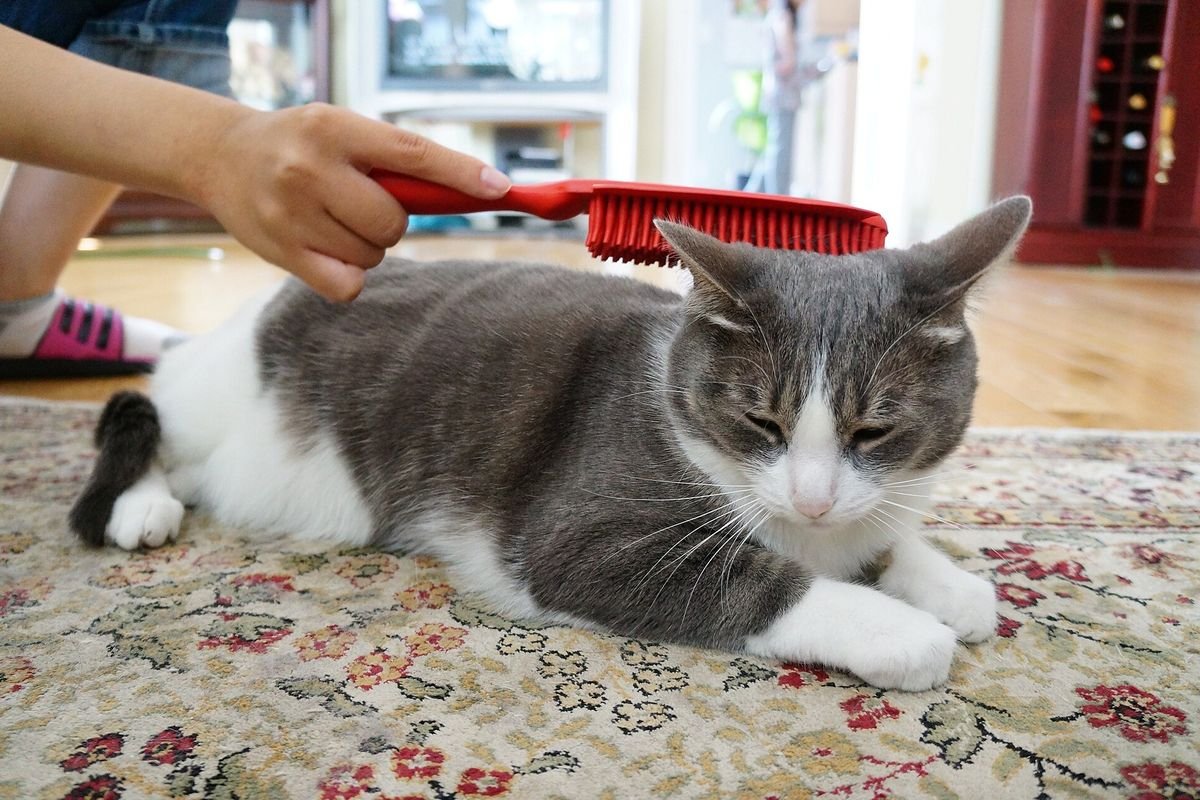
A study of stroking (Ellis and colleagues, 2015) found cats responded more positively to touch around the face, especially the cheeks, and more negatively near the base of the tail, so start at the head. Use a soft or rubber brush for a few short strokes and stop while your cat still enjoys it.
Brushing a cat who sheds a lot and has never been brushed
One of the cats sheds a lot of hair and had never been brushed before. If that sounds like your foster, go slowly:
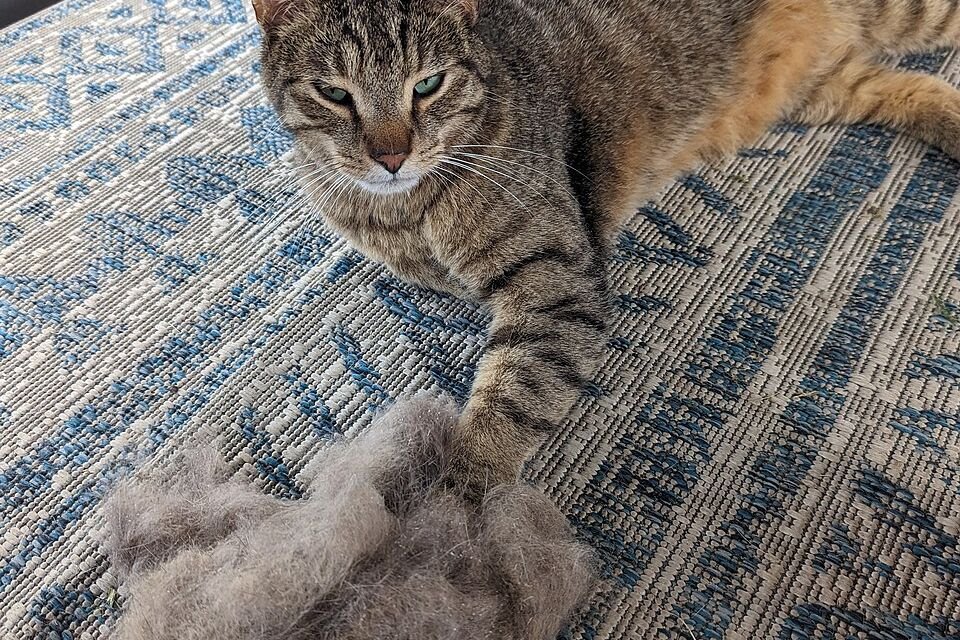
- Start with hands, then the brush. Stroke the cheeks and head first, and let the cat sniff the brush before it touches fur.
- Keep sessions short – a few strokes to start, with a treat, and stop while the cat is still happy. Build up over days.
- Choose a gentle tool. The ASPCA says a rubber brush can be especially effective for removing dead hair on short-haired cats. Brush in the direction the coat grows. Save stronger deshedding tools for later, once the cat enjoys brushing, and go lightly.
- Brushing helps with hairballs. Cornell’s Feline Health Center notes that cats swallow loose hair as they groom, and recommends brushing and combing to cut down on hairballs, which are more common in shedding seasons.
- Check the skin as you go. The ASPCA notes bald patches or significant hair loss can point to a health problem. Look for redness, bumps, scabs, fleas or flea dirt, and tell your rescue about anything unusual.
Stop at the first sign of overstimulation: tail flicking, skin twitching, ears turning back, or a sudden head turn toward your hand. For a shy cat, brushing comes later, once stroking is comfortable.
When to call the rescue or a vet
Your first call is usually the rescue – most have their own vet and approval process, so check your rescue’s policy, including after hours. Watch for:
- Emergency: straining to pee with little or no urine, especially in a male cat. Cornell calls urethral obstruction an absolute emergency and notes males are at greater risk. Go to a vet right away.
- Not eating for about 24-48 hours. International Cat Care says very anxious cats may not eat on day one, but to speak to your vet team if it continues. Cats that stop eating risk hepatic lipidosis (fatty liver), which Cornell warns can be fatal if not treated promptly.
- Not using the litter box, especially no urine in about 24 hours – call the same day.
- Vomiting, diarrhea or lethargy.
- Sneezing or eye or nasal discharge. Cornell notes respiratory infections are common in shelters, and stress can trigger flare-ups.
- Hiding that gets worse, especially with any sign above.
Foster-specific tips: work with your rescue
Policies vary by rescue, so ask early who pays for vet care, which clinic to use, and what needs approval – including medications, supplements or calming products you might buy.
A few habits make fostering smoother:
- Save your rescue’s emergency number and the nearest 24-hour vet before day one.
- Wash your hands and keep foster supplies separate from any resident pets, since shelter cats can carry respiratory infections, ringworm or parasites.
- Keep simple records of eating, litter use, weight if asked, and behavior.
- Track schedules for vaccinations or medication.
- Take photos and short videos for adoption listings.
- Share behavior notes to help match each cat with the right adopter.
- Do not introduce resident pets without the rescue’s okay.
- Plan for goodbye. It is hard, but your patience is part of what makes a cat ready for a home.
Helpful supplies for settling in new cats
We have not tested these; they are well-known options that fit the advice above. Listings and stock change, so check the current listing, and ask your rescue first.
GoCat Da Bird Single Pole Teaser
A feather wand on a 36-inch rod for play at a distance – good for shy and playful cats alike. Store it after play, since feathers can be chewed.

Da Bird feather wand toy with a cat (same product line; not the exact listing). Photo: Reiny79, CC BY-SA 3.0, via Wikimedia Commons (resized)
GoCat Da Bird Single Pole Teaser
Feather wand for distance play; suits shy cats warming up and playful cats needing exercise.
Check price on AmazonINABA Churu Lickable Cat Treats
Lickable treats are handy for nail-trim training. Keep treats a small part of the diet, and ask your rescue about special diets.

CIAO Churu lickable treat tube (same Churu line, Korean packaging; not the exact listing). Photo: Audtn8520, CC BY-SA 4.0, via Wikimedia Commons (resized)
INABA Churu Lickable Cat Treats
Lickable treats that keep a cat busy during paw handling and nail-trim training.
Check price on AmazonCoastal Pet Safari Cat Deluxe Nail Trimmer
A small, cat-specific scissor-style trimmer. Whatever you use, trim only the clear tip and ask for a demo if you are new to it.

Scissor-style cat nail clipper (item type; not the exact product). Photo: Flanoz, CC0, via Wikimedia Commons
Coastal Pet Safari Cat Deluxe Nail Trimmer
Small scissor-style cat trimmer for owners learning to clip just the clear tip.
Check price on AmazonKONG Rubber Brush for Cat
A soft rubber brush is a gentle way to start brushing, especially for short coats. Long-haired cats may also need a comb for tangles.
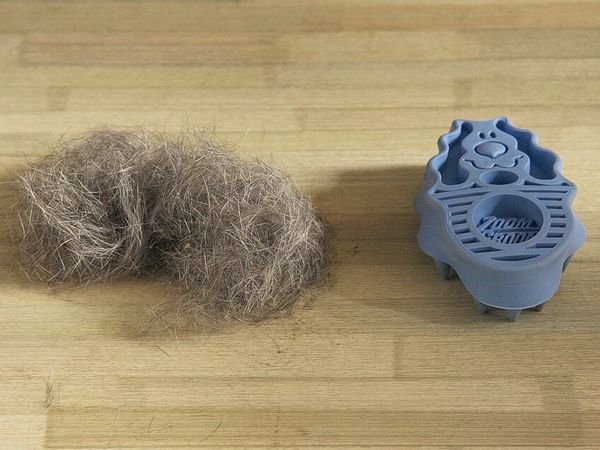
KONG ZoomGroom rubber brush with brushed-out fur (KONG rubber brush line; not the exact listing). Photo: Maja Dumat, CC BY 2.0, via Wikimedia Commons (resized)
KONG Rubber Brush for Cat
Soft rubber brush for gentle first brushing sessions, best for short-coated cats.
Check price on AmazonBedsure Cat House Bed for Indoor Cats
A covered bed gives a shy cat a hiding spot you can still reach. A box on its side works too.

Covered cat house (item type; not the exact product). Photo: Nori Norisa, CC BY 4.0, via Wikimedia Commons (resized)
Bedsure Cat House Bed for Indoor Cats
Covered hideaway bed giving a shy new cat a reachable place to hide.
Check price on AmazonFELIWAY Classic Cat Calming Diffuser Kit
A plug-in pheromone diffuser for a safe room. Evidence is mixed: reviews found limited support, with some studies showing modest effects. Treat it as an optional extra.

Relaxed cats resting at home (item type, not the exact product). Photo: Michael Cat, CC BY-SA 4.0, via Wikimedia Commons (resized)
FELIWAY Classic Cat Pheromone Calming Diffuser Kit
Optional plug-in pheromone diffuser for a safe room; evidence is mixed, check with your rescue.
Check price on AmazonFAQ
How long does it take a new foster cat to settle in?
It varies. Confident cats may explore within hours; International Cat Care notes some cats take several weeks to feel safe.
Why is my new foster cat hiding?
Hiding is a normal stress response to a new place. Offer hiding spots and a steady routine, and contact your rescue if hiding comes with not eating or signs of illness.
Should I pull a hiding cat out?
No, unless there is a safety or medical reason; it can make the cat more fearful. Sit nearby, offer treats and wait.
My new foster cat is not eating – when should I worry?
Very anxious cats may eat little on day one. If a cat has not eaten for about 24-48 hours, contact your rescue or vet; cats that stop eating risk a serious liver condition, hepatic lipidosis.
Do pheromone diffusers like Feliway work?
The evidence is mixed. A 2010 review found insufficient evidence for most uses; a 2023 review found moderate evidence of less acute stress at vet visits. They may help a little but do not replace a safe room.
How do I trim a nervous cat’s nails?
Go slowly with treats: paw touches, then pressing a toe pad, then the clippers, starting with one nail per session. Trim only the clear tip and stop before your cat gets stressed.
When is the best time to trim a new foster cat’s nails?
When the cat is calm and drowsy – for example after a meal, or once they have wound down after play – and only after some treat-based paw-handling practice. Do one or two nails per session, snip only the clear tip, and check paws about weekly. If nails are very long or curling toward the pads, or the cat has scratched you, ask your rescue’s vet team or a groomer to do the first trim.
Can two new cats share a safe room?
If they are already bonded, often yes – ask your rescue. Strangers should start in separate rooms and be introduced gradually.
Bottom line
Settling in a new foster cat comes down to a safe room, a steady routine and patience. A shy cat like Lulu needs time; a curious cat like Fufu needs play. Both are normal.
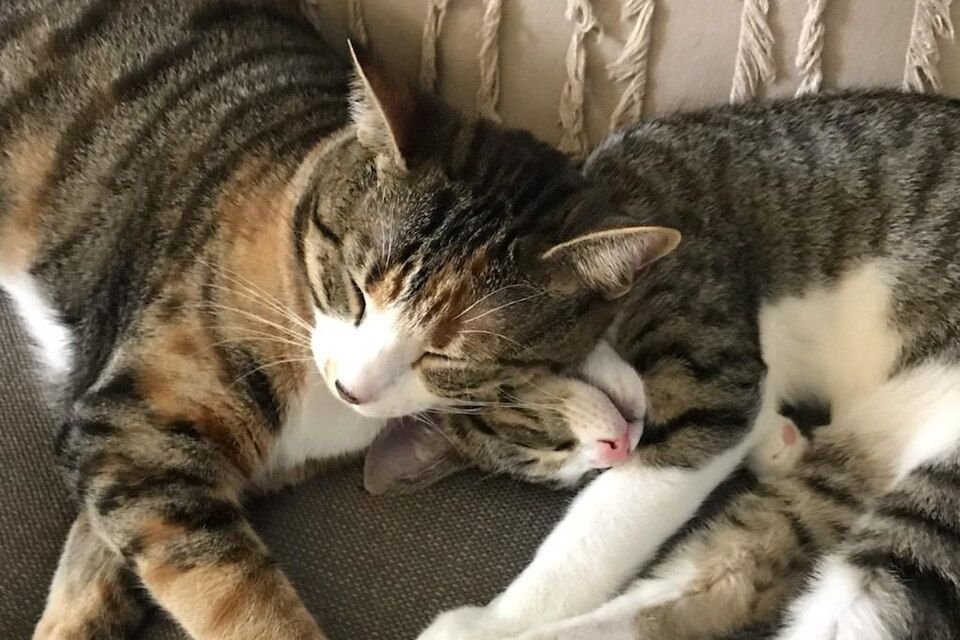
Our friend’s two lessons are worth repeating: treats help a lot, and treat training is why she can now trim their nails. Food is a great motivator for building trust, and a brushing routine like the one Fufu enjoys can turn handling into a bonding ritual. Hold off on picking up a new cat until trust is built. If anything worries you, especially not eating or litter box trouble, call your rescue or vet.