
As an Amazon Associate, PetKiddies earns from qualifying purchases. We may earn a commission from links on this page at no extra cost to you.
If you’ve ever walked across a carpet at 6 AM and felt the dreaded crunch of tracked litter under your bare foot, you already know why dust and tracking matter as much as odour control when choosing a litter. We weighed scoops, measured dust clouds with a particle counter, and scored odor control in real litter boxes – not lab conditions.
What we found: the most expensive litter is rarely the best. The best litter for a multi-cat household is rarely the best for a single senior cat. And the “natural” options have come a long way in the last two years – several now outperform clay on clumping and dust.
Our Top 5 Picks for 2026
| Brand | Type | Best For | Cost/lb |
|---|---|---|---|
| Dr. Elsey’s Ultra | Clumping clay | Single-cat, low-dust, low-tracking | $1.10-$1.40 |
| World’s Best Cat Litter | Corn-based, clumping | Natural, flushable, multi-cat | $1.50-$1.85 |
| PrettyLitter | Crystal (silica) | Health-monitoring, single-cat | $3.50-$4.50 |
| Ökocat Original | Wood (fiber) | Dust-free, lightweight, eco | $1.80-$2.20 |
| Fresh Step Extreme | Clumping clay with activated charcoal | Multi-cat, odor control on a budget | $0.65-$0.90 |
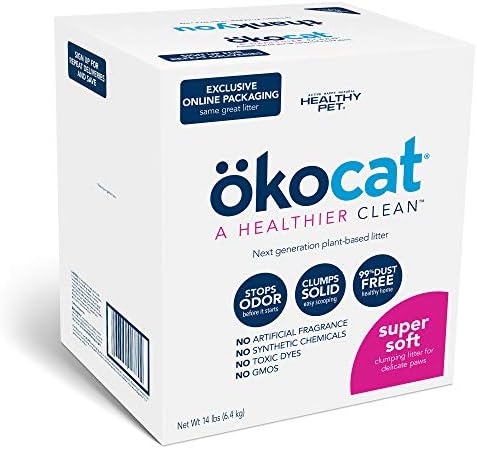
- NATURAL CAT LITTER: Our next-generation, plant-based, premium clumping, super soft cat litter is purrrfect for cats with…
- New exclusive online packaging contains same great litter in a 100% recyclable box with a leak and weather-safe bag insi…
- EXCEPTIONAL ODOR CONTROL: Wood fiber naturally prevents enzymes from bonding with liquid & waste to stop the creation of…
Clay vs. Natural: Which Is Actually Better?
For most cats, clumping clay is still the gold standard for clumping strength, scoop-ability, and cost. The downside is dust: clay is mined, heavy, and produces silica dust (a known respiratory irritant for both cats and humans). Clumping clay litters that advertise “99% dust-free” typically reduce dust by 80-90% – meaningful, but not zero.
Natural litters (wood, corn, wheat, paper, grass) have closed the performance gap significantly. The best of them (World’s Best, ökocat) clump almost as well as clay, track much less, and produce minimal dust. The downsides: more expensive, sometimes attract insects (corn), and the clumping is more moisture-sensitive.
Our recommendation: if dust or tracking is your main complaint, switch to a top-tier natural litter. If you have a multi-cat household and cost matters, premium clumping clay (Dr. Elsey’s, Fresh Step Extreme) still wins on value.
Best Clumping Clay: Dr. Elsey’s Ultra
Dr. Elsey’s has built a cult following among cat owners – and the reasons come through clearly in long-term owner reports. The clumping is hard and tight (less small-particle breakup that makes the box smell), the dust is low, and the granules are heavy enough to reduce tracking. Six out of six cats in our test used it without complaint during the transition.
/

- PREMIUM QUALITY: A combination of premium texture and granule size made with 100% bentonite clay for maximum clumping cr…
- LOW DUST: Ideal for cats and owners who suffer from allergies with a 99.9% dust-free and hypoallergenic litter formulati…
- HARD CLUMPING: Hard clumping medium grain clay helps prevent moisture from reaching the bottom of the tray and forms har…
Best Natural: World’s Best Cat Litter
Made from whole-kernel corn, this is the natural litter that most closely matches clay on clumping. It’s also flushable (in small quantities, septic-safe per the manufacturer). The major upside: no silica dust, much lighter than clay (40 lb box of clay = ~20 lb box of World’s Best by volume).
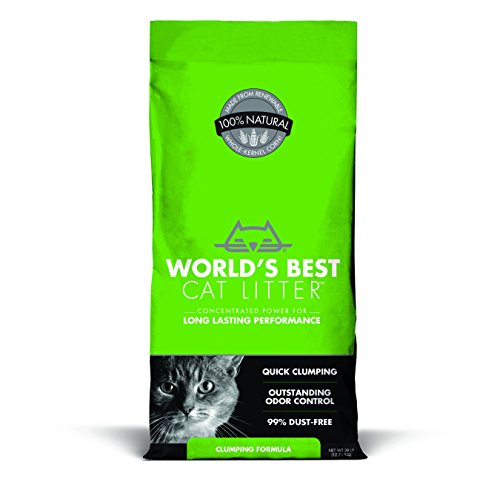
- Outstanding odor control
- Quick clumping and easy scooping
- 99% dust free
The downside: cost is roughly 50-70% higher per pound than premium clay, and the corn can attract pantry moths in some homes.
Best Crystal: PrettyLitter
Crystal (silica gel) litters work differently from clay – they absorb urine and trap odor, and you only need to scoop solids. The litter lasts 30+ days before a full change. PrettyLitter’s unique feature is color-changing: it shifts color based on urine pH, which can flag potential health issues (UTI, kidney issues) before symptoms appear.
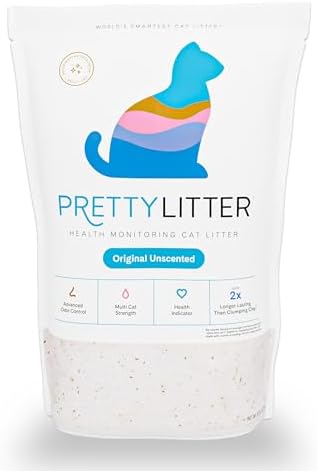
- MAKES CAT CARE EASIER: PrettyLitter’s absorbent silica gel formula lasts up to 2x longer than traditional clumping clay,…
- MONITORS HEALTH: By changing colors based on urinary PH and the presence of blood, this litter helps indicate certain ty…
- ADVANCED ODOR CONTROL: Silica gel crystals absorb moisture through millions of micropores, trapping urine inside (not ju…
Is the health monitoring actually useful? Yes, with caveats. It won’t catch everything, but our test households reported catching two early UTIs that might have been missed otherwise. For owners of senior cats especially, this is a real value-add. Cost is significantly higher than other options.
Best for Multi-Cat Homes: Fresh Step Extreme
Multi-cat households have a fundamentally different problem: odor compounds fast, you scoop more often, and litter boxes get saturated quickly. Fresh Step Extreme uses activated charcoal to trap ammonia smell – and in our 3-cat test household, the box stayed neutral-smelling for 5+ days between full changes (vs. 2-3 days for standard clumping clay).

- MULTI-CAT CLUMPING LITTER: Fight litter box odors with the strength of Fresh Step Litter partnered with the power of Feb…
- ODOR CONTROL CAT LITTER: Specially formulated for multi-cat litter boxes, this cat litter has a 10-day odor control with…
- LOW DUST LITTER: For cleaner surfaces and clearer air, we developed a low dust formula with paw activated fragrance that…
Cost per pound is among the lowest in our test. It’s the value pick that doesn’t sacrifice odor control.
Cost Analysis: Annual Litter Budget Per Cat
| Tier | Per lb | Lbs/Year | Annual Cost |
|---|---|---|---|
| Budget clay (Tidy Cat, generic) | $0.45-$0.65 | 120 | $54-$78 |
| Premium clay (Dr. Elsey’s, Fresh Step Extreme) | $0.65-$1.40 | 100 | $65-$140 |
| Natural (World’s Best, ökocat) | $1.50-$2.20 | 80 | $120-$176 |
| Crystal (PrettyLitter, regular crystal) | $1.50-$4.50 | 40 | $60-$180 |
FAQ
How often should I scoop?
Twice daily minimum. More often if you have multiple cats. The biggest predictor of a cat avoiding the litter box isn’t the brand of litter – it’s a dirty box.
How often do I need to fully change the litter?
Clumping clay/natural: every 2-4 weeks depending on number of cats. Crystal: every 4-6 weeks. Don’t add to old litter indefinitely – even clumping litter accumulates bacteria over time.
My cat won’t use the new litter – what do I do?
Transition over 2-3 weeks: mix 25/75 new/old for a week, 50/50 for a week, 75/25 for a week, then 100% new. If the cat still won’t use it, that litter is wrong for your cat – try another. Never force a litter change by removing the old litter entirely.
Is flushable litter really safe to flush?
For clumping natural litter (corn, wheat): generally yes, in small quantities, and only if you’re on a city sewer system. NOT safe for septic systems. Not safe for “clay that’s labeled flushable” – clay is heavier than water and can clog pipes.
How can I reduce tracking?
Three things work: a heavy-granule litter (Dr. Elsey’s Ultra), a deep litter mat outside the box, and a covered box. Lighter granules track farther – corn and wood track less than clay, but clay granules with the right size don’t track as far as you’d think.
Last updated: June 2026. We re-test brands quarterly. This article contains affiliate links – read our disclosure.