
As an Amazon Associate, PetKiddies earns from qualifying purchases. We may also earn from other affiliate links on this page at no extra cost to you.
A quick note: we are not vets, and this is not veterinary advice. This guide is research-based, drawing on International Cat Care, the AAFP and ISFM, the Ohio State Indoor Pet Initiative, VCA Animal Hospitals and the ASPCA, and we have not hands-on tested the products mentioned. If your cat is a senior or has trouble jumping or climbing, ask your own vet what is right for them before you buy.
Last updated: Nov 9, 2026
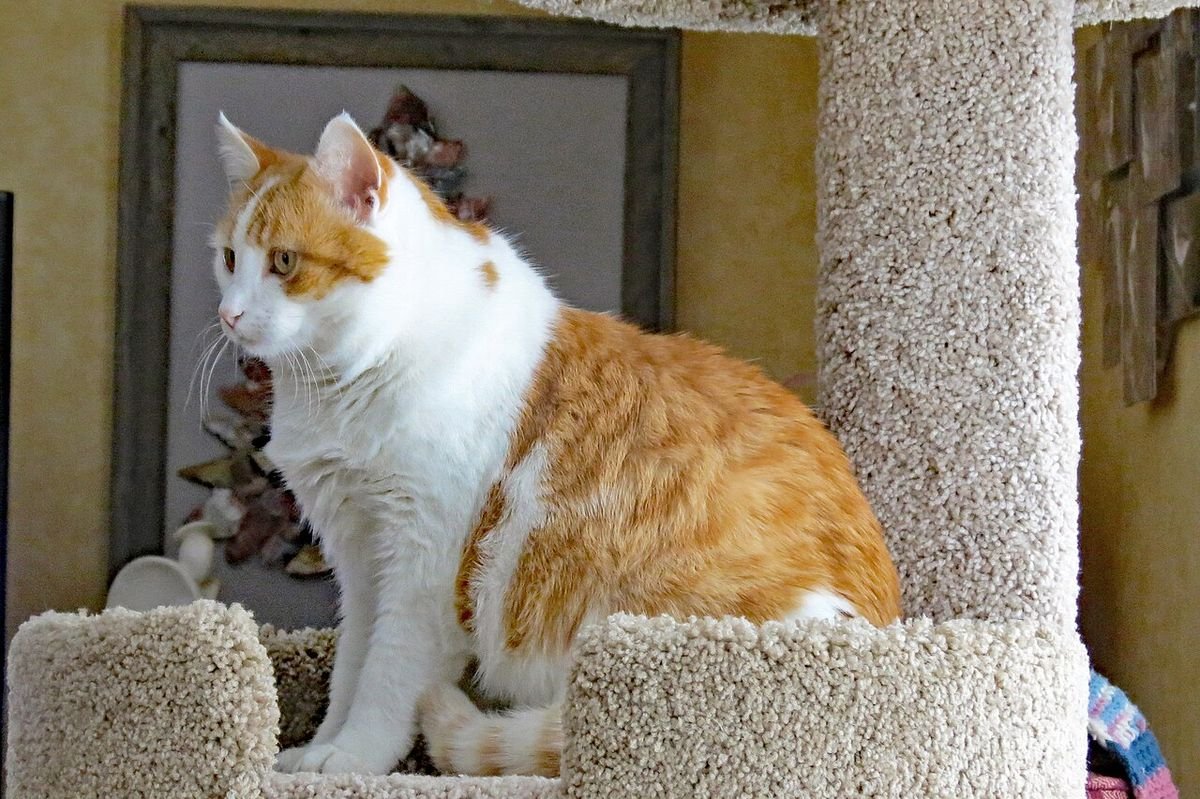
A cat tree does several jobs at once: a place to climb, a perch to watch the room from, and a sturdy spot to scratch. Interest in cat trees tends to climb ahead of the holidays, when many owners shop for Black Friday or for a gift to put under the Christmas tree.
The catch is that cat trees vary a lot. A wobbly or undersized one may sit unused, or worse, tip over. This guide covers how to size, check and place a cat tree for an indoor cat, with a few product types worth a look. We researched listings only; we have not tested any of them.
Quick answer
- Stability first. Choose a wide, heavy base that suits your cat’s size, and anchor tall trees to the wall.
- Match height to your home and your cat. Mind your ceiling height, and go lower with easy steps for kittens and older cats.
- Look for sisal. Scratching posts should be tall and sturdy enough for a full stretch, and sisal is a favorite material of experts.
- Check the perches. Platforms and beds should be big enough for your cat to rest on comfortably.
- Prefer replaceable or washable parts. Worn posts and dirty covers are easier to deal with if you can swap or wash them.
- Compare dimensions, not just price, especially in holiday sales.
Why indoor cats like vertical space
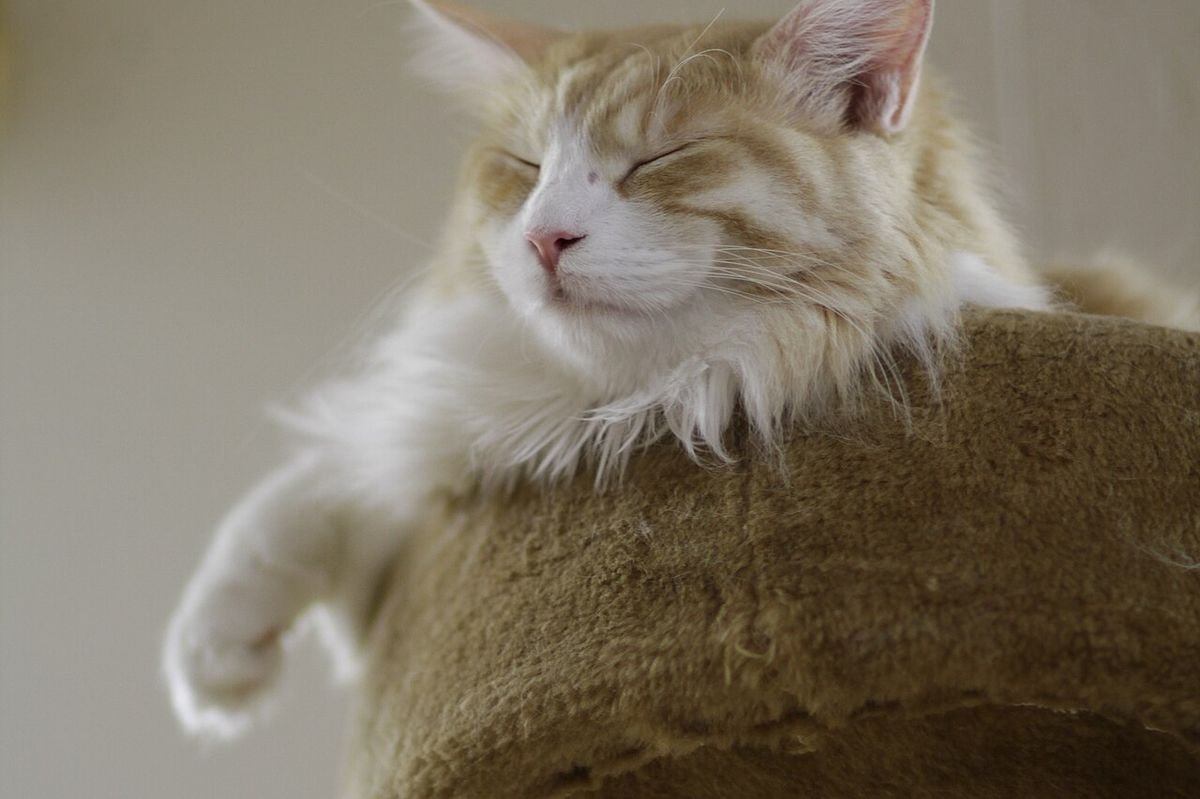
International Cat Care says cats are natural climbers that “need to be able to rest and watch over their surroundings from high places, as this is where they feel safe.” The Ohio State Indoor Pet Initiative says cats need something that lets them get up off the ground, and describes a perch as anything that lets a cat lie, sit, sleep or look outside from above.
VCA Animal Hospitals adds that a high space can give a cat somewhere to retreat from other pets or children, and says this may decrease conflicts between cats. The AAFP and ISFM Feline Environmental Needs Guidelines say it is vitally important to meet cats’ needs and let them express natural behaviors, to prevent stress. A cat tree is one easy way to give an indoor cat a climbing spot, a lookout and a scratching post in one place.
Sizing guide
The heights below are our rough rules of thumb, not figures from a standard. Always check the listing’s stated dimensions and your own ceiling height.
| Cat or household | Height | Perches and base | Look for |
|---|---|---|---|
| Kitten | Low to medium | Small steps between levels, a base that does not tip | Easy climbing and a post for scratching |
| Adult, average size | Medium to tall, as your ceiling allows | Perches big enough to stretch out on | Sisal posts and a wide base |
| Large breed (e.g. Maine Coon) | Medium to tall | Extra-wide perches, a heavy and wide base | Large-cat wording on the listing, thick posts, wall anchor |
| Senior | Low, or tall with easy steps | Wide platforms, low first step or ramp | Non-slip surfaces and an easy way down |
| Multi-cat home | Tall, or more than one tree | Several perches so cats can avoid each other | More than one way up and down |
Stability comes first
A tree that rocks when your cat jumps on it may teach your cat to avoid it. Look for a wide, heavy base, because a taller tree needs a bigger footprint. VCA advises anchoring a tall cat tree to the wall to prevent injury to your cat or others in the home. Many tall trees come with a strap or anti-tip fitting, so check the listing.
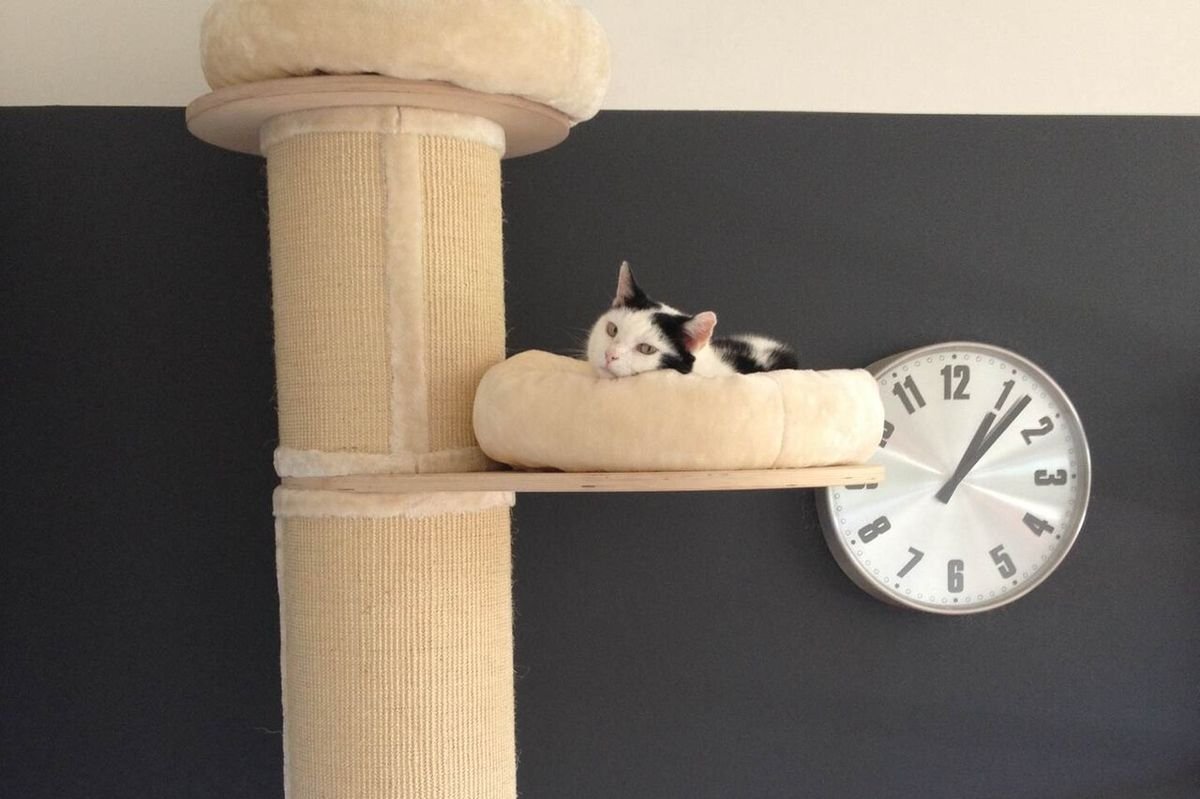
After assembly, push on the top and shake each platform. Tighten any loose screws, and hold off using the tree until it feels solid. Weight limits are worth a look, but only trust them when the listing states one for that exact model.
Materials and build
- Sisal. The Ohio State Indoor Pet Initiative says sisal posts are ideal because they are satisfying to scratch and tough enough for repeated use. The ASPCA also lists sisal among rough materials for scratching posts.
- Carpet and cardboard. International Cat Care notes cats usually have a favorite scratching material, such as sisal, cardboard or carpet, so offering a variety helps you find it.
- Replaceable posts. A worn post is easier to deal with if the brand sells a replacement or the post can be swapped out.
- Washable covers. Removable covers or hand-washable parts make upkeep easier. Read the care notes on the listing.
- Perch size. International Cat Care says beds on cat trees should be large enough for your cat to rest comfortably, otherwise they are less likely to use them. Hammocks and baskets are fun, but check the size against your cat.
Placement tips
The Ohio State Indoor Pet Initiative says more than one perch lets a cat look outside at different angles, so a spot near a window can make a tree more interesting. For scratching posts, it suggests putting them where cats gather, such as near sleeping areas and along routes to food, water and litter.
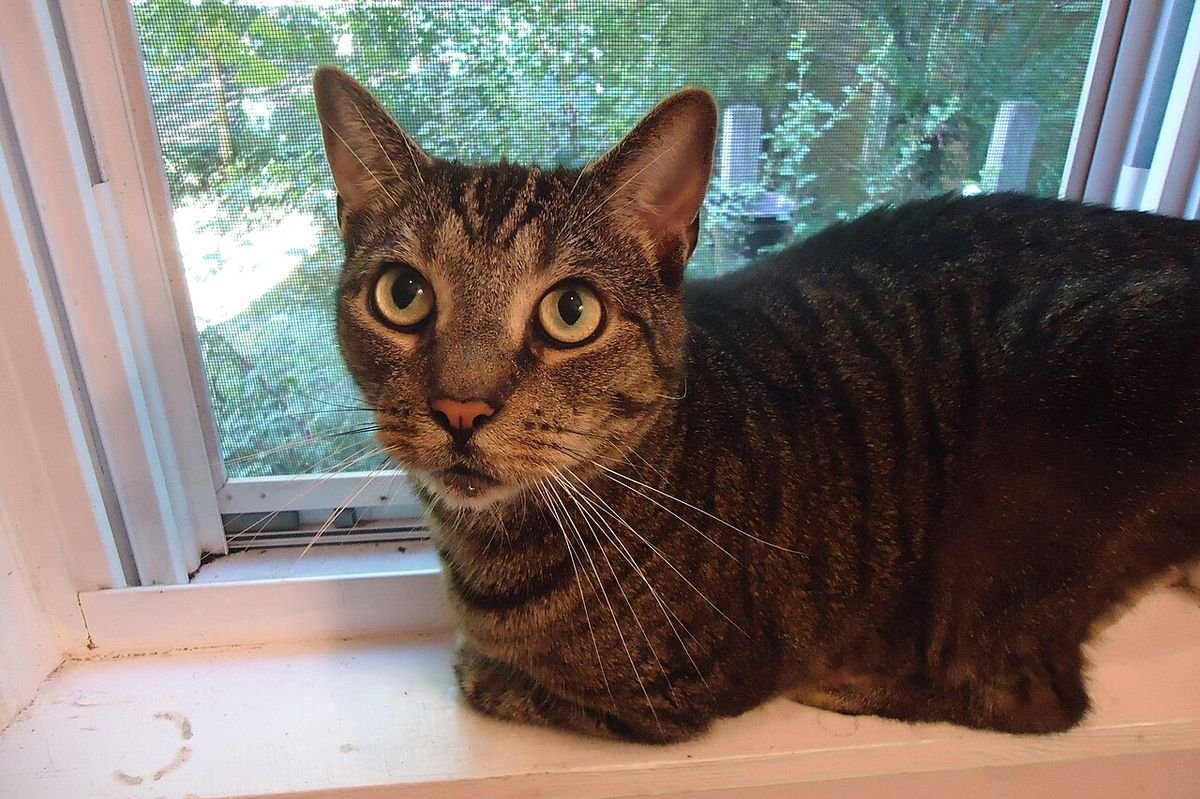
Cats also need quiet. Ohio State describes a refuge as an out-of-the-way area where a cat can retreat when it needs time alone, so a tree in a calmer corner can help too. If you put up a holiday tree, keep the cat tree well away from it; see our cat-proof Christmas tree guide.
Senior cats and multi-cat homes
International Cat Care says to make sure your cat can get down easily from high places, especially older cats, who may have limited mobility, and suggests a halfway platform for easy access. For seniors, that could mean low steps, a ramp and wider platforms. It also advises a non-slip surface on shelves, as many wooden ones are extremely slippery.
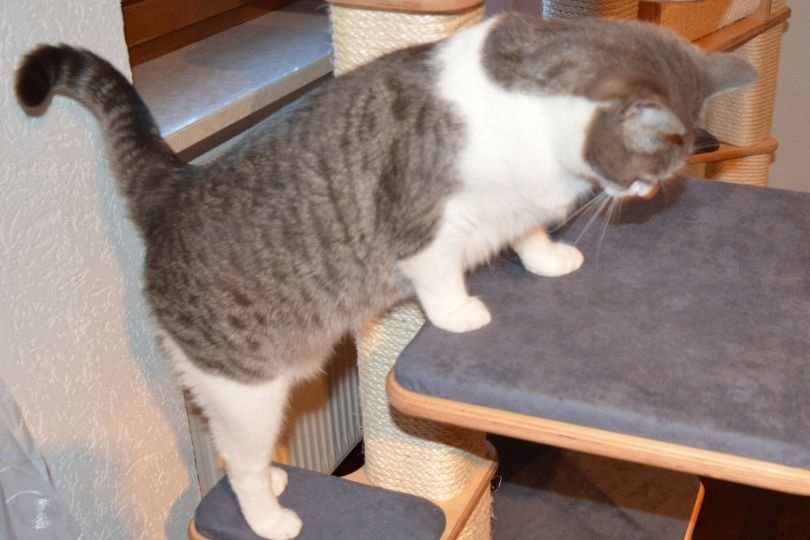
If your cat seems to hesitate before jumping, or avoids climbing, mention it to your vet, and see our guide to changes for senior cats. In multi-cat homes, International Cat Care recommends resources such as scratching facilities in sufficient numbers, a minimum of one per cat plus one extra, spaced around the home to help prevent competition.
Wall shelves vs freestanding trees
- Wall shelves, pros: they use wall space instead of floor space, and VCA notes they let a cat jump from shelf to shelf up the wall.
- Wall shelves, cons: they need secure mounting. VCA says to check the maximum weight rating, and in a multi-cat home to be sure a shelf can support more than one cat’s weight.
- Freestanding, pros: no drilling, and many include posts, beds and perches in one unit.
- Freestanding, cons: a bigger footprint, and taller ones need anchoring.
Getting your cat to use it
Put the tree where your cat already spends time. International Cat Care says some cats find catnip particularly attractive, and VCA suggests hiding treats, catnip or a favorite toy up high. A short play session with a wand toy near the tree can help too; see our interactive cat toys guide. Be patient, and do not force your cat onto it.
Picks worth a look
We checked these listings on amazon.com on Nov 9, 2026. Listings change, so read each full listing for dimensions, assembly notes and current availability before buying. We have not tested any of them.
Compact tower for small spaces and kittens
A shorter tree suits apartments and kittens. The listing title for this one gives a 33.1-inch height and describes it as for large cats up to 16 lb, with a large perch, two caves and a scratching post. Check the base size and whether the perch fits your cat.
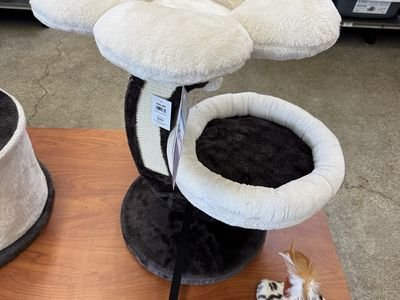
Compact cat tower (illustrative photo, not the exact product). Photo: Missvain, CC0, via Wikimedia Commons
Feandrea Cat Tree (33.1 in, perch, 2 caves)
Listing title gives 33.1 in height, for large cats up to 16 lb, with a large perch, 2 caves and a scratching post. Check base size and assembly.
Check price on AmazonHeavy-duty tree for large cats
If you have a big cat or a multi-cat home, look for large-cat wording, a wide base and a wall anchor. The search results below are a starting point: compare heights, post thickness and base footprints across listings, and measure your ceiling first.
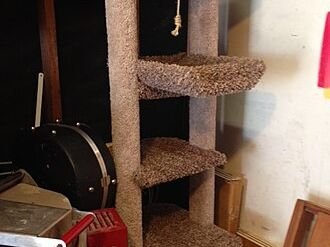
Tall cat tree (illustrative photo, not the exact product). Photo: MPlauche, CC BY-SA 4.0, via Wikimedia Commons (resized)
Heavy-duty cat trees for large cats (search results)
Search results for heavy-duty trees. Look for large-cat wording, thick sisal posts, a wide base and a wall anchor, and measure your ceiling.
Search on AmazonWall-mounted shelf set
Shelf sets suit people short on floor space and willing to mount hardware. Compare a few sets in the search results below and check the mounting instructions, the weight rating and whether your walls suit them.
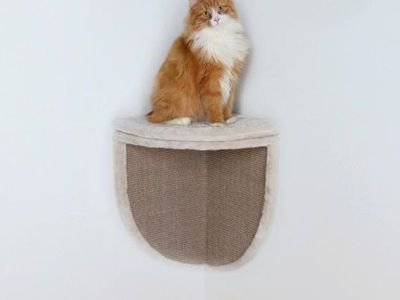
Wall cat shelf (illustrative photo, not the exact product). Photo: Oleg Royko, CC BY-SA 4.0, via Wikimedia Commons (resized)
Wall-mounted cat shelves (search results)
Search results for wall shelf sets. Check the weight rating, mounting hardware and whether your wall type suits them.
Search on AmazonTall sisal scratching post
A standalone post also works as an add-on when your tree’s posts are worn. The ASPCA suggests a sturdy post at least three feet high that does not wobble, and this listing gives a 32-inch sisal post, a little under that guideline, so it may suit average-size cats better than long-bodied ones. Check the base size for stability.
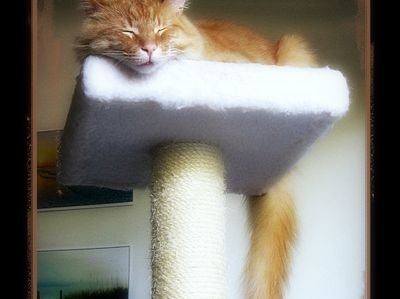
Sisal post (illustrative photo, not the exact product). Photo: Trish Hamme from Reno , Nevada, USA, CC BY 2.0, via Wikimedia Commons (resized)
SmartCat Ultimate Scratching Post (32 in, sisal)
Listing gives a 32-inch sisal post tower. Handy as an extra scratching spot or replacement for worn tree posts; check the base size.
Check price on AmazonBlack Friday tip
Sales can make a tree look like a bargain, so compare listing dimensions and base size, not just price. A cheaper tree that is too small or wobbly for your cat is no bargain. We track offers on our Black Friday and Cyber Monday pet deals page and have more ideas in Christmas gifts for cats. You can also browse Walmart’s Black Friday deals.
FAQ
How tall should a cat tree be?
It depends on your cat, your ceiling and your space. Kittens and older cats often do better with lower trees, while agile adults may like taller ones if the base is stable.
Do I need to anchor a cat tree to the wall?
VCA advises anchoring a tall cat tree to the wall to prevent injury to your cat or others in the home. Many tall trees include a strap or anti-tip fitting.
What material is best for scratching?
The Ohio State Indoor Pet Initiative calls sisal ideal. International Cat Care notes cats have preferences, so offer a variety of surfaces.
Where should I put a cat tree?
Near a window or where your cat already spends time is a good start. Keep it away from your Christmas tree.
Do multi-cat homes need more than one tree?
International Cat Care recommends at least one scratching facility per cat plus one extra, spaced around the home. Several perches also give cats a choice of where to rest.
Is a cat tree OK for a senior cat?
Often, if it has low steps or a ramp, wide platforms and an easy way down. Ask your own vet if your cat seems stiff or hesitant to jump.
Bottom line
A good cat tree is steady, sized for your cat and placed where your cat likes to be. Take your time, check the dimensions, and ask your vet about any mobility concerns.
More from PetKiddies
- Best interactive cat toys for indoor cats
- Heated cat beds for winter
- How to cat-proof a Christmas tree
- Environment changes for senior cats
- Christmas gifts for cats
- Black Friday and Cyber Monday pet deals
Sources
- International Cat Care, “Making your home cat friendly” (accessed Nov 9, 2026). icatcare.org
- Ohio State Indoor Pet Initiative, perches, scratching and refuge pages (accessed Nov 9, 2026). Perches, Scratching, Refuge
- VCA Animal Hospitals, “Take your kitten to new heights: making use of vertical space” (accessed Nov 9, 2026). vcahospitals.com
- AAFP and ISFM Feline Environmental Needs Guidelines (accessed Nov 9, 2026). catvets.com
- ASPCA, general cat care: scratching (accessed Nov 9, 2026). aspca.org
- Amazon.com product listings, checked via search results Nov 9, 2026.
Featured photo: Photo: James St. John, CC BY 2.0, via Wikimedia Commons (resized)