
As an Amazon Associate, PetKiddies earns from qualifying purchases. We may also earn from other affiliate links on this page at no extra cost to you.
A quick note: we are not vets, and this is not veterinary advice. This guide is research-based, drawing on ASPCA Animal Poison Control, Pet Poison Helpline, VCA Animal Hospitals and the Cornell Feline Health Center. We have not hands-on tested the products mentioned; we researched their Amazon listings. If your cat swallows something or chews a plant, call your vet.
Last updated: Nov 2, 2026
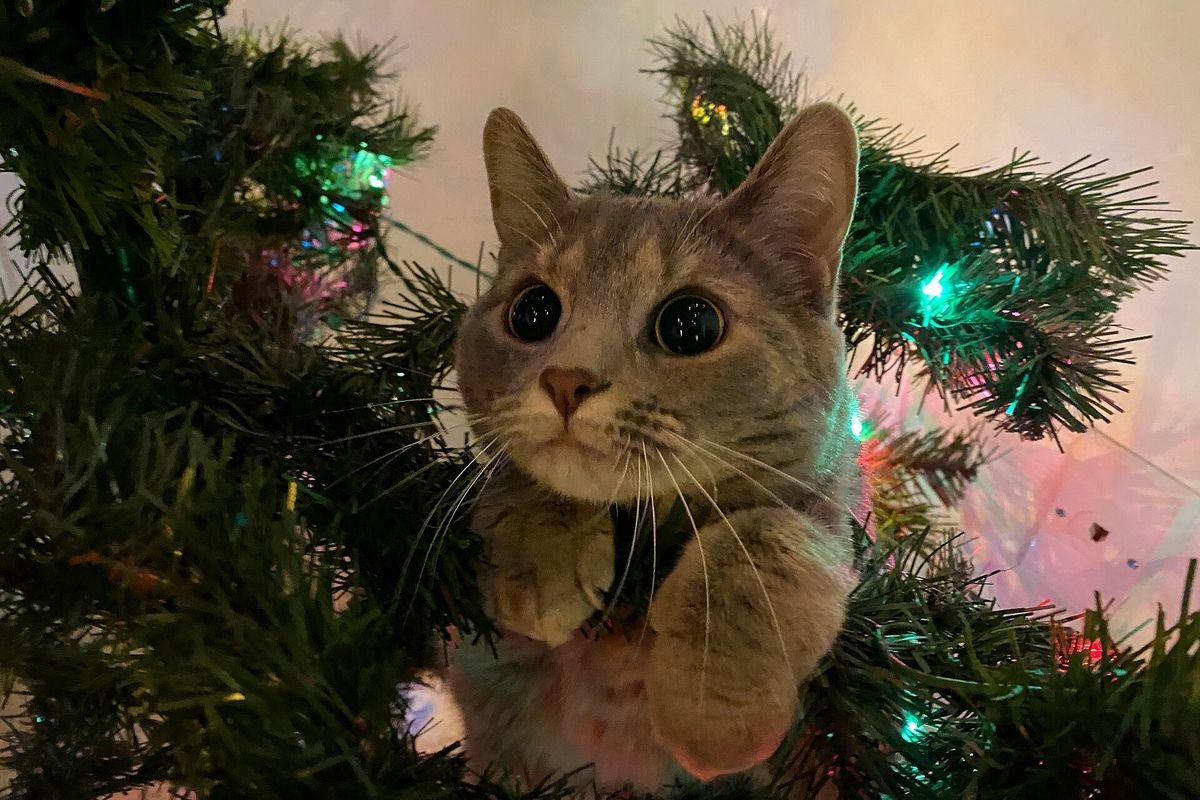
To a cat, a Christmas tree is a climbing frame covered in shiny toys. Cornell’s Feline Health Center says a holiday tree “offers the excitement of the outdoors inside the home.” That is cute until the tree tips over or your cat swallows tinsel.
Our Google Trends check on November 2 found US searches for “cat christmas tree” running about 85% higher over the past week than over the previous four weeks. Here is how to set up a cat proof Christmas tree before the tree goes up, plus gear that can help.
Quick answer: how do you cat-proof a Christmas tree?
- Secure the tree with a wide stand and a wall or ceiling anchor.
- Skip tinsel and loose ribbon. Swallowed tinsel can block the gut and may need surgery.
- Hang shatterproof ornaments low with cloth loops, not metal hooks.
- Cover the tree water and protect light cords.
- Keep lilies out of the house. They can cause kidney failure in cats.
- Offer a better option, like a nearby cat tree, and never punish.
Why cats go after the tree
Cats like to climb and hide, and swaying ornaments look like toys. The ASPCA notes cats love tinsel because it is “sparkly, light-catching and easy to bat around.” It is normal behavior, so the goal is a safe, boring tree and a better place to play.
Holiday tree hazards at a glance
| Holiday tree hazard | Why it matters for cats | What to do instead |
|---|---|---|
| Tipping tree | A climbing cat can pull it over | Wide stand plus a top anchor |
| Tinsel, ribbon, string | Linear foreign body risk; may need surgery | Skip tinsel; keep ribbon off the tree |
| Glass ornaments | Shards can damage the mouth and gut | Shatterproof low; breakables high |
| Metal hooks | Easy to knock down or swallow | Cloth loops or soft ties |
| Tree water | Bacteria can upset the stomach | Plain water, covered basin |
| Light cords | Chewing can cause electrocution | Cord protectors; unplug when out |
| Salt dough ornaments | Severe salt toxicity | No edible ornaments |
| Lilies | Kidney failure in cats | Keep them out; use faux flowers |
Choose and set up the tree
Real or artificial? Pet Poison Helpline suggests an artificial tree so cats cannot get at sap, tree water or needles, which it says can cause nausea, vomiting, skin irritation or stomach injury. Cornell notes even a fake tree may not deter a chewer.
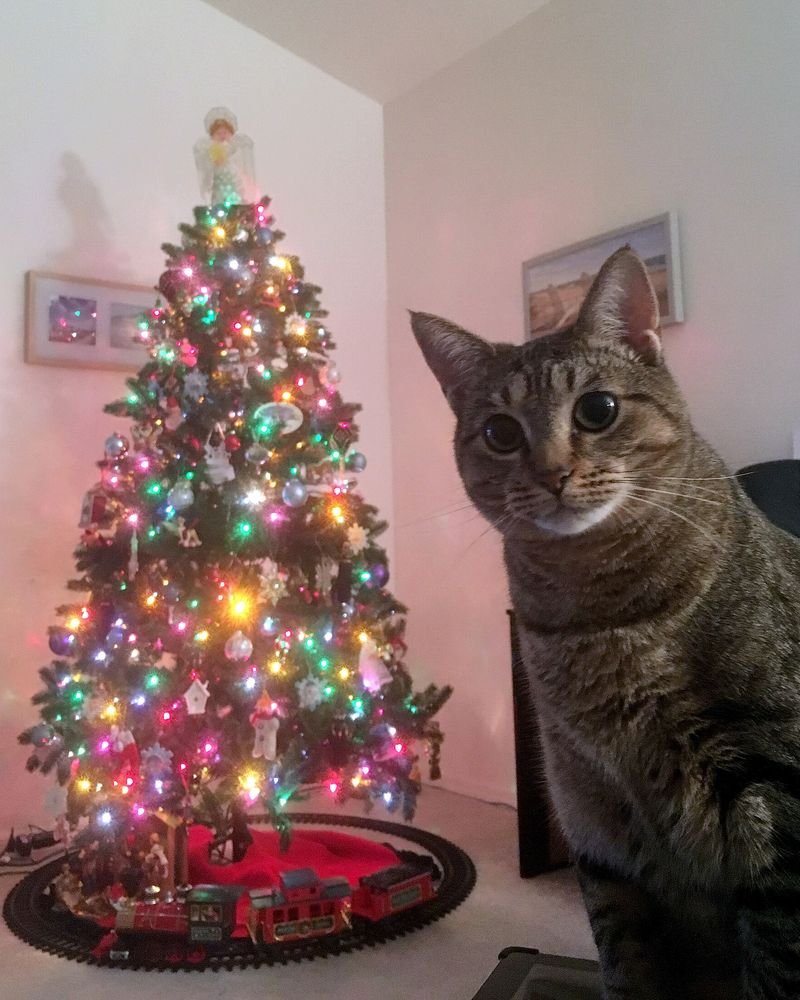
Make it stable. The ASPCA says to secure the tree “so there is no chance it can tip over.” Use a wide, heavy stand, then anchor the top: Cornell suggests a ceiling cup hook with wire or string. A smaller or tabletop tree is easier to secure.
Place it well. Keep it away from sofas and shelves your cat could launch from. Put the bare tree up for a day or two, then add decorations gradually.
Cover the tree water
The ASPCA calls tree water “a breeding ground for bacteria that could cause nausea, diarrhea or stomach upset” and says to keep it covered. Cornell recommends plain water with no chemicals added, so skip additives.
Tinsel, ribbon, hooks and ornaments
VCA Animal Hospitals describes a linear foreign body as a long, thin object “such as string, yarn, and tinsel” in the digestive tract. It can bunch up and even tear the intestines, and treatment usually means surgery. Pet Poison Helpline warns that even small amounts of tinsel can cause a blockage. Skip tinsel, keep curling ribbon away from the tree and use cloth loops instead of hooks, as Cornell suggests.
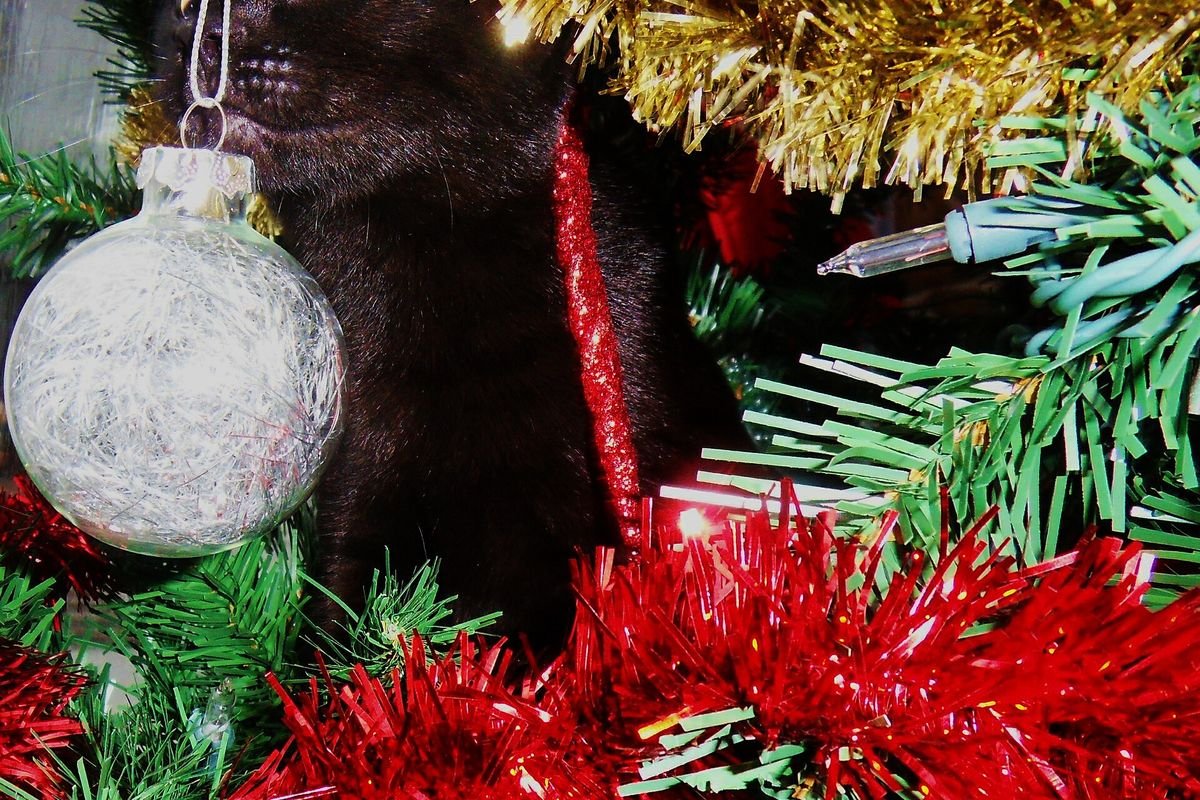
The ASPCA warns broken ornament shards “can damage your pet’s mouth and digestive tract,” so hang plastic, felt or wood ornaments low and keep glass high. Skip edible ornaments: Pet Poison Helpline says salt dough ornaments can cause severe salt toxicity.
Lights and cords
Pet Poison Helpline says cats sometimes chew light strands, “which can cause electrocution,” and advises a vet visit if you find a chewed cord. Cornell suggests a heavy plastic cord protector. Run cords along the wall and unplug the tree when you are out or asleep.
Holiday plants near the tree
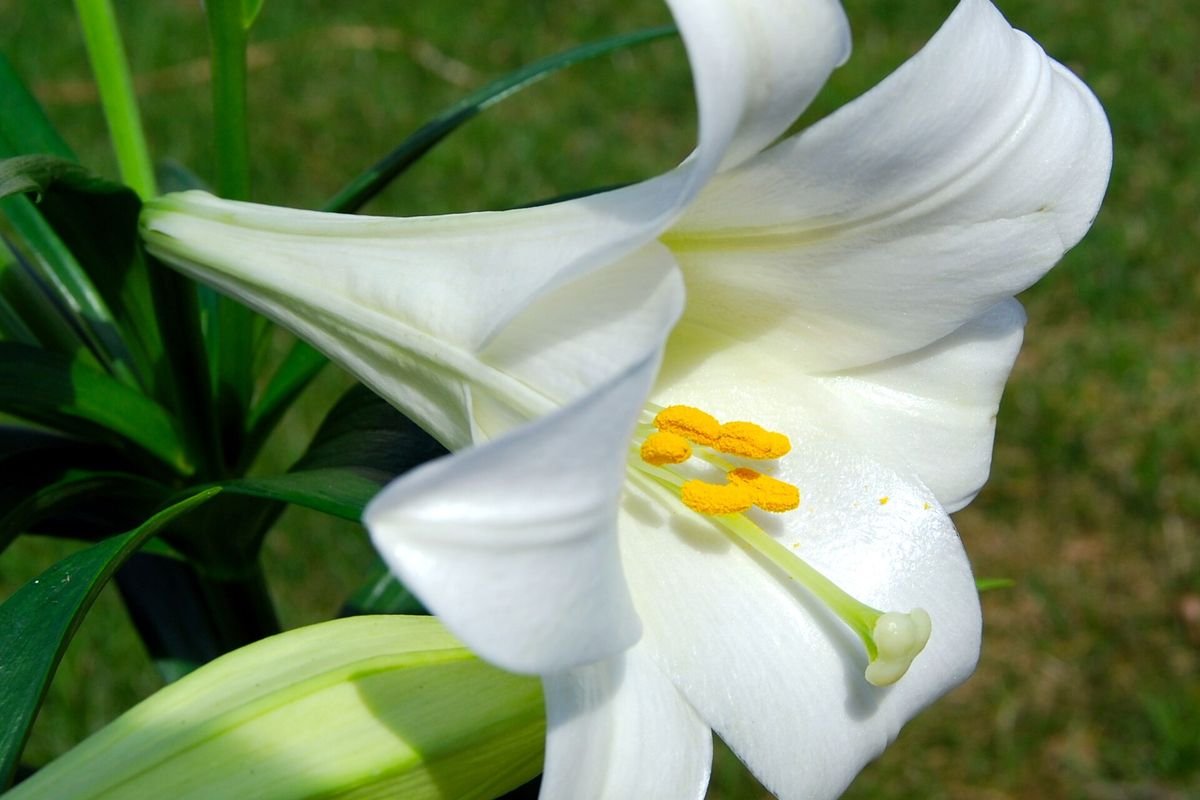
- Lilies: the ASPCA says many bouquet lilies are “highly toxic and can cause kidney failure in cats.” Pet Poison Helpline says pollen and vase water count too.
- Mistletoe and holly: toxic to cats per the ASPCA, with vomiting and diarrhea among the signs.
- Poinsettia: irritating to the mouth and stomach but “generally over-rated in toxicity,” per the ASPCA.
More in our guide to pet-safe plants.
Deterrents without punishment
- Barriers: a tree fence or playpen panels, set far enough out that paws cannot reach.
- Textures: double-sided pet deterrent tape or foil around the base.
- Motion-activated air sprays: they work by startling, which can stress nervous cats. Try barriers first.
- No essential oils. Pet Poison Helpline says cats are especially sensitive to pine oil, and concentrated tea tree oil can cause severe poisoning. Skip citrus or peppermint oil sprays.
Never yell, squirt water or punish; it only makes cats anxious.
Give your cat a better option
Put a cat tree or window perch in the same room and reward your cat for using it. A play session before bed burns off climbing energy; see our guide to interactive toys for indoor cats.
If your cat swallows tinsel or chews a lily
Call your vet or ASPCA Animal Poison Control at (888) 426-4435 right away (24/7; a consultation fee may apply). Do not wait for symptoms after lily exposure.
If you see string in your cat’s mouth or under the tail, do not pull it. A veterinarian writing for Preventive Vet warns that string around the tongue can cut off circulation, and pulling against resistance from the rear can tear the intestines or rectum.
Multi-pet homes: a note on dogs
Wagging tails clear low branches, and chocolate ornaments tempt dogs. A 2017 Veterinary Record study found canine chocolate exposure was recorded far more often around Christmas, listing tree decorations among the sources. See what to do if your dog ate chocolate.
Gear that can help
We researched these Amazon listings on Nov 2, 2026. Details come from the listings, so check before you buy.
A fence around the tree
Claiki’s set has 16 metal panels of about 12 x 12 inches that stack to roughly 24 inches high, per the listing. It will not stop a determined jumper, but it keeps paws off low branches and the water.
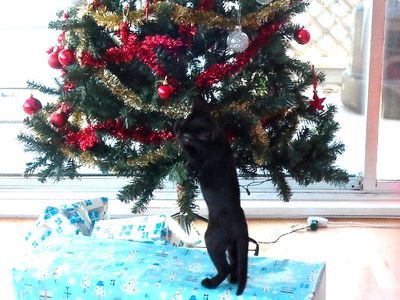
Kitten at a Christmas tree (illustrative photo, not the exact product). Photo: Jennifer C., CC BY 2.0, via Wikimedia Commons (resized)
Claiki Christmas Tree Fence (16 metal panels)
16 metal panels (about 12 x 12 in) that stack to roughly 24 in high, per the listing. Keeps paws off low branches; a determined jumper can still clear it.
Check price on AmazonShatterproof ornaments
FlameFlash’s 100 plastic balls come in three sizes and are described as shatterproof. The smallest are about 1.18 inches, so hang those high and swap the hooks for soft ties.
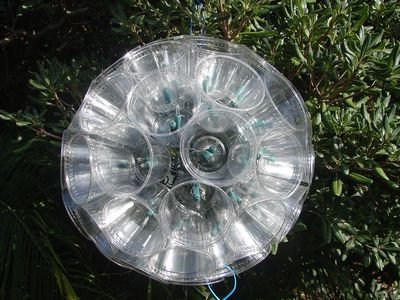
Plastic ornament (illustrative photo, not the exact product). Photo: Vidamasvida, CC BY 3.0, via Wikimedia Commons (resized)
FlameFlash Shatterproof Ornaments (100 pcs)
100 shatterproof plastic balls in three sizes. Smallest are about 1.18 in, so hang those high and use soft ties instead of hooks on low branches.
Check price on AmazonA cord protector
This 10 ft x 1/2 in braided split sleeve is sold for pets and trims with scissors. Check that your light cord fits, and still supervise hard chewers.
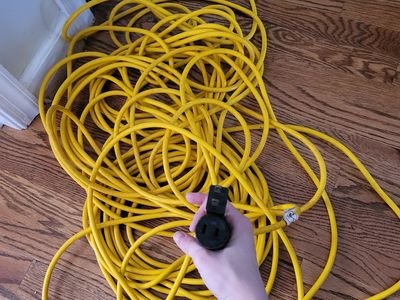
Electrical cord (illustrative photo, not the exact product). Photo: Punker1999, CC0, via Wikimedia Commons
Paws and Wires Cord Protector (10 ft x 1/2 in)
10 ft x 1/2 in braided split sleeve sold for pets; trims with scissors. Check your light cord fits and still supervise hard chewers.
Check price on AmazonA wider tree stand
SYITCUN’s 28-inch metal cross base fits artificial tree poles up to 1.26 inches, per the listing. It is wide, not weighted, so still anchor the top.

Christmas tree stand (illustrative photo, not the exact product). Photo: Asurnipal, CC BY-SA 4.0, via Wikimedia Commons (resized)
SYITCUN Tree Stand (28 in base, artificial trees)
28 in metal cross base for artificial trees with poles up to 1.26 in, per the listing. Wide, not weighted: still anchor the top of the tree.
Check price on AmazonDouble-sided deterrent tape
Karaseno’s clear tape is 3 inches wide and sticky on both sides. The listing calls it “a training tape, not a shield” and says to test a hidden spot first.
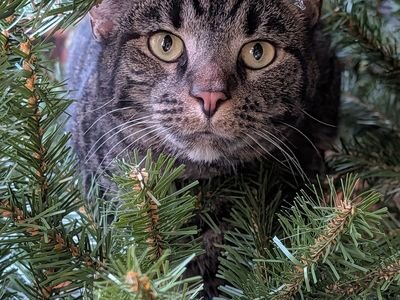
Cat in a tree (illustrative photo, not the exact product). Photo: MrCoolBean, CC BY-SA 4.0, via Wikimedia Commons (resized)
Karaseno Cat Scratch Tape (3 in x 30 yd)
3 in x 30 yd clear double-sided tape. The listing calls it a training tape, not a shield; test a hidden spot first and avoid velvet or leather.
Check price on AmazonFAQ
Is a real or artificial tree better for cats?
An artificial tree avoids sap, needles and tree water, which Pet Poison Helpline links to vomiting and stomach irritation. Secure either type.
Is tinsel really that dangerous for cats?
Yes. Swallowed tinsel can become a linear foreign body that often needs surgery.
How do I stop my cat from climbing the tree?
Anchor it, move it away from jumping spots and add a barrier. Offer a cat tree and daily play instead.
Are poinsettias poisonous to cats?
The ASPCA says they irritate the mouth and stomach but are “generally over-rated in toxicity.” Lilies are far more dangerous.
Can I use essential oil sprays to keep my cat away?
We do not recommend them, because concentrated oils can poison cats. Use barriers, foil or deterrent tape.
What if my cat chewed a light cord?
Unplug the lights and call your vet. Pet Poison Helpline advises a vet check right away.
Who do I call if my cat eats something from the tree?
Your vet or ASPCA Animal Poison Control at (888) 426-4435. A consultation fee may apply.
Bottom line
A cat proof Christmas tree comes down to a few habits: anchor it, skip tinsel, keep breakables high, cover the water, protect cords and keep lilies out. Then give your cat a better place to climb.
More from PetKiddies
- Best interactive cat toys for indoor cats
- Dog and cat advent calendars: what to check
- Pet-safe gardening and plants
- Dog ate chocolate? What to do
- Christmas gifts for senior dogs
Sources
- ASPCA, “Holiday Safety Tips” (accessed Nov 2, 2026). aspca.org
- ASPCA Animal Poison Control, contact page and plant entries for lilies, poinsettia, American mistletoe and holly (accessed Nov 2, 2026). Poison Control, Lily, Poinsettia, Mistletoe, Holly
- VCA Animal Hospitals, “Linear Foreign Body in Cats” (accessed Nov 2, 2026). vcahospitals.com
- Cornell Feline Health Center, “Beware Holiday Hazards” (accessed Nov 2, 2026). vet.cornell.edu
- Pet Poison Helpline, “Cats and Christmas Trees,” “Tinsel,” “Lilies,” “Homemade Play Dough,” “Pine Oil” and “Tea Tree Oil” (accessed Nov 2, 2026). Christmas trees, Tinsel, Lilies, Salt dough, Pine oil, Tea tree oil
- Preventive Vet, “Cat With String Hanging Out of Their Butt – Do You Pull?” by Beth Turner, DVM (accessed Nov 2, 2026). preventivevet.com
- Noble PJM et al. “Heightened risk of canine chocolate exposure at Christmas and Easter.” Veterinary Record, 2017 (via PMC). pmc.ncbi.nlm.nih.gov
- Google Trends (US) and Amazon.com product listings, checked Nov 2, 2026.
Featured photo: Photo: Mikael Häggström, M.D., CC0, via Wikimedia Commons