

As an Amazon Associate, PetKiddies earns from qualifying purchases. We may also earn from other affiliate links on this page at no extra cost to you.
A quick note: we are not vets, and this is general information, not a substitute for your vet. If your dog ate a ham bone, a lot of ham, or seems unwell, call your vet or an emergency vet now. We researched veterinary and ASPCA/AKC/FDA guidance and product listings; we did not test any products.
Last updated: Nov 24, 2026
Holiday ham is on many US tables at Thanksgiving, Christmas and Easter, and dogs love to help with leftovers. A tiny crumb is one thing. A ham bone or a plate of glazed slices is another.
Here is the ham-specific answer and a plan if your dog already ate some. For the rest of the table, see our Thanksgiving foods guide.
Quick answer
- Ham is not toxic, but it is a poor choice. PetMD says ham “is not toxic to dogs, but it’s also not a healthy treat for them.” AKC calls feeding it “not advisable.”
- Salt and fat are the main problems. AKC says excess salt can be toxic, and too much fat can lead to pancreatitis.
- Never give ham bones. AKC says never give cooked pork bones to dogs.
- Glaze can add risks. The ASPCA flags onion, garlic, raisins and xylitol.
- If your dog ate some, call your vet, especially for a bone or a large amount. Do not induce vomiting unless your vet says so.
Why ham is a poor choice for dogs
Sodium. AKC says store-bought ham contains a great deal of sodium and that excess salt can be toxic to dogs. The ASPCA says excessive salt can cause increased thirst and urination, and that signs of salt toxicity can include vomiting, diarrhea, depression, tremors and seizures. Neither source gives a safe or unsafe amount of ham, so we cannot either. As a general caution, a stolen slice is very different from a whole ham, and a small dog has less room for error.

Fat. AKC notes ham has a higher fat content than many other meats. VCA says the exact cause of pancreatitis in dogs is unknown, but it may be triggered in some cases by a fatty meal, and that in many cases it seems to occur spontaneously. AKC adds that fatty foods are a poor choice for dogs with a history of pancreatitis.
Preservatives and sugar. AKC says the preservatives in ham are loaded with nitrates and nitrites, which are sodium-based. PetMD says ham can also be high in sugar.
What about a tiny piece? Sources differ in tone. AKC’s ham article says a little sliver once in a while probably will not hurt, and its people-foods page says a small piece may be acceptable for healthy dogs but ham should not become a regular treat. PetMD says a little piece that fell on the floor should be fine. None gives a gram amount. Ask your vet if your dog has had pancreatitis.
Ham bones, glaze and seasonings
| Part of the ham | Main concern | What to do |
|---|---|---|
| Ham bone | Cooked bones can splinter, causing choking or a blockage (PetMD, AKC) | Keep it away from your dog; call your vet if swallowed |
| Fat and skin | Rich food; fatty meals may trigger pancreatitis (VCA) | Do not share trimmings or drippings |
| Slices and salty meat | High sodium (AKC, PetMD) | Skip it, or ask your vet about a very small plain piece |
| Glaze | Sugar; may contain onion, garlic, raisins or xylitol, all flagged by the ASPCA | Check the label or recipe; call poison control if one of these was eaten |
| Stuffing, gravy and sides | Onion and garlic can be toxic; bouillon-style gravy is high in sodium (ASPCA) | Keep plates out of reach |
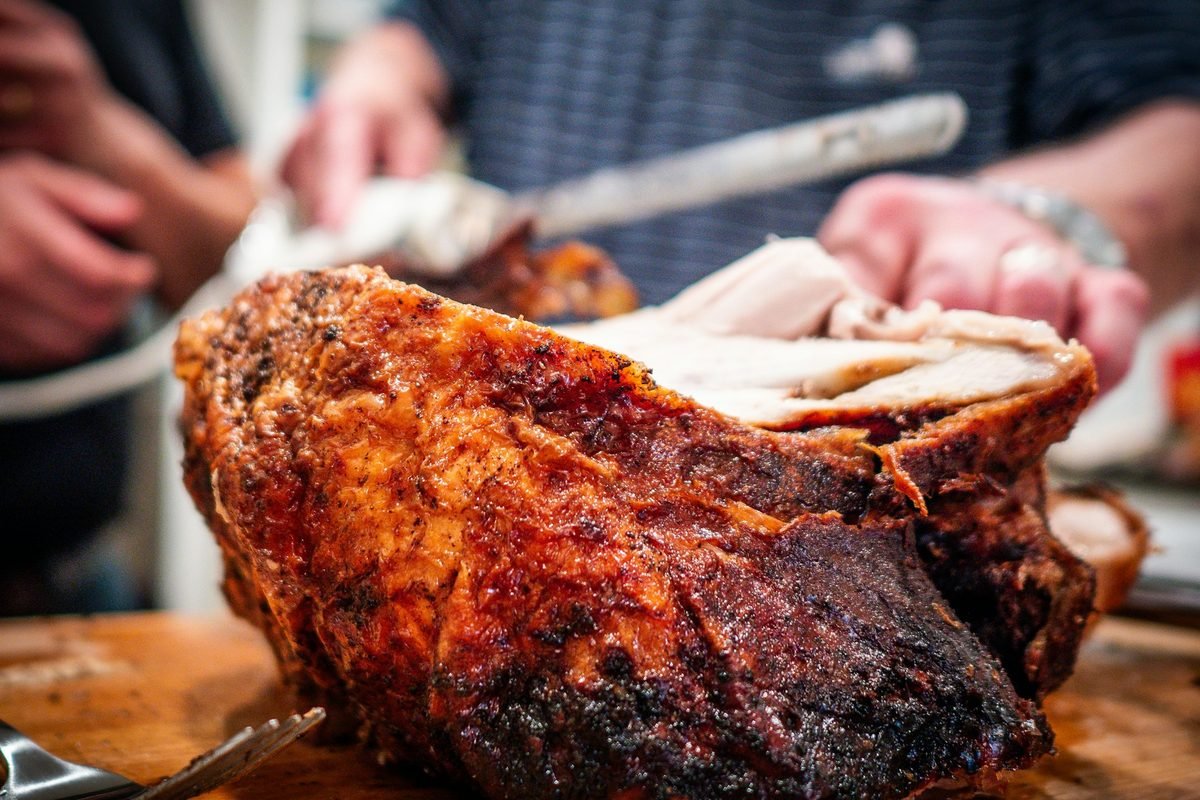
VCA, citing the FDA, lists broken teeth, mouth and tongue injuries, choking, damage to the stomach and intestines, and blockages among the problems bones can cause. We do not recommend raw bones either. See also what to do if your dog ate a turkey bone.
My dog ate ham: what to do now
- Stay calm and check your dog. If your dog is choking, gagging, struggling to breathe or in obvious pain, go to a vet or emergency vet right away.
- Take away what is left. Calmly remove the ham, bone and glaze so your dog does not gulp them down.
- Work out what was eaten. Note roughly how much, whether there was a bone, what the glaze or sides contained, and when it happened.
- Call your vet or an emergency vet. Be extra careful with a bone, a large amount, a small dog, or a dog with a history of pancreatitis.
- Do not induce vomiting unless your vet says so. VCA says to consult a veterinarian first because inducing vomiting can be dangerous in certain situations.
- Call poison control for toxic ingredients. If the glaze or sides had onion, garlic, raisins or xylitol, call your vet or ASPCA Animal Poison Control at (888) 426-4435 (a consultation fee may apply). See our poison control guide and xylitol emergency guide.
- Watch your dog closely and follow your vet’s advice on feeding and monitoring.

Signs to watch for
PetMD lists lethargy or weakness, lack of appetite, excessive drooling, abdominal pain, vomiting and diarrhea as signs of stomach upset after a dog gets into holiday ham, and says to contact your vet. VCA adds fever and nausea for pancreatitis, and AKC and the ASPCA add excessive thirst and urination for too much salt. Tremors or seizures need an emergency vet right away. Tell your vet everything your dog ate.
Can cats eat ham?
Sources differ a little here. PetMD’s vet-written cat article says plain home-cooked ham can be a lean protein source, but that deli-processed ham often has additives such as sodium and seasonings like garlic or onion, which are toxic to cats. It adds that even low-sodium hams contain salt. Because holiday ham is usually salty and often glazed, we would skip it.

PetMD says all bones are off-limits for cats, and the ASPCA says cats are more susceptible than dogs to onion and garlic. Call your vet if your cat ate ham bones or glazed ham, and do not make your cat vomit at home unless your vet says so.
Safer holiday treats to share
The simplest plan is your dog’s normal diet. If you share, the ASPCA says any small bite of turkey or other meat should be boneless and fully cooked. AKC says cooked turkey meat is safe for dogs in moderation, with fat, skin and all bones removed; ask your vet if your dog is prone to pancreatitis. The ASPCA also suggests mixing plain green beans into the usual dinner. Skip seasoning, butter and gravy.
Helpful gear to have on hand
None of this replaces your vet. The buttons below open Amazon search results so you can compare options; check each listing’s details before buying.
Locking-lid kitchen trash can. The ASPCA warns that holiday trash fills up with bones, onions and other hazards. A can with a locking or pet-proof lid keeps your dog out of the carcass. Check the lid lock and the size.

Kitchen trash can (illustrative photo, not the exact product). Photo: Puscas Adryan on Unsplash (Unsplash License) (cropped)
Dog-proof kitchen trash cans with locking lids (Amazon search results)
Search results, not one product. Compare the lid lock, size and whether it suits your kitchen before buying.
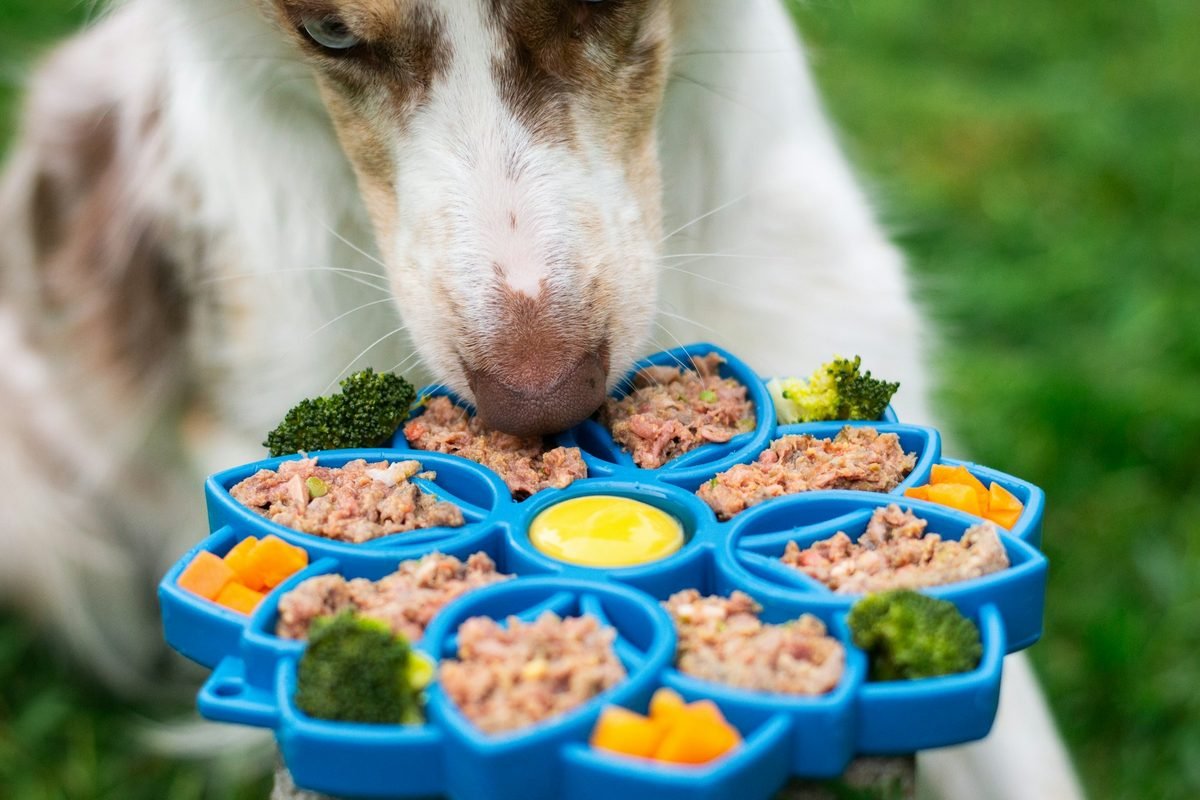
Search on AmazonLick mat. Spreading a little dog-safe food, such as your dog’s regular wet food, on a lick mat gives a dog something to do while guests eat. It suits dogs who get restless at gatherings. Check the size and the maker’s supervision advice, and count the food toward your dog’s meals.
Dog with a textured food tray (illustrative photo, not the exact product). Photo: Ayla Verschueren on Unsplash (Unsplash License) (cropped)
Dog lick mats and slow feeders (Amazon search results)
Search results, not one product. Check size and the maker's supervision advice; count food toward daily meals.
Search on AmazonPet first aid kit. A kit keeps basics like gauze, bandages and a first aid guide in one place. Check whether it is made for dogs or cats, what is included, and the expiry dates, and keep your vet and emergency vet numbers beside it.
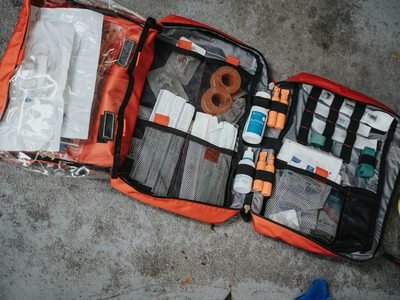
First aid kit (illustrative photo, not the exact product). Photo: Mat Napo on Unsplash (Unsplash License) (cropped)
Pet first aid kits (Amazon search results)
Search results, not one product. Check what is included, whether it is made for dogs or cats, and expiry dates.
Search on AmazonFAQ
Is ham toxic to dogs?
PetMD says ham is not toxic to dogs, but it is high in sodium and fat. AKC advises against feeding it.
Can dogs eat ham bones?
No. AKC says never to give cooked pork bones to dogs, and PetMD says cooked bones can splinter and cause choking or an intestinal blockage.
My dog ate a slice of ham. What now?
Remove any leftovers, check for a bone and for glaze ingredients like onion or garlic, and call your vet for advice. Do not induce vomiting unless your vet says so.
Can ham cause pancreatitis in dogs?
VCA says a fatty meal may trigger pancreatitis in some cases, though many cases seem to happen without a clear cause. AKC says too much fat from ham can lead to pancreatitis.
Can cats eat ham?
PetMD says plain home-cooked ham can be lean protein, but processed ham is salty and may contain onion or garlic, which are toxic to cats. We would skip it, and never offer bones.
Is turkey a better choice than ham?
AKC says cooked turkey meat is safe for dogs in moderation without skin, fat or bones. Ham is higher in sodium and fat, so plain turkey is the gentler choice.
Bottom line
Ham is not poison, but the salt, fat, bones and glaze make it a risky scrap. Keep it and the trash out of reach, skip bones, and call your vet if your dog got into some.
More from PetKiddies
- Thanksgiving foods for dogs and cats
- Dog ate a turkey bone? What to do
- Pet poison control: who to call
- Xylitol and sugar-free candy emergency guide
- Petsgiving 2026
- Dog anxiety during the holidays
Sources
- AKC, “Can Dogs Eat Ham?” (updated May 27, 2025; accessed Nov 24, 2026). akc.org
- AKC, “People Foods Dogs Can and Can’t Eat” (updated Oct 21, 2026; accessed Nov 24, 2026). akc.org
- ASPCA, “People Foods to Avoid Feeding Your Pets” (accessed Nov 24, 2026). aspca.org
- ASPCA, “Thanksgiving Safety Tips” (accessed Nov 24, 2026). aspca.org
- VCA Animal Hospitals, “Pancreatitis in Dogs” (edited Feb 6, 2026; accessed Nov 24, 2026). vcahospitals.com
- VCA Animal Hospitals, “Why Bones Are Not Safe for Dogs” (updated Oct 31, 2025; cites the FDA; accessed Nov 24, 2026). vcahospitals.com
- VCA Animal Hospitals, “What to Do If Your Pet Eats Something Toxic” (accessed Nov 24, 2026). vcahospitals.com
- PetMD, “Can Dogs Eat Ham?” (updated Feb 1, 2023; accessed Nov 24, 2026). petmd.com
- PetMD, “Can Cats Eat Ham?” (Oct 11, 2023) and “Can Cats Eat Onions?” (updated Sep 16, 2025); accessed Nov 24, 2026. Ham, Onions
Featured photos: left, Photo: Niall Smith on Unsplash (Unsplash License) (cropped); right, Photo: Сергей Орловский on Unsplash (Unsplash License) (cropped)