
As an Amazon Associate, PetKiddies earns from qualifying purchases. We may also earn from other affiliate links on this page at no extra cost to you.
A quick note: we are not vets, and this is general information, not a substitute for advice from your own vet. We researched labels, listings and published guidance; we did not test these foods or feed them to our own dogs. If your dog has a health condition, ask your vet before changing food.
Last updated: Nov 18, 2026
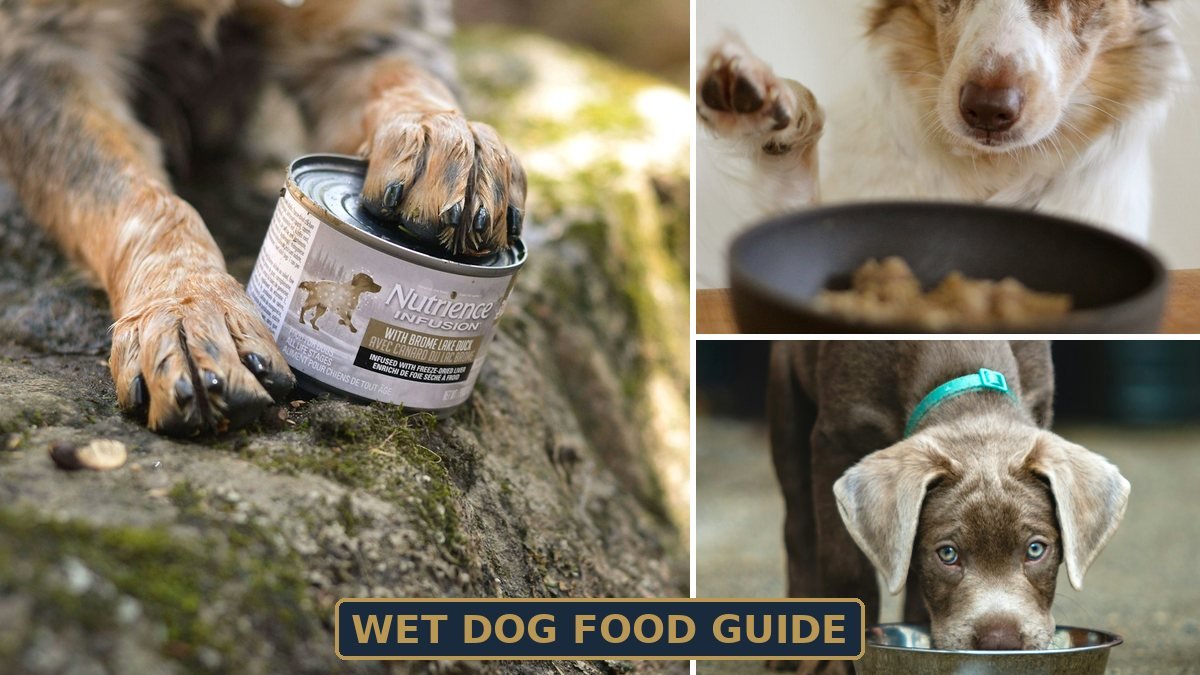
As the holidays get closer, many owners reach for a can to make mealtime feel special, tempt a fussy eater, or top the usual kibble.
Picking a can is mostly about reading the label, not the photo on the front. Here is how wet and dry compare, how to read a canned dog food label, three foods worth a look, and how to store wet food safely.
Quick answer
- Look for “complete and balanced.” It should match your dog’s life stage.
- Avoid “intermittent or supplemental feeding only” for daily meals. That means a topper, not a sole diet.
- Compare foods on a dry matter basis. Wet food is mostly water, so its protein looks low.
- Count calories, not cans. Use the kcal per can, especially when mixing with kibble.
- Refrigerate opened cans, covered. VCA and AKC sources say use within about 3 to 5 days.
- Switch slowly over about a week, and ask your vet first if your dog has health issues.
Wet vs dry dog food
Neither is “healthier” by default: a complete and balanced wet food or kibble can both meet a dog’s needs. VCA Animal Hospitals notes that canned food’s very high water content can help increase a dog’s water intake, and calls kibble the easiest and most convenient option.

- Wet pros: high moisture, often tastier for picky eaters, easy to mash or serve slightly warmed.
- Wet cons: usually costs more per calorie, spoils quickly once opened, and needs fridge space.
- Dry pros: convenient, long shelf life, easy to measure.
- Dry cons: low moisture, and some dogs find it less appealing.
Many families do a bit of both. For fresh options, see our fresh dog food vs kibble comparison, and our best dog food 2026 roundup for the wider picture.
How to read a wet dog food label
The AAFCO statement
AAFCO calls the nutritional adequacy statement “perhaps the most important part of a label.” The FDA explains that if it includes the phrase “complete and balanced,” the product is intended to be fed as a pet’s sole diet. It gets there by meeting the AAFCO Dog Food Nutrient Profiles or passing an AAFCO-procedure feeding trial. Life stages are gestation/lactation, growth, maintenance and all life stages; match it to your dog.

“Intermittent or supplemental feeding only” means a topper, not dinner. The FDA also says endorsements and seals of approval from other organizations are not assurances of nutritional adequacy.
What the name tells you
AAFCO’s naming rules (not counting added water):
- “Beef Dog Food”: at least 95% beef.
- “Beef Dinner,” “Entree” or “Platter”: at least 25% beef.
- “With Beef”: at least 3% beef.
- “Beef Flavor”: a listed ingredient provides the flavor, with no set percentage.
Guaranteed analysis and dry matter
The guaranteed analysis is “as fed,” water included. The FDA notes that canned food is typically 75 to 78 percent moisture, versus 10 to 12 percent for dry food. To compare fairly, divide the nutrient percentage by the dry matter (100 minus moisture) and multiply by 100.
Example: a can lists 8% protein and 78% moisture. Dry matter is 22%, so 8 / 22 = about 36% protein on a dry matter basis. A kibble lists 26% protein and 10% moisture. Dry matter is 90%, so 26 / 90 = about 29%. The can looked lower but is higher on a dry matter basis (an illustration, not a quality ranking).
Calories per can
Look for “kcal per can” (and per cup for kibble) in the calorie statement. That is the number you need to set portions, and similar-size cans can differ a lot. If your vet has given you a daily calorie target, split it across everything your dog eats.
Wet food types at a glance
| Type | Best for | What to check |
|---|---|---|
| Pate or loaf | Smooth texture, easy to mash, mixing with kibble | Life stage statement, kcal per can |
| Stew or chunks in gravy | Dogs who like texture and sauce | Product name (Dinner or “with”), gravy ingredients |
| Shredded | Picky eaters who like a meaty look | Complete and balanced vs topper-only wording |
| Small-breed cups and trays | Small mouths, single-serve portions | Calories per tray, life stage, serving size for your dog |
| Senior formulas | Older dogs without a medical diet | Adult maintenance or all life stages statement, ask your vet |
| Toppers and complements | Adding variety to kibble | “Intermittent or supplemental” wording means not a sole diet |
| Prescription (vet only) | Medical conditions diagnosed by your vet | Only feed on your vet’s direction |
Picks worth a look
Three complete-and-balanced wet foods from established makers, picked from listings we researched (not tested). Confirm the life stage statement and kcal per can before you buy.
Adult classic loaf. Hill’s Science Diet Adult 1-6 Chicken and Barley Entree comes in 13 oz cans, and the listing describes it as a loaf for adult dogs. It suits medium and large adults; Hill’s sells a separate Adult 7+ version for older dogs.

Dog at mealtime (illustrative photo, not the exact product). Photo: Chewy on Unsplash (Unsplash License) (cropped)
Hill's Science Diet Adult 1-6 Chicken and Barley Entree (13 oz cans)
Loaf-style adult entree in 13 oz cans (listing). Suits medium and large adult dogs; check the kcal per can when portioning.
Check price on AmazonSmall-dog tray. Cesar Classic Loaf in Sauce Beef Recipe comes in 3.5 oz easy-peel trays, and the listing says it is complete and balanced for adult dogs and can be a meal or a topper. Single-serve trays mean fewer leftovers for small dogs.

Small dog with food bowl (illustrative photo, not the exact product). Photo: 龙 赵 on Unsplash (Unsplash License) (cropped)
Cesar Classic Loaf in Sauce Beef Recipe (3.5 oz trays)
3.5 oz easy-peel trays; listing says complete and balanced for adult dogs, as a meal or topper. Handy single servings for small dogs.
Check price on AmazonSensitive-stomach pate. Purina Pro Plan Sensitive Skin and Stomach Salmon and Rice is a pate in 13 oz cans. The listing says it is complete and balanced for adult dogs and includes prebiotic fiber. Ongoing tummy trouble has many causes, so ask your vet.

Dog with food bowl (illustrative photo, not the exact product). Photo: Chris Benson on Unsplash (Unsplash License) (cropped)
Purina Pro Plan Sensitive Skin and Stomach Salmon and Rice (13 oz cans)
Salmon and rice pate in 13 oz cans; listing says complete and balanced for adults, with prebiotic fiber. Ask your vet about recurring stomach upsets.
Check price on AmazonWhen comparing any maker, WSAVA suggests asking whether it employs a qualified nutritionist, who formulates its diets, whether foods go through feeding trials, and what quality control it uses. WSAVA does not endorse brands.
Feeding and storing wet food safely
Mixing with kibble. Adjust by calories so the daily total stays the same: if a can supplies part of the day’s calories, reduce the kibble to match. WSAVA says treats should stay under 10% of daily calories, so count those too.

Switching foods. AKC suggests a gradual switch over about 7 days, for example 25% new food on day 1, 50% on day 3, 75% on day 5 and 100% on day 7. Dogs with sensitive stomachs may need longer, and call your vet if stomach upset does not settle.
Opened cans and leftovers. The FDA says to tightly cover refrigerated pet food, keep the fridge at 40 F or below, and promptly refrigerate or throw out leftovers. VCA says to toss unused portions after three days; a UC Davis vet quoted by AKC says about five days is probably fine. When in doubt, use the shorter window.
Bowls and hands. The FDA advises washing your hands for at least 20 seconds before and after handling pet food, washing bowls with soap and hot water after each use, and storing unopened cans somewhere cool and dry, below 80 F.
Recalls. The FDA suggests keeping the lot number and product details handy in case of a recall. Our pet food recall guide explains how.
Grain-free and legume-rich diets. The FDA says it has received reports of non-hereditary dilated cardiomyopathy (DCM) in dogs eating both grain-free and grain-containing diets, many with non-soy legumes or pulses high in the ingredient list. It says it does not know the specific connection (page current as of Aug 19, 2024) and asks owners to talk with their vet before changing a diet.
FAQ
Is wet food better than dry for dogs?
Not by default. Complete and balanced wet or dry food can both work; the main differences are moisture, cost per calorie and convenience.
Can I mix wet and dry dog food?
Yes. Cut back the kibble to account for the wet food’s calories so the daily total stays the same.
How long can wet dog food sit out?
The FDA gives no set time but says to promptly refrigerate or throw out leftover canned food, so do not leave a bowl out all day.
How long does an opened can last in the fridge?
VCA says to toss it after three days; a vet quoted by AKC says about five days, covered, is probably fine. Use the shorter window when unsure.
How much wet food should I feed?
Start with the label’s feeding directions and kcal per can, and ask your vet for your dog’s daily calorie target.
What does complete and balanced mean?
The FDA says it means the product is intended as a pet’s sole diet, meeting AAFCO nutrient levels or passing an AAFCO feeding trial for a stated life stage.
Final thoughts
The best canned dog food fits your dog’s life stage, passes your label check, and gets eaten. Start with the AAFCO statement, compare on dry matter, count calories, and keep opened cans cold. If your dog’s appetite or health changes, call your vet.
More from PetKiddies
- Best Dog Food 2026
- Fresh Dog Food vs Kibble
- Choosing the Best Dog Food: Quick Guide
- Senior Dog Food Buyer’s Guide
- Senior Dog Not Eating
- Pet Food Recall Guide
- Black Friday and Cyber Monday Pet Deals
Sources
- FDA, “Complete and Balanced” Pet Food (accessed Nov 18, 2026). fda.gov
- FDA, Proper Storage of Pet Food and Treats (accessed Nov 18, 2026). fda.gov
- FDA, Tips for Safe Handling of Pet Food and Treats (accessed Nov 18, 2026). fda.gov
- FDA, Questions and Answers: FDA’s Work on Potential Causes of Non-Hereditary DCM in Dogs (accessed Nov 18, 2026). fda.gov
- AAFCO, Reading Labels (accessed Nov 18, 2026). aafco.org
- WSAVA Global Nutrition Committee, Guidelines on Selecting Pet Foods (accessed Nov 18, 2026). wsava.org (PDF)
- WSAVA, Feeding treats to your dog (accessed Nov 18, 2026). wsava.org (PDF)
- VCA Animal Hospitals, Dry, Canned, or Semi-Moist: Food Choices for Dogs (accessed Nov 18, 2026). vcahospitals.com
- AKC, Does Dog Food Expire? (accessed Nov 18, 2026). akc.org
- AKC, How to Switch Dog Foods (accessed Nov 18, 2026). akc.org
- Google Trends (US), checked Nov 18, 2026.
Featured photos: left, Photo: Doodlethetrouble on Unsplash (Unsplash License) (cropped); top right, Photo: Ayla Verschueren on Unsplash (Unsplash License) (cropped); bottom right, Photo: Michael Starkie on Unsplash (Unsplash License) (cropped)