
As an Amazon Associate, PetKiddies earns from qualifying purchases. We may also earn from other affiliate links on this page at no extra cost to you.
A quick note: we are not vets, and this is not veterinary advice. This guide is research-based, drawing on the ASPCA, VCA Animal Hospitals and Pet Poison Helpline, and we have not hands-on tested the products mentioned. Every pet is different, so ask your own vet what is safe for yours, especially if your pet has a health condition or a special diet.
Last updated: Nov 3, 2026
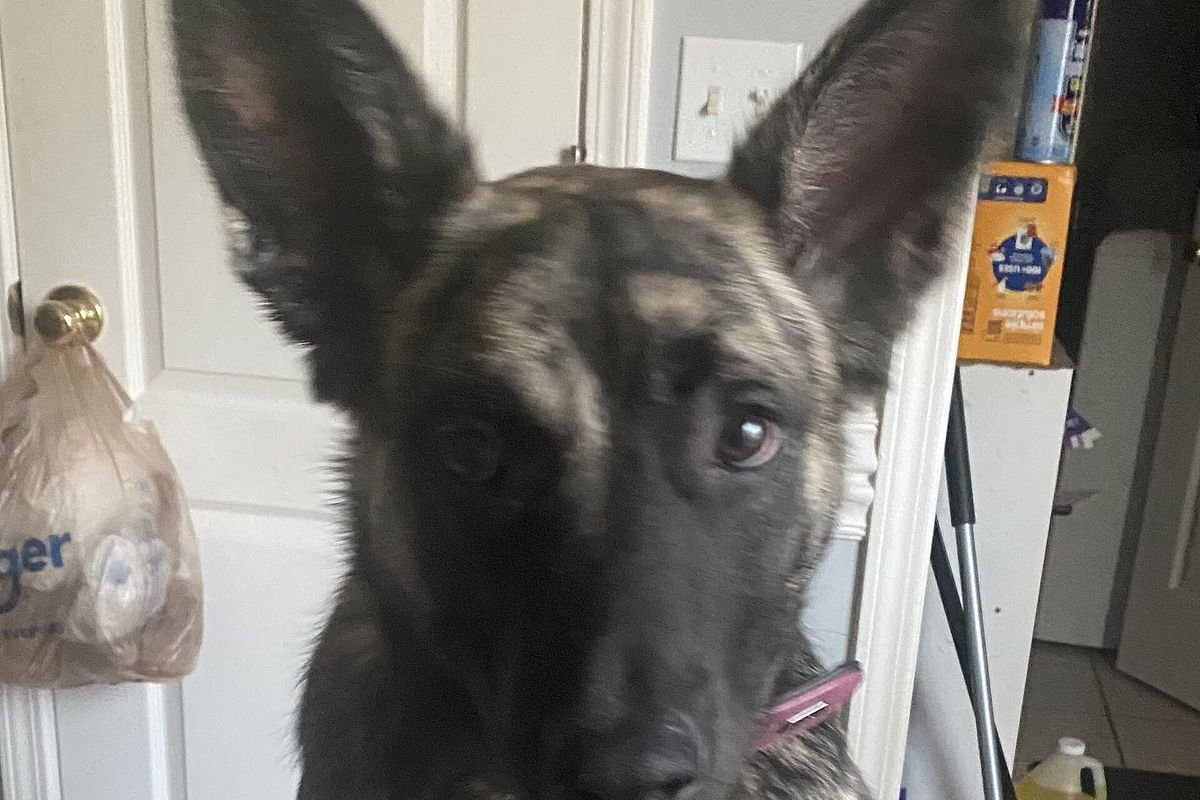
Thanksgiving is Thursday, November 26, and owners are already asking the same thing. In our Google Trends check on November 3, US searches for “can dogs eat turkey” were running about 93% above the previous four weeks. In both 2024 and 2025, that search ran at roughly seven times its usual level during November.
The short version: the turkey itself is rarely the problem. The trouble is everything around it, like fat, bones, seasoning and a few ingredients that are toxic to pets. This guide covers what is generally fine, what is not, and what to do if your dog or cat gets into the leftovers.
Quick answer: can dogs eat turkey?
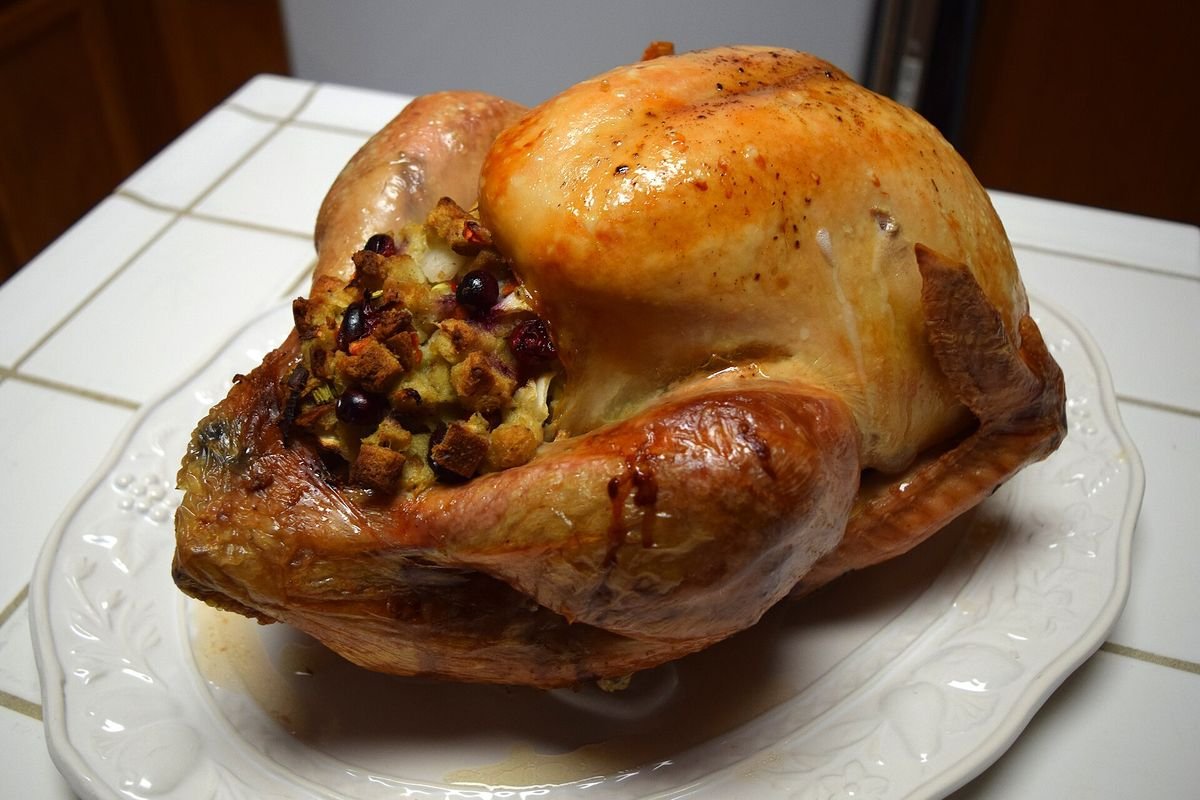
- A small bite of plain turkey is generally OK. The ASPCA says if you feed a small bite of turkey, make sure it is boneless and fully cooked. Raw or undercooked turkey may carry salmonella.
- Skip the skin, drippings and gravy. They are fatty and salty. VCA notes a fatty meal may trigger pancreatitis in dogs.
- No bones. The ASPCA calls poultry bones a major choking hazard, and says bones can injure or block a dog’s or cat’s gut.
- Watch the sides. Onions, garlic and chives, raisins and grapes, chocolate, xylitol and raw dough all appear on the ASPCA’s danger lists.
- Cats follow the same rules, plus string and lilies (see below).
- Not sure? Ask your vet before the holiday, not during it.
Thanksgiving foods: dogs and cats
| Thanksgiving food | Dogs | Cats | Why |
|---|---|---|---|
| Plain turkey meat (boneless, skinless, fully cooked) | Small bite OK | Small bite OK | ASPCA: boneless and fully cooked only. Raw or undercooked turkey may contain salmonella. |
| Turkey skin, drippings, gravy | Skip | Skip | Fatty and salty. A fatty meal may trigger pancreatitis in dogs (VCA). Stock cubes in gravy are high in sodium (ASPCA). |
| Cooked turkey bones | Avoid | Avoid | Choking hazard, and bones can injure or block the gut (ASPCA). |
| Stuffing | Avoid | Avoid | Often contains onion, garlic or chives. These can damage red blood cells; cats are more susceptible (ASPCA). |
| Plain sweet potato | OK in small amounts | OK in small amounts | ASPCA suggests mixing sweet potato into regular meals. Leave off butter, sugar and seasoning. |
| Plain green beans | OK | OK | ASPCA suggests green beans mixed into the usual dinner. |
| Mashed potatoes with butter, cream or garlic | Skip | Skip | Garlic is an Allium (ASPCA), and rich, fatty add-ins are what to avoid. |
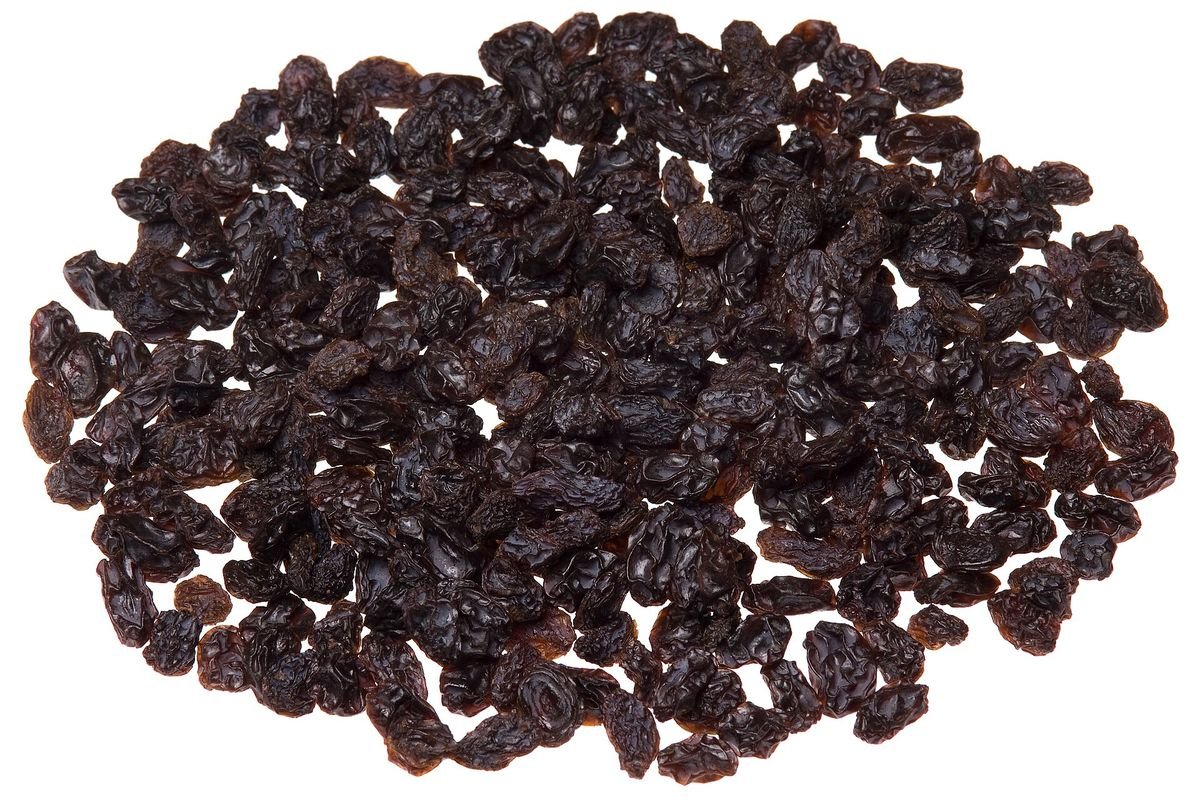
| Grapes and raisins | Avoid | Play it safe | ASPCA: can lead to kidney damage in dogs. The ASPCA entry names dogs only, so ask your vet about cats. |
| Chocolate desserts | Avoid | Avoid | ASPCA: can cause vomiting, diarrhea, tremors, seizures and even death. |
| Sugar-free desserts with xylitol | Dangerous | Avoid | ASPCA: xylitol can cause low blood sugar and liver damage. |
| Raw yeast dough | Dangerous | Dangerous | ASPCA: dough can expand in the stomach and the yeast produces alcohol. |
| Alcohol | Avoid | Avoid | ASPCA: can cause vomiting, incoordination, breathing trouble, coma and even death. |
| Macadamia nuts | Avoid | Ask your vet | ASPCA: weakness, vomiting, tremors and fever in dogs. Cats are not mentioned. |
Fat, pancreatitis and bones
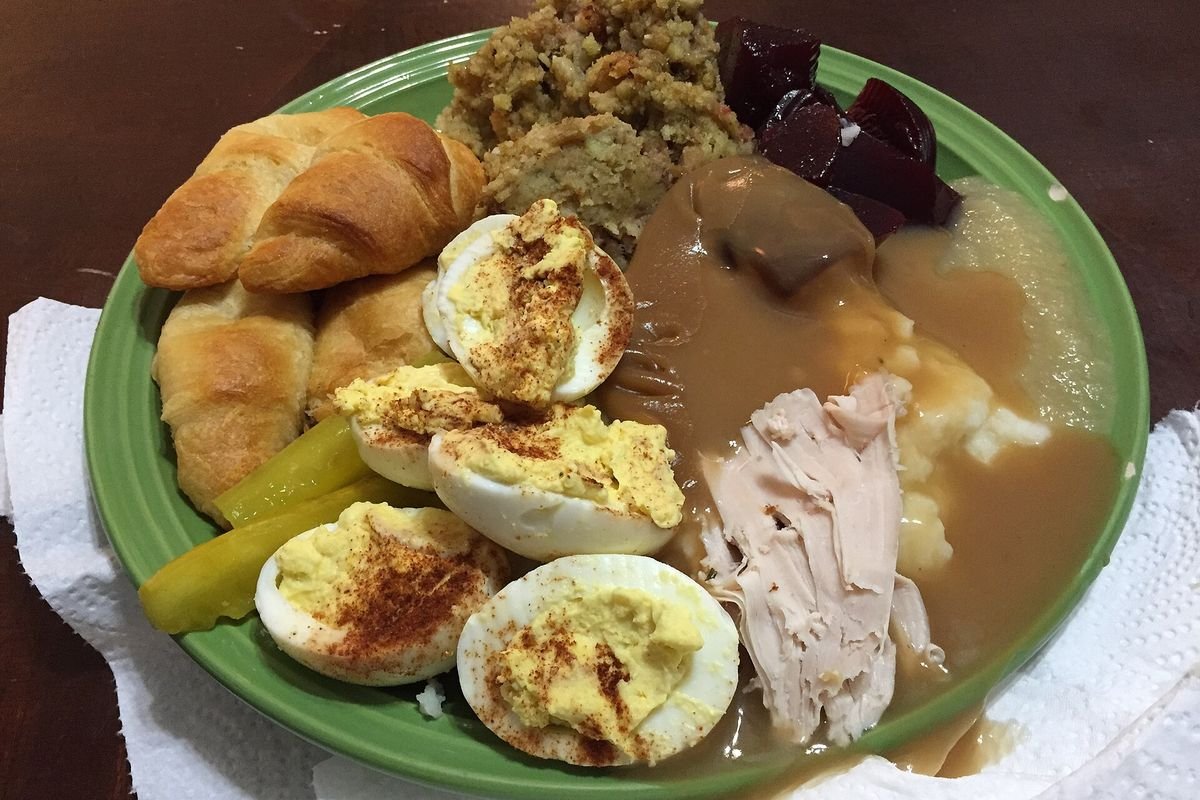
Rich food is the most common holiday trap. VCA says the exact cause of pancreatitis in dogs is unknown, but it may be triggered in some cases by a fatty meal. Common signs include nausea, vomiting, fever, lethargy, abdominal pain, diarrhea and decreased appetite. Skin, drippings, butter-heavy sides and fatty scraps are the usual culprits, so a little plain meat beats a plate of “everything.”
Bones are the other big one. Even if a dog gulps a bone and seems fine, call your vet for advice rather than waiting to see what happens.
Non-food hazards on the table
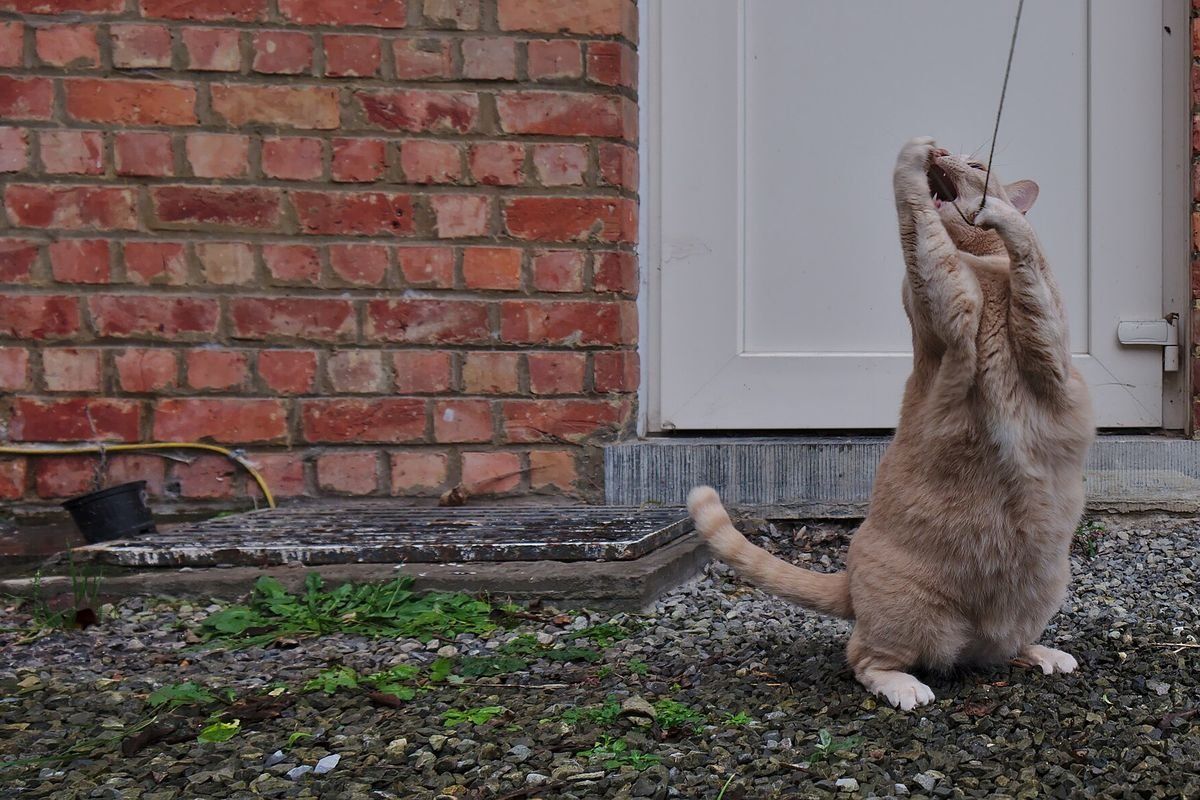
- String and twine from the roast. VCA describes string, yarn and tinsel as linear foreign bodies, most common in cats, and says the most serious complication is tearing of the intestine. Signs include vomiting, refusal to eat, dehydration and lethargy. If you see string hanging from your cat, call your vet before trying to remove it.
- Foil, plastic wrap, toothpicks and skewers. These can be swallowed along with food scraps. We did not find a specific source for each, but they are common-sense items to bin out of reach.
- The trash. The ASPCA notes the bin can fill with bones, chocolate and onions. Empty it through the day or keep your pet out of that area.
- Guests’ bags. The ASPCA reminds hosts that visitors may carry medication, and swallowing it is “all too common.”
Hosting tips that actually help
- Set one rule: no feeding the pets from the table. Tell guests before dinner.
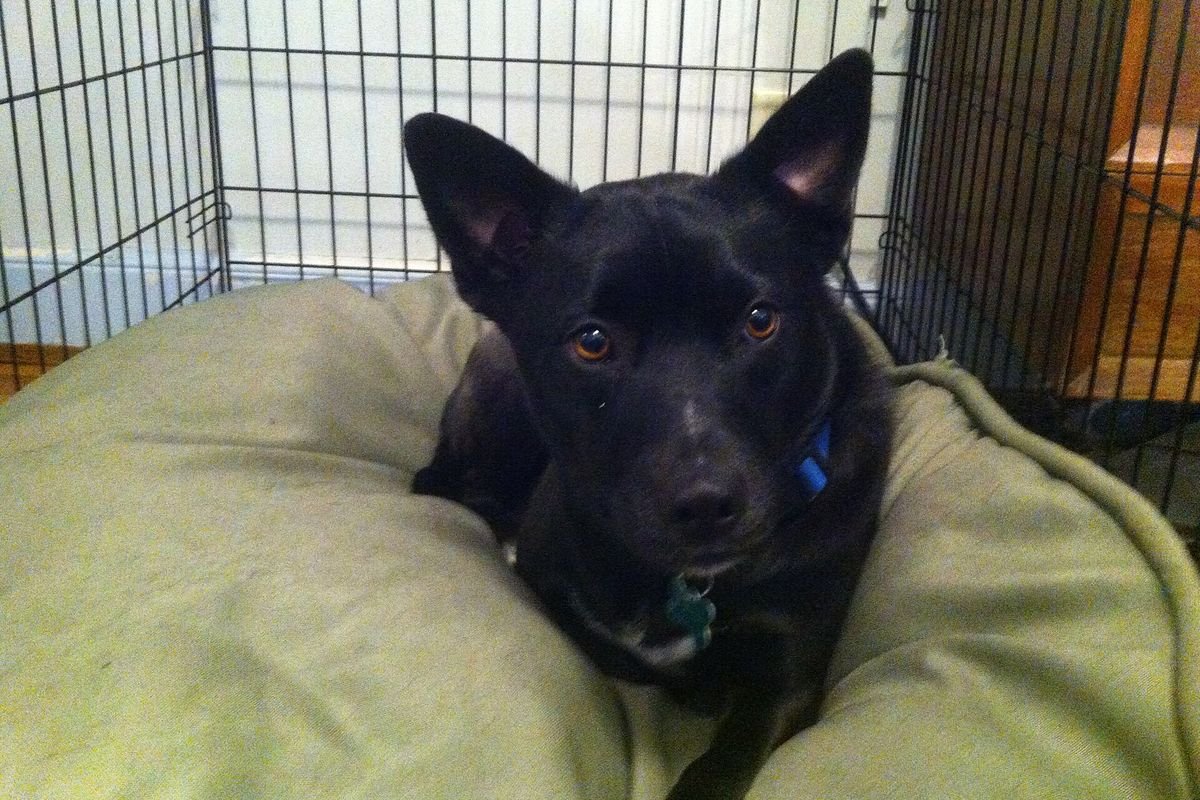
- Give a quiet spot. The ASPCA says extra people can overwhelm pets, and suggests blankets on the floor or an open bedroom door as a place to relax. A crate with a familiar bed works for many dogs.
- Clear plates fast and tie up trash bags.
- Keep your pet busy with a food puzzle or lick mat while you eat.
- Watch the doors. Make sure ID tags and microchip details are current in case of an escape.
Cats at the table
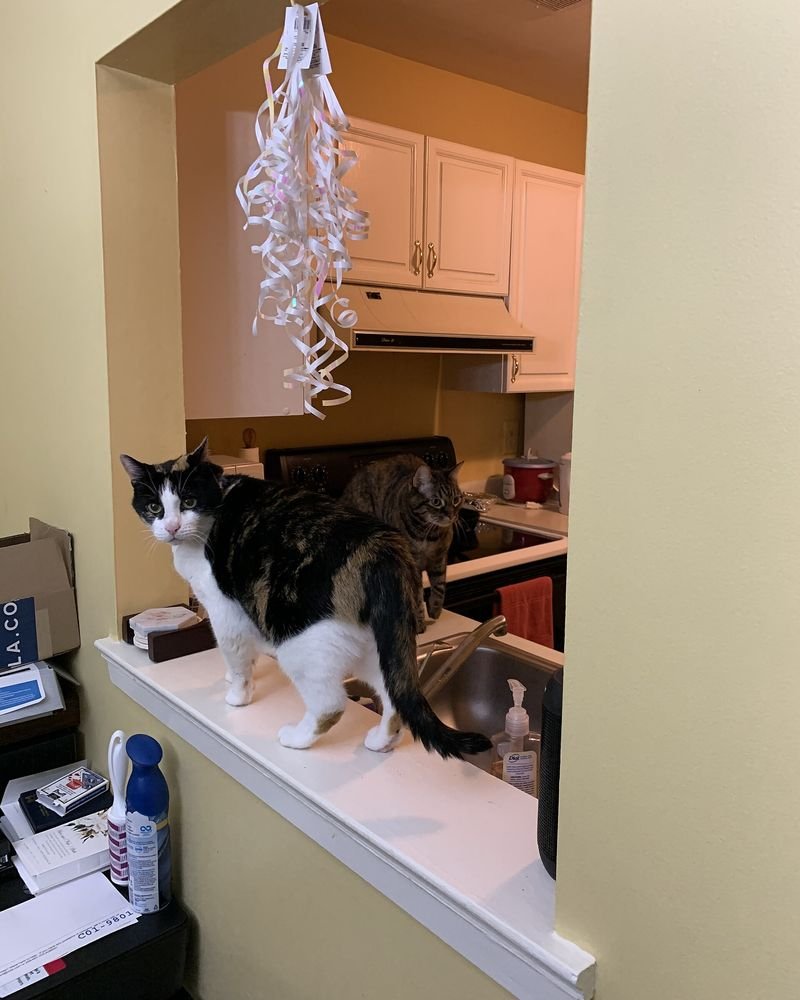
Cats are less likely to steal a turkey leg, but they get into string, foil and trash too. Onion and garlic matter more for cats, since the ASPCA says cats are more susceptible to Allium than dogs. Also check your centerpieces: lilies such as Easter lily are listed by the ASPCA as toxic to cats, with vomiting, lethargy and kidney failure possible, and the ASPCA says cats are the only species known to be affected. If lilies are in a bouquet, keep them out of the house or well away from your cat.
If your pet eats something risky
- Call right away. Contact your vet or an emergency vet. You can also call ASPCA Animal Poison Control at (888) 426-4435 (a consultation fee may apply) or Pet Poison Helpline at (855) 764-7661 (its site listed a $99 per-incident fee when we checked on November 3).
- Do not make your pet vomit or give medicines unless a vet or poison expert tells you to.
- Have details ready: what was eaten, roughly how much, when, and your pet’s weight. Keep any packaging.
- Watch for warning signs such as vomiting, diarrhea, lethargy and belly pain, and head to a vet if you see them.
Holiday hours are limited, so find your nearest 24-hour emergency vet before Thanksgiving Day.
Confirmed vs. uncertain
- Well supported: plain, boneless, fully cooked turkey in small amounts; onion and garlic toxicity; xylitol, chocolate, raw yeast dough and alcohol as hazards.
- Less clear: the ASPCA calls tartaric acid only “speculated” as the toxic part of grapes and raisins, and we found no source giving a safe amount, so treat any as a risk.
- Not established for cats: grapes, raisins and macadamia nuts. The sources we read name dogs only.
- Not covered: we did not find a reliable source for nutmeg or corn cobs, so we left them out rather than guess.
Gear that can help on the day
We researched these Amazon listings on Nov 3, 2026, but we have not tested them. Read each listing for size and care details, supervise your pet with any of them, and remember that no product replaces keeping food out of reach.
A lick mat to keep a pet busy
This LUKITO set includes 2 silicone mats, each about 7.87 x 7.87 in, with 77 suction cups on the back and four textured surfaces for spreadable food like yogurt or peanut butter. The listing says it is dishwasher and freezer safe and made for cats and dogs.
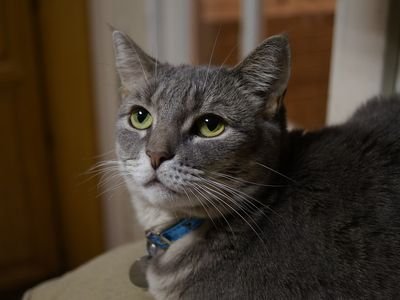
Cat (illustrative photo, not the exact product). Photo: Sbharris, CC BY-SA 4.0, via Wikimedia Commons (resized)
LUKITO Lick Mat, 2-pack (suction cups, food-grade silicone)
Two silicone lick mats with suction cups for spreadable food; listing says dishwasher and freezer safe. About 7.87 in square. Supervise.
Check price on AmazonA slow feeder for dinner time
The Outward Hound Fun Feeder is a maze-design bowl that the listing describes as a medium size for small to medium dogs, holding 2 cups of dry or wet food. It is non-slip and top-rack dishwasher safe. Other sizes exist, so check which one fits your dog.
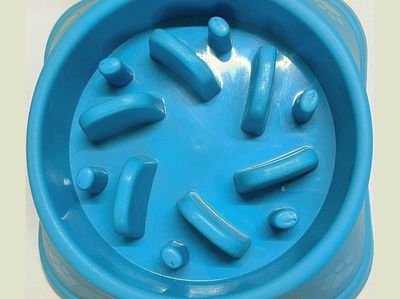
Slow feeder bowl (illustrative photo, not the exact product). Photo: ELTORO.VET, CC0, via Wikimedia Commons
Outward Hound Fun Feeder Slo Bowl (medium, 8.8 in, 2 cups)
Maze-style slow feeder bowl, medium size for small to medium dogs, holds 2 cups. Other sizes exist, so check the listing. Supervise.
Check price on AmazonA stuffable toy for the dog
The KONG Classic is a stuffable natural rubber toy, and this listing is the medium size. Other sizes exist, so check the size guide, fill it with food your dog already eats, and take it away if it breaks apart.
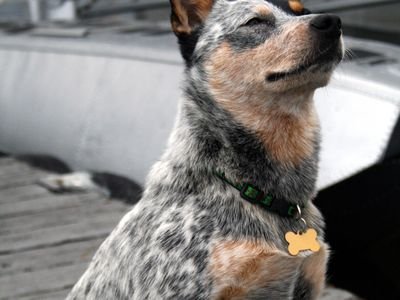
Dog (illustrative photo, not the exact product). Photo: Michael Hays, CC BY 2.0, via Wikimedia Commons (resized)
KONG Classic Stuffable Dog Toy (medium)
Stuffable natural-rubber toy; this listing is the medium size. Check the size guide, fill with food your dog already eats, and supervise.
Check price on AmazonA lock for the trash can
This LynxLink pack has 2 adhesive lid-lock straps with a dual-button release and no drilling. The listing says they stick to round, square or curved bins, and you should clean the surface first. Adhesive locks may deter pets but are not guaranteed against a determined large dog.
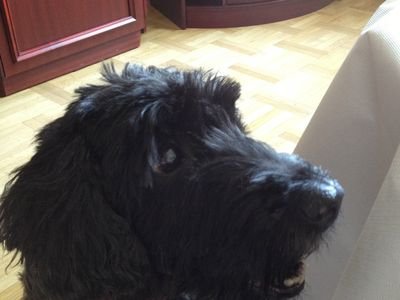
Dog (illustrative photo, not the exact product). Photo: Susanne Nilsson, CC BY-SA 2.0, via Wikimedia Commons (resized)
LynxLink Trash Can Lock Strap, 2-pack (adhesive, no drilling)
2-pack adhesive lid-lock straps, no drilling. May deter pets but is not guaranteed against a determined large dog. Clean the bin first.
Check price on AmazonA freestanding gate for the kitchen
The PETMAKER gate has 4 folding panels, about 73 in wide and 24 in tall, and needs no drilling. At 24 in tall it is not suited to jumpers or large dogs, and freestanding gates can be pushed over, so supervise.
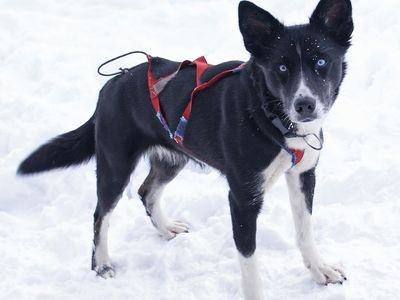
Dog (illustrative photo, not the exact product). Photo: Randi Hausken from Bærum, Norway, CC BY-SA 2.0, via Wikimedia Commons (resized)
PETMAKER 4-Panel Freestanding Pet Gate (73 x 24 in)
Freestanding 4-panel folding gate, about 73 x 24 in. Only 24 in tall, so not for jumpers or large dogs; can be pushed over. Supervise.
Check price on AmazonShopping around before the holiday? You can also browse Walmart’s Black Friday deals for pet gear. This is an affiliate link, and deals change often, so check the listing before you buy.
FAQ
Can dogs eat turkey?
A small amount of plain, boneless, fully cooked turkey is generally fine for most healthy dogs, according to the ASPCA. Avoid skin, fat, bones and seasoned meat.
Can cats eat Thanksgiving turkey?
A small bite of plain, boneless, fully cooked turkey is generally OK for cats too. Keep onion, garlic, string and lilies away from them.
Is turkey skin bad for dogs?
It is fatty, and VCA says a fatty meal may trigger pancreatitis in dogs, so we suggest skipping it.
Are cooked turkey bones safe?
No. The ASPCA calls poultry bones a major choking hazard and says bones can injure or block a dog’s or cat’s gut.
Can dogs eat stuffing?
Usually not. Stuffing often contains onion, garlic or chives, which the ASPCA says can damage red blood cells.
My dog ate something off the counter. What now?
Call your vet, an emergency vet, ASPCA Animal Poison Control at (888) 426-4435 or Pet Poison Helpline at (855) 764-7661. Do not make your pet vomit unless told to.
Can dogs eat sweet potato or green beans?
Plain, yes in small amounts; the ASPCA suggests mixing both into the usual meal. Leave off butter and seasoning.
Bottom line
Plain turkey in small amounts is the safe treat. Keep the fat, bones, seasoning and desserts away, secure the trash, and give your pet something to do while you eat. If something goes wrong, call for help early.
More from PetKiddies
- What to do if your dog ate chocolate
- Xylitol and sugar-free candy: a dog emergency
- Pet food recall guide
- Black Friday and Cyber Monday pet deals
- How to cat-proof your Christmas tree
Sources
- ASPCA, “Thanksgiving Safety Tips” (accessed Nov 3, 2026). aspca.org
- ASPCA, “People Foods to Avoid Feeding Your Pets” (accessed Nov 3, 2026). aspca.org
- ASPCA Animal Poison Control; plant entries for Easter lily, onion and garlic (accessed Nov 3, 2026). aspca.org
- Pet Poison Helpline (accessed Nov 3, 2026). petpoisonhelpline.com
- VCA Animal Hospitals, “Pancreatitis in Dogs” (accessed Nov 3, 2026). vcahospitals.com
- VCA Animal Hospitals, “Linear Foreign Body in Cats” (accessed Nov 3, 2026). vcahospitals.com
- Google Trends (US) and Amazon.com product listing, checked Nov 3, 2026.
Featured photo: Photo: St.ChromaLover15, CC BY 4.0, via Wikimedia Commons (resized)