
As an Amazon Associate, PetKiddies earns from qualifying purchases. We may also earn from other affiliate links on this page at no extra cost to you.
A quick note: we are not vets, and this is general information, not a substitute for advice from your own vet. This guide draws on maker pages, listings and published guidance from sources such as the AKC, Humane World for Animals and Texas A&M’s veterinary school. We researched these toys on paper; we did not test them hands-on.
Last updated: Nov 20, 2026
Not every dog plays the same way. One dog gently carries a plush toy around the house, while another turns the same toy into confetti in five minutes. Matching the toy to the chew style is the simplest way to get more use out of it and to keep toy time safer.
Gift season is also when many of us shop for dog toys, from Black Friday through Christmas. This guide covers the main chew styles, which toy types tend to suit each one, the safety rules most vets and shelters agree on, and a few widely sold toy types to look at.
Quick answer
- Pick by how your dog plays, not by the photo on the box. Gentle chewers, power chewers, shredders, fetchers, puzzle lovers and tug fans each need something different.
- Size matters. Humane World for Animals warns that toys that are too small can be swallowed or become lodged in a dog’s throat. Choose a toy too big to fit whole in the mouth.
- Supervise new toys and chews, and throw out anything that is torn, breaking into pieces or losing stuffing.
- Harder is not always better. Texas A&M vets note that very hard chew toys can damage teeth.
- No toy is indestructible. Even KONG’s own page for its toughest rubber says so.
- Rotate a few toys at a time to keep things interesting.
What is your dog’s chew style?
Most dogs are a mix, but one style usually stands out. Watch how your dog handles a toy for a few days before you buy.
- Gentle chewer: mouths, carries and nibbles but rarely tears anything apart.
- Power chewer: clamps down hard and keeps going, and gets through ordinary toys quickly.
- Shredder: wants to open things up, hunt the squeaker and pull out the stuffing.
- Fetcher or chaser: lives for balls and flying discs and may not chew much at all.
- Puzzle lover or foodie: happiest when there is a treat to work for.
- Tug fan: wants a partner. Tug is a game for two, not a toy to leave lying around.
Toy types by chew style
| Chew style | Toy types to look for | What to skip or watch |
|---|---|---|
| Gentle chewer | Soft rubber toys, plush toys with sturdy seams | Anything very hard. Texas A&M vets say soft rubber is often safer than hard toys for seniors, puppies and dogs with dental disease. |
| Power chewer | Durable rubber made for strong chewers, in a size that is generous for your dog | Plush, squeaker and soft toys, which Texas A&M advises avoiding for dogs that love to destroy toys. Also very hard bones and antlers. |
| Shredder | Firm rubber toys, treat-stuffed toys that give your dog a job | Plush with squeakers and loose stuffing. Take away torn toys at once. |
| Fetcher or chaser | Durable rubber balls and discs sized well above your dog’s mouth | Small balls for large dogs. Discard tennis balls that have been chewed through. |
| Puzzle lover or foodie | Treat-dispensing rubber toys, puzzle feeders, snuffle mats | Extra calories from the treats inside. Use part of the daily meal where you can. |
| Tug fan | Rope or braided tug toys, used together | Frayed or shredded rope. Put the toy away after the game. |
Safety rules for any dog toy
- Size: Texas A&M describes a good fit as a toy that is “not small enough to swallow or fit whole into the mouth.” The AKC likewise says to pick a ball your dog cannot swallow.
- Supervision: Humane World advises supervising play with squeaky toys, because a dog may try to get at the squeaker and swallow it. The AKC says not to let your dog remove and chew a squeaker.
- Hardness: The AKC cautions against very hard bones or antlers for puppies, whose teeth are still developing, and for older dogs with compromised teeth. A thumbnail test is often suggested for chews: if you cannot leave a dent with your thumbnail, it may be too hard. We found this test described in an AAHA article, but could only read a search snippet of it, so ask your vet what suits your dog. Our dog dental care guide has more on teeth.
- Bones: Texas A&M notes that cooked bones can splinter and perforate the gut, and that hard rawhide bones can break teeth or cause blockages.
- Damaged toys: Humane World says to discard toys when they start to break into pieces or are torn. The AKC says to throw out a plush toy with stuffing coming out.
- Strings and rope: Texas A&M notes that rope toys are often shredded, and the pieces may be swallowed or can get stuck in teeth. Check rope often and put it away when playtime ends.
- Rotation and storage: Humane World suggests rotating toys weekly, with only a few out at a time. Texas A&M adds that fewer toys makes it easier to notice missing pieces.
- Cleaning: Humane World says soft toys should be machine washable. For everything else, follow the care label from the maker.
Picks worth a look
We could not load Amazon listings when we researched this guide on Nov 20, 2026, so we are not naming specific listings. Instead, each button below opens an Amazon search for that toy type. Read the full listing, including the size chart, before you buy. We have not tested any of them.
Classic rubber treat-dispensing toy
This is the hollow, stuffable rubber toy that Humane World describes as “Kong-type,” which “can keep a puppy or dog busy for hours” when filled with broken-up treats. KONG’s maker page lists the red Classic rubber in sizes from XS to XXL by dog weight, and says its red rubber is suggested for average chewers. It suits gentle chewers and foodies. Check the size chart, and the AKC advises making sure hollow rubber toys have a hole at each end so they do not create suction.
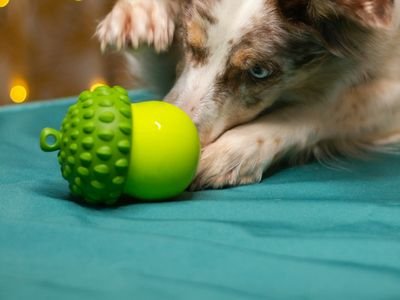
Dog with a rubber treat toy (illustrative photo, not the exact product). Photo: Ayla Verschueren on Unsplash (Unsplash License) (cropped)
KONG Classic style rubber treat toy (Amazon search results)
Search results for the hollow rubber treat toy. KONG's page suggests red rubber for average chewers; check the size chart by dog weight.
Search on AmazonDurable rubber for strong chewers
KONG’s Extreme page says its black rubber is its strongest and is designed for power chewers. The same page says “no dog toy is indestructible,” lists “Supervised use only,” and notes that power chewers may need to size up one or two sizes. It did not state a guarantee when we checked on Nov 20, 2026.
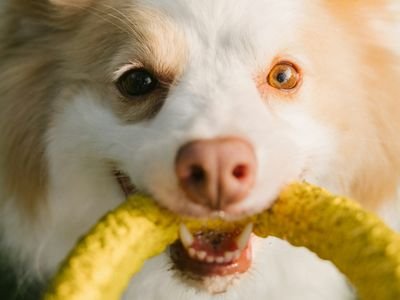
Dog with a durable rubber toy (illustrative photo, not the exact product). Photo: Alvan Nee on Unsplash (Unsplash License) (cropped)
KONG Extreme style durable rubber toy (Amazon search results)
Search results. KONG's page says supervised use only and no dog toy is indestructible; power chewers may need to size up.
Search on AmazonPuzzle or food-dispensing toy
Ohio State’s veterinary medical center describes puzzle toys as a way to slow fast eaters and give mental exercise, and the AKC calls puzzles a great way to entertain dogs of any age. Look for an adjustable difficulty level and parts that are too big to swallow. Part of your dog’s meal can go in the toy. For more brain work away from home, try our guide to sniff walks.

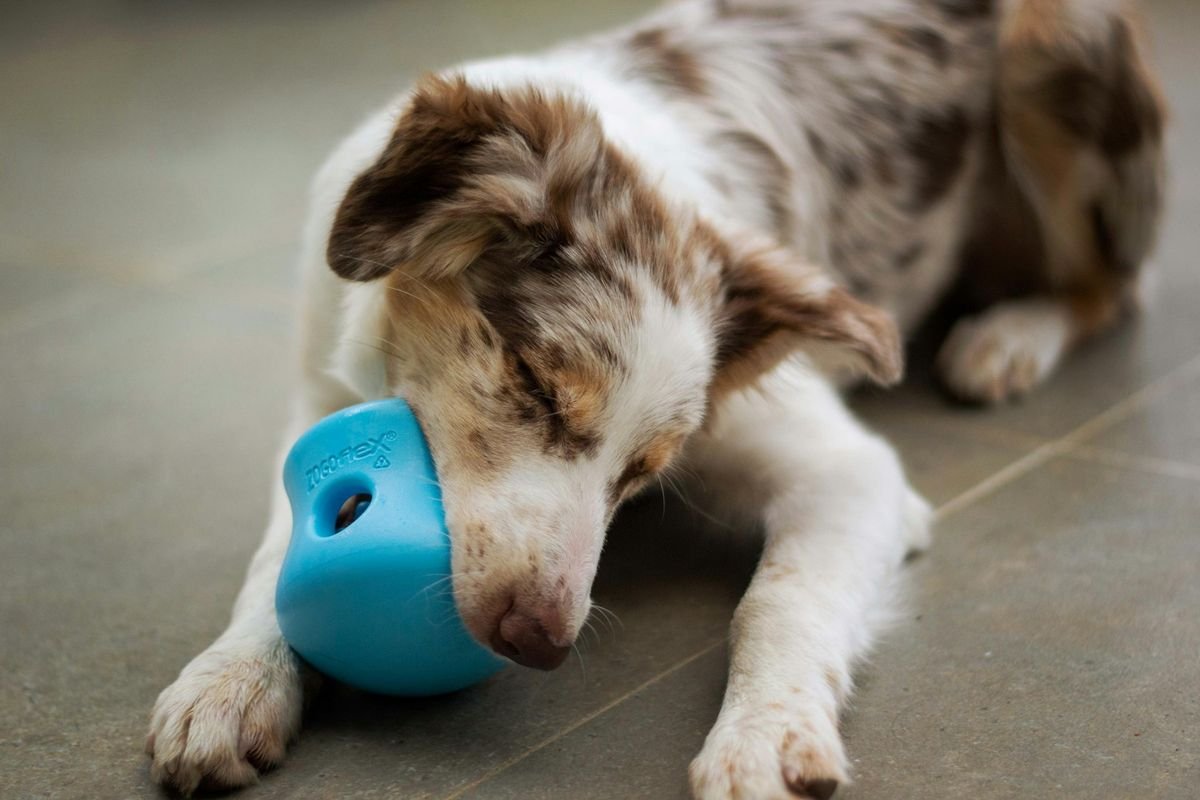
Dog at a puzzle feeder (illustrative photo, not the exact product). Photo: Ayla Verschueren on Unsplash (Unsplash License) (cropped)
Dog puzzle feeder toys (Amazon search results)
Search results for puzzle feeders. Check parts are too big to swallow and count treats toward the daily total.
Search on AmazonDurable fetch toy
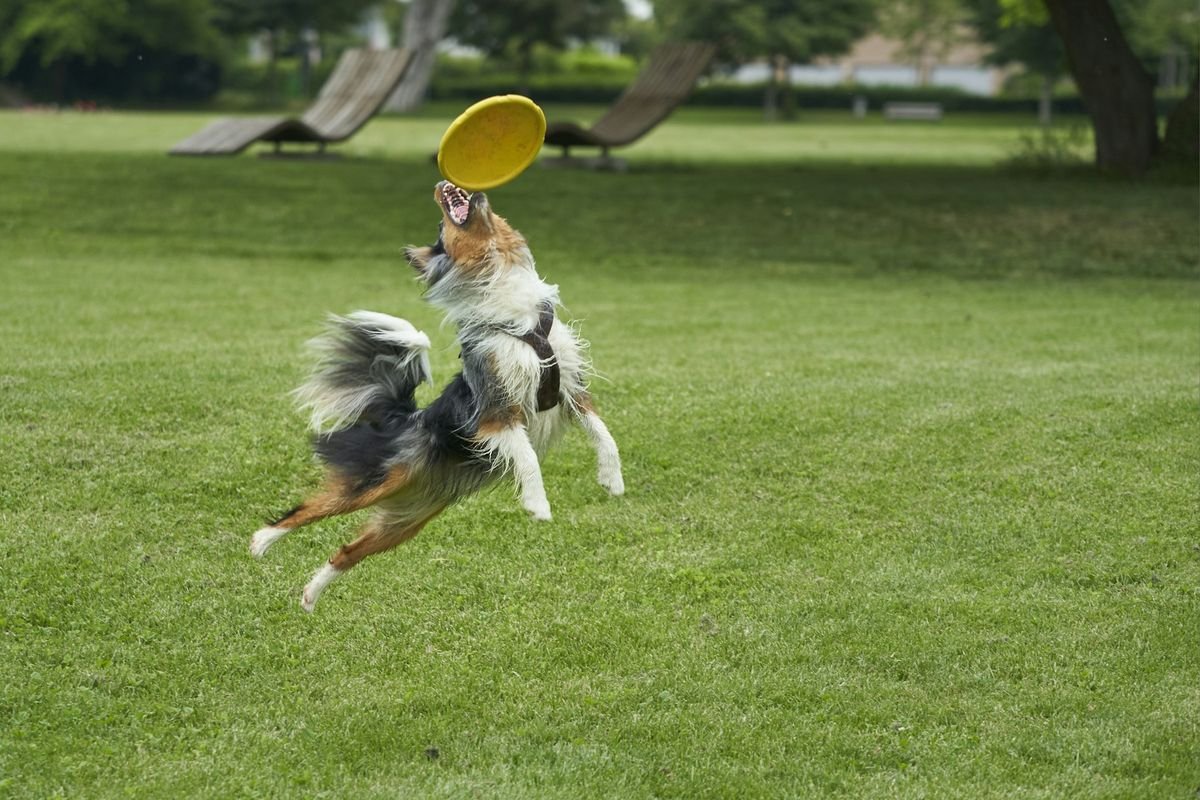
The AKC recommends choosing a ball or toy made of durable rubber, and says tennis balls, even ones made for dogs, can abrade tooth enamel or be popped and swallowed in pieces. Pick a size that cannot go to the back of your dog’s mouth, and retire the ball when it starts to break down.

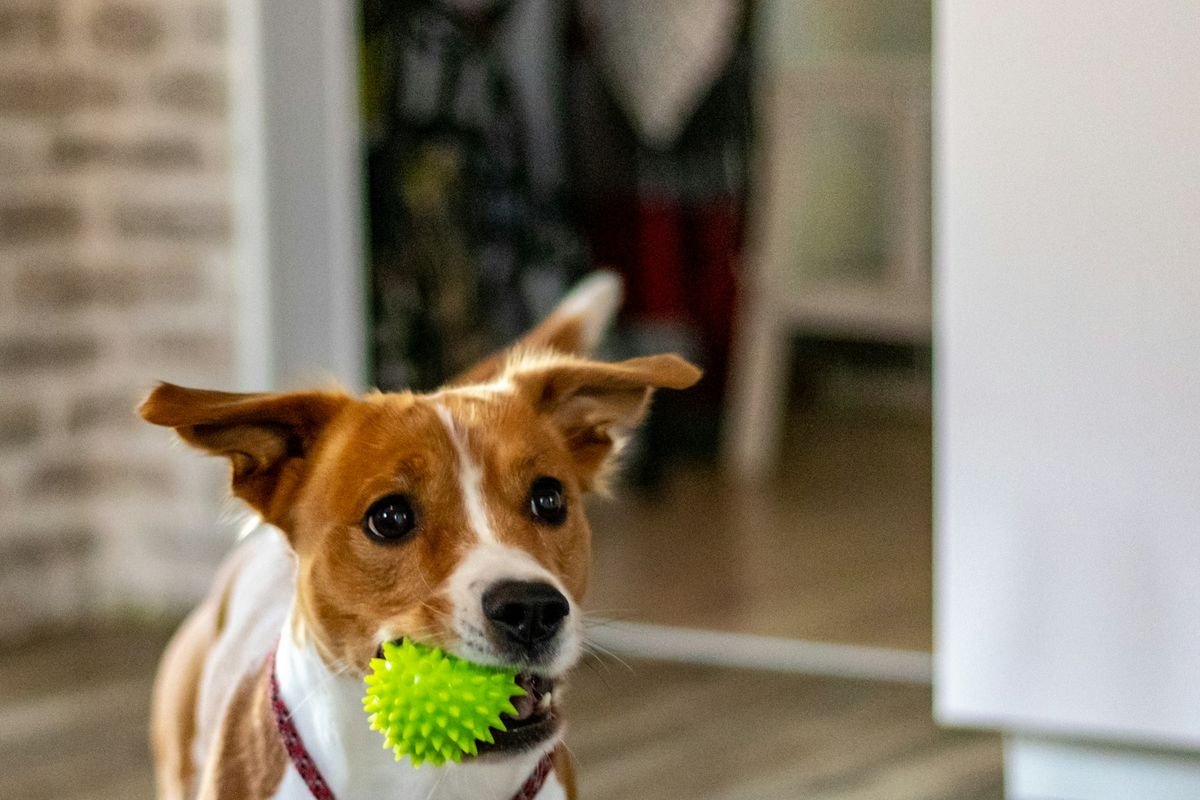
Dog with a rubber ball (illustrative photo, not the exact product). Photo: Jonas Jaeken on Unsplash (Unsplash License) (cropped)
Durable rubber fetch balls (Amazon search results)
Search results. Choose a size too big to swallow, and retire the ball once it starts to break down.
Search on AmazonDog toys as holiday gifts
A new toy is an easy gift, but match it to your dog’s chew style first and size up if you are unsure. Open it with your dog, supervised, and keep ribbon, tinsel and wrapping paper out of reach; our pet stocking stuffer ideas cover safer fillers. If you are shopping the sales, see our Black Friday and Cyber Monday pet deals tips. On busy or stressful days, a stuffed rubber toy can give your dog something calm to do; see our holiday anxiety guide.
FAQ
What toys are safest for aggressive chewers?
No toy is fully safe or indestructible, but makers such as KONG sell tougher rubber made for strong chewers, to be used under supervision. Avoid plush and squeaker toys for dogs that love to destroy things.
How big should a dog toy be?
Texas A&M says a good fit is a toy that is not small enough to swallow or fit whole into the mouth.
Are rope toys safe?
Texas A&M notes that rope toys are often shredded and the pieces may be swallowed or get stuck in teeth. Supervise, and put rope away when you are done.
How often should I replace dog toys?
There is no fixed schedule in the sources we read. Humane World says to discard toys when they start to break into pieces or are torn.
Are tennis balls safe for dogs?
The AKC says tennis balls, even those made for dogs, can abrade tooth enamel or be popped and swallowed, and Humane World says to discard ones that have been chewed through.
Should I rotate my dog’s toys?
Humane World suggests rotating toys weekly by making only a few available at a time.
Bottom line
Watch how your dog plays, choose a toy that fits that style and is too big to swallow, and check it often. Replace it once it wears down. Your vet is the best person to ask about teeth and chewing.
More from PetKiddies
- Sniff walks for dogs
- Pet stocking stuffers
- Dog dental care at home
- Dog anxiety during the holidays
- Black Friday and Cyber Monday pet deals
Sources
- Humane World for Animals, “How to pick the best and safest dog toys” (accessed Nov 20, 2026). humaneworld.org
- AKC, “A Guide to Toy Shopping for Your Pup” (accessed Nov 20, 2026). akc.org
- Texas A&M School of Veterinary Medicine, “Hidden Hazards: A Guide To The Potential Dangers Of Pet Toys” (accessed Nov 20, 2026). vetmed.tamu.edu
- AAHA, “Don’t chew on this” (search snippet only; page did not load, accessed Nov 20, 2026). aaha.org
- Ohio State University Veterinary Medical Center, puzzle toys handout (search snippet only, accessed Nov 20, 2026). vmc.vet.osu.edu
- KONG Company, KONG Extreme and KONG Classic pages (accessed Nov 20, 2026). Extreme, Classic
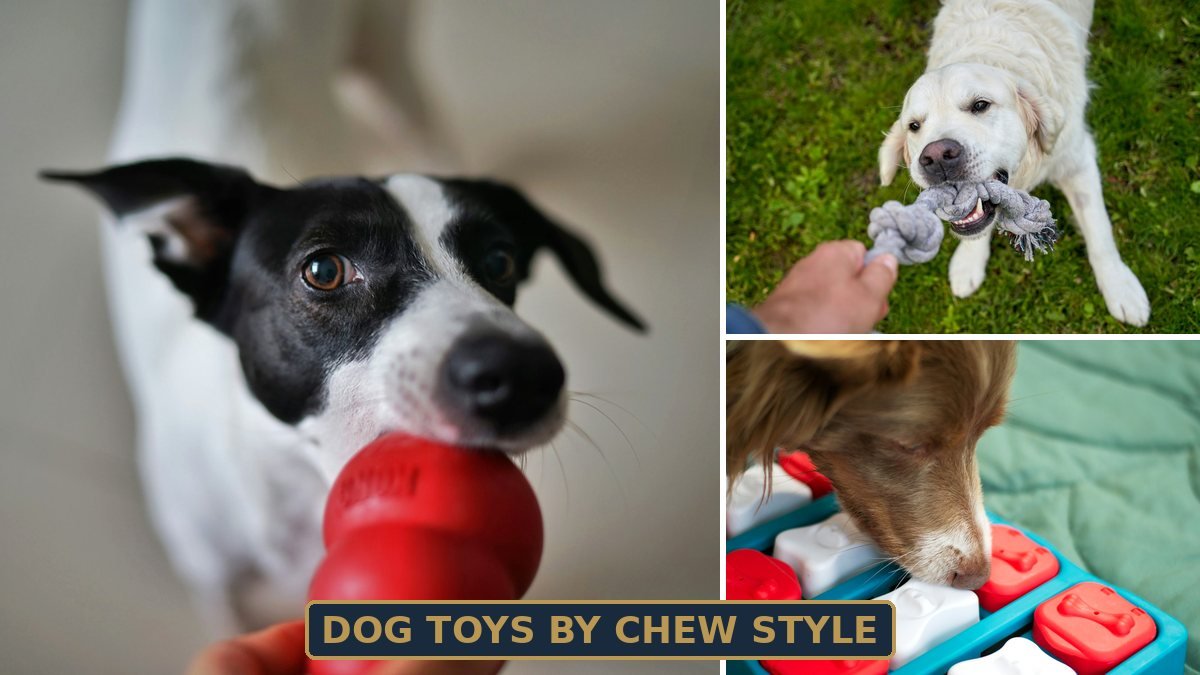
Featured photos: left, Photo: Daisy D on Unsplash (Unsplash License) (cropped); top right, Photo: Barnabas Davoti on Unsplash (Unsplash License) (cropped); bottom right, Photo: Ayla Verschueren on Unsplash (Unsplash License) (cropped)